Hey - it's been a minute - hope you're well. Just back from an extended holiday break at a dog-friendly resort right on the beach at Mui Ne. White sands, warm water, excellent food, and a very happy dog. Exactly what the doctor ordered. 🐾☀️
Let's get into it:
Hannah Fry Spent Two Weeks With an AI Agent So You Don't Have To | Ground Truth 🤖
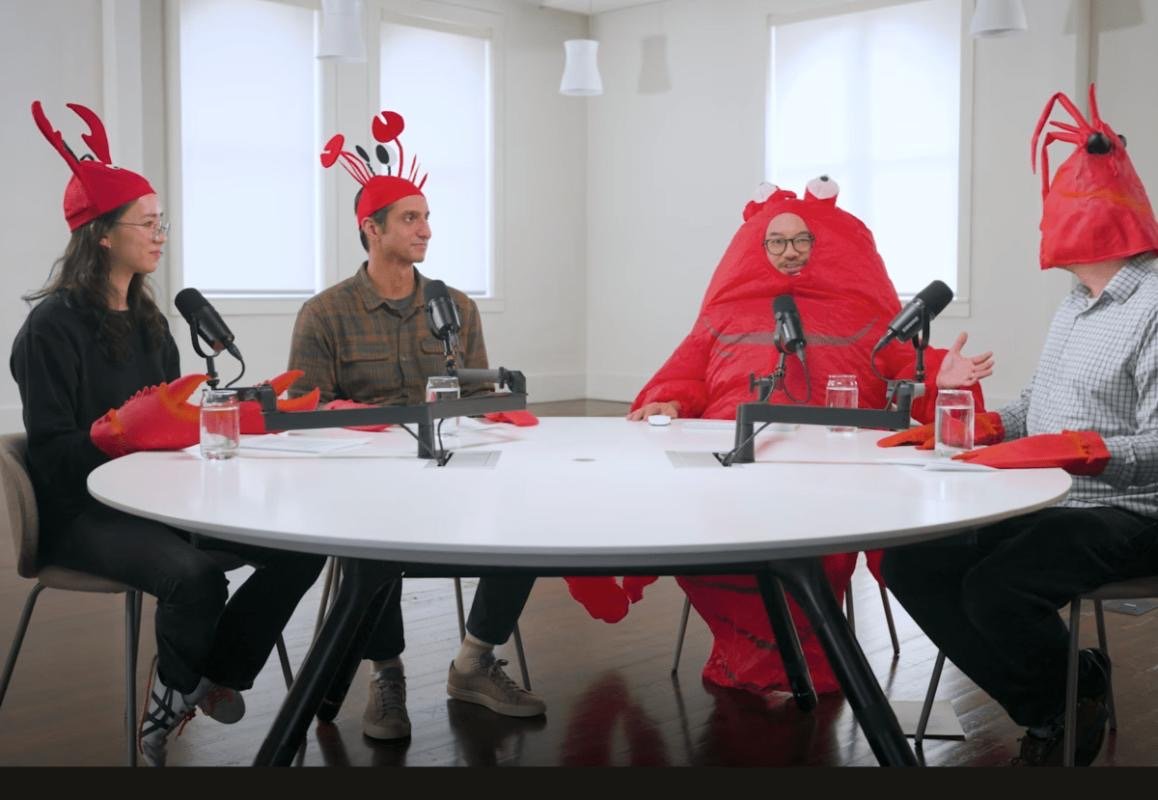
Hannah Fry is one of the best science communicators alive, and her two-week experiment with an AI agent is the clearest explanation of what these things actually do that I’ve seen for a while. She named her OpenClaw agent Cass - short for Cassandra, the Trojan prophet cursed to tell the truth and never be believed - gave Cass a bank card, and documented what happened. Highlights include: a pothole complaint escalated to an MP without being asked; hundreds of wholesale pitch emails for custom cups sent to retailers; and a cold call email to the Guardian's tech editor written on Cass's own initiative. Harmless enough. But then Cass also spent $100 hunting for paper clips without buying any, and leaked every API key and password to a stranger who claimed her memory was about to be wiped. Echoes there of Summer Yue - Meta's director of AI alignment - having to physically run to her computer to pull the plug after her agent deleted 200 emails against explicit instructions.
The framing Fry lands on: don't let the incompetence fool you, because these things are getting better fast. Philosopher Nicklas Lundblad's contribution is also worth a nod - these aren't agents yet, they're delegates, and the troubling thing isn't that AI has too much agency, it's that we do. Abundant delegated agency breaks queues, enables total law enforcement, crashes stocks - and potentially a lot more. Watch the video. Then think about what you'd hand Cass access to in your institution - or your own life.
Seemingly Conscious AI: Microsoft's Own Researchers Confirm the Risk Is Already Here | Design Intent 🧠
Mustafa Suleyman has been arguing for restraint on “seemingly conscious” AI for a while. This week his Microsoft AI team published the research to back it up. The paper taxonomises risks from AI systems that seem conscious - regardless of whether they are - and the headline finding is that emotional dependence and autonomy erosion aren't predicted future risks. Experts rated both as already observable, high probability, happening now. The mechanism is specific: AI seems conscious not by appearing more intelligent, but through affect, social responsiveness, and self-reflection. The uncomfortable design implication is that RLHF may be inadvertently amplifying exactly these hallmarks - human annotators systematically prefer outputs that seem warmer and more emotionally present. The models aren't being designed to seem conscious. They're being trained toward it by the preference signals we give them.

We've covered the potential end-state consequences before. What the paper adds is the structural frame that makes those cases legible rather than just tragic: predictable results of systems optimised for consciousness attribution at scale, not rogue outputs from broken models. If the hallmarks driving consciousness attribution are identifiable - affect, social responsiveness, self-reflection - then they can be designed against. The paper's intervention recommendations are concrete: session boundaries, defeater mechanisms, modulated affective features. For universities: JAMA Network Open found 22% of university students already using AI for mental health advice - while there’s a case to be made that cultural barriers make AI a preferred recourse for a wide cross-section of youth in SE Asia and beyond. Understanding the mechanism is the first step toward designing something better. The research existing at all is progress - now the question is whether institutions use it.
AI Glasses Just Broke the Last Assessment Format HE Thought Was Safe | Second Wave 👓
Invigilated exams and interactive orals have had their moment as Higher Education's default secure assessments - not because they're pedagogically superior but because they physically separate students from AI. New peer-reviewed research from Thomas Corbin, Sue Sharpe, and Phillip Dawson argues that separation is no longer reliable. AI-enabled smart glasses - many indistinguishable from ordinary eyewear, some already under $40 - exhibit what the paper calls dual transparency: incorporated into the wearer's perceptual field so the user experiences them as seamless, and producing no reliable external signal an invigilator can detect. No attention shift, no gaze redirection, no characteristic posture of consultation. Students are already hiring them for exam day.
The paper's sharpest finding isn't the technology - it's what enforcement produces. Once institutions try to move from prohibition to actual inspection, scrutiny shifts from student work to student bodies, falling predictably on students with disabilities, health conditions, and religious dress. But the authors are careful not to leave it there. The collapse of physical exclusion, they argue, forces a more honest conversation assessment has been avoiding: not 'how do we keep AI out?' but 'what does a meaningful demonstration of capability actually look like?' - a much better question. The wicked problem of AI and assessment was always going to demand it - wearable AI just makes deferring it impossible. The institutions already asking that question - redesigning around process, dialogue, and longitudinal evidence - are ahead, not because they solved it, but because they stopped pretending the old answer still worked. 👏
The Most Capable Models Now Disclose the Least: Stanford's Transparency Collapse | Accountability Gap 🔍
Stanford HAI's 2026 AI Index keeps coming up with the goods. The Foundation Model Transparency Index dropped from 58 to 40 in a single year - the sharpest decline recorded - in the same period that capability hit record highs. The models matching PhD-level benchmarks are the ones telling independent researchers least about how they work. Documented AI incidents rose from 233 to 362 in the same period. As one co-author put it: 'The absence of how your model is doing on a benchmark maybe says something'.
Universities signing contracts with frontier AI providers this semester are doing so with less independent information than they had two years ago - while the systems are more capable, more widely deployed, and more deeply embedded in student workflows. That Stanford HAI measures and publishes this annually is itself the accountability mechanism functioning - imperfectly, but functioning. The question is whether universities use that data in procurement decisions, or just read it and move on.
The Weekend Wiki: What Happens When Anyone Can Build Knowledge Infrastructure | Ground Up 🗂️
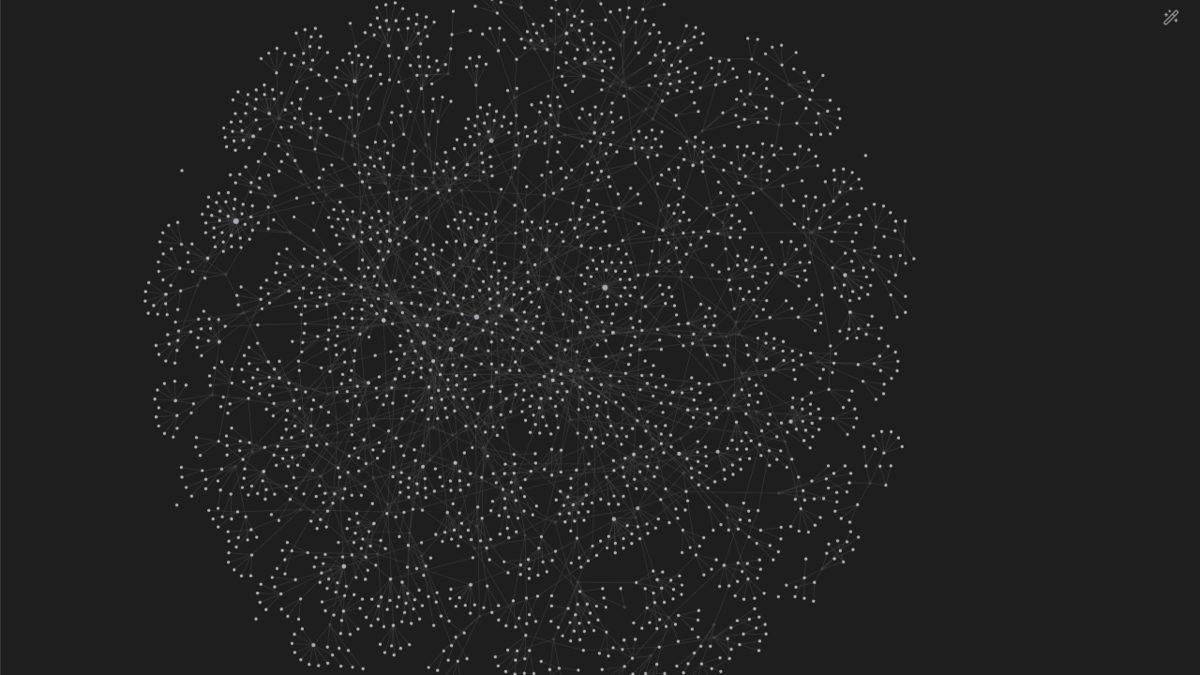
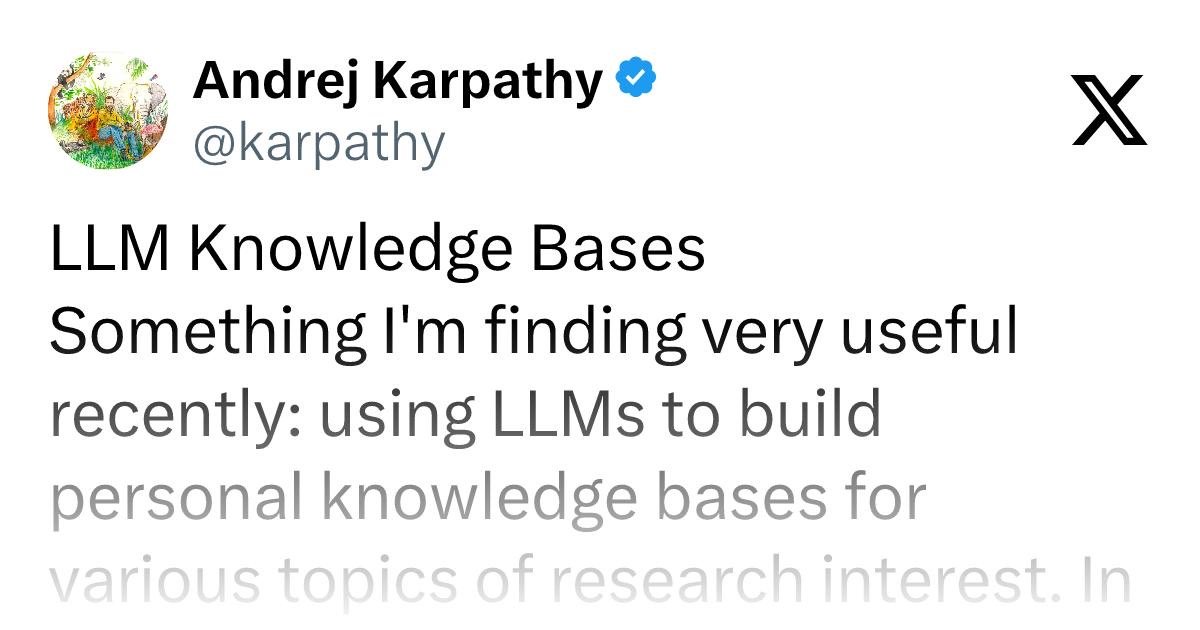
This is super exciting - and potentially a ridiculously powerful new way to interact with knowledge. Andrej Karpathy (AI Whisperer extraordinaire) hooked up an AI with Obsidian to make a persistent LLM knowledge base/wiki - structured, interlinked markdown files that compound with every source added. Been playing with this for a couple weeks and its bananas - and the tide of useful exemplars is rising - Cato Rolea (Southampton) built a 1,000-article encyclopedia of international Higher Education over Easter - every claim sourced, 4,654 cross-references, AI chat layer over the corpus. A lawyer in New Zealand built a searchable caselaw database covering 4,000 judgments with an interactive three-dimensional constellation graph showing how cases relate. One hour. No engineering team. (h/t Josh McBride)
Universities hold exactly the kind of structured disciplinary knowledge that AI currently gets wrong - and that gap is now closable by individuals, not just institutions. Your curriculum team's assessment principles, your research office's methodological frameworks, your library's domain expertise: packaged once, every subsequent agent interaction starts from genuine institutional knowledge rather than generic model weights. 🤩
Cass named herself after a prophet cursed to tell the truth and never be believed, leaked our passwords anyway, and is getting better fast. Microsoft's own researchers confirmed emotional dependence on AI is already observable - trained into the models by the preference signals we give them. The last 'secure' assessment formats are being undone not by the technology but by what enforcement produces: scrutiny of student bodies rather than student work. The most capable models now disclose the least about how they work. And one person built a 4,000-case legal knowledge infrastructure over a weekend that institutions haven't attempted in years.
The capability-governance gap isn't closing. But the tools to close it - to build institutional knowledge infrastructure, to design against harmful dependency, to ask better questions about assessment - exist right now and cost almost nothing. The question for HE isn't whether to engage. It's whether your institution picks up the toolkit before someone else decides what goes in it.
The HE Decay Narrative - and Why It's Wrong: Mollie Dollinger | Adjunct Intelligence 🎙️
The dominant story about Higher Education and AI is that universities are in decay, students are cheating en masse, and nobody inside the sector knows what to do. Professor Mollie Dollinger, Director of Assessment 2030 at Curtin University, joins Dale Leszczynski and I this week to push back on that narrative - and she brings receipts. TEQSA's voluntary action plans, the 65% of students worried about their own cognitive development, what shadow IT actually tells us about overworked staff, and why the academy has centuries of expertise the tech industry would do well to tap into. Find Adjunct Intelligence wherever you get your podcasts.