Chúc mừng năm mới, 新年快乐, and all the very best to you and yours for the year of the fire horse! 🔥🐴
Hope you're well. Saigon has been super chilled the last week - everyone leaves the city for Tet celebrations, making for a lovely change and excellent setting for a staycation. No notes 🤩
Things have been busy in the world of AI tho so let's get into it:
The OECD Digital Education Outlook 2026: Your AI Literacy Programme Might Be the Mirage | Metacognition Gap 🧠
The OECD Digital Education Outlook 2026 is worth reading - not for surprises, but for the receipts. Students using AI for practice performed 127% better during assisted tasks, then 17% worse than peers who never used it when tested alone. They call it 'the mirage of false mastery' - impressive outputs masking underdeveloped skills. Their fix: ditch general-purpose chatbots, invest in purpose-built educational AI, shift from output to process. Sensible advice. But Nick Potkalitsky, PhD's LinkedIn response identifies what it misses.
Metacognition isn't a transferable skill you can bolt onto any curriculum. A historian's critical moves are categorically different from a scientist's or a writer's - and 'reflect on how you used AI' produces surface awareness, not the disciplinary depth that actually protects against cognitive offloading. Universities rushing to build generic AI literacy programmes risk producing exactly what the OECD warns about: polished outputs, hollow understanding. What does your discipline notice that AI misses - and is that question anywhere in your course design?
The Billion-Dollar AI Myth: What Training Models Actually Costs | Cost Reality 💸
Worldwide AI spending hits $2.52 trillion in 2026 - a 44% jump year-on-year according to Gartner. When those headlines land alongside Stargate's $500 billion and OpenAI training runs in the hundreds of millions, they do something useful for the companies involved: they make building AI feel categorically out of reach for anyone without a hyperscaler within easy reach. Hugging Face's new compute costs report (h/t Dr. Sasha Luccioni 🦋 ) is a direct challenge to that narrative. Frontier model training runs do cost nine figures. But a competitive 7B parameter model costs around $43k to train. A domain-specific genomics foundation model built by a university consortium? $40k. A specialist OCR model that outperforms general-purpose alternatives on its specific task? Under $100k. The gap between the biggest models and everything else isn't a gap - it's several orders of magnitude of deliberate misdirection.
The energy picture complicates this further. Interesting paper titled ‘How Hungry is AI?’ found a 340,000x difference in energy consumption between the most and least efficient models - and reasoning models use orders of magnitude more energy than standard ones. The uncomfortable implication for HE: institutions defaulting to the shiniest frontier API for every task aren't just overpaying financially, they're carrying environmental costs that sit poorly alongside sustainability commitments. The question worth putting to your AI steering committee isn't 'can we afford AI?' It's 'why are we buying a Formula 1 car to pick up groceries - and who benefits from us thinking that's our only option?
The Market Is Forcing AI Transformation Nobody Asked For | Panic Architecture 📉
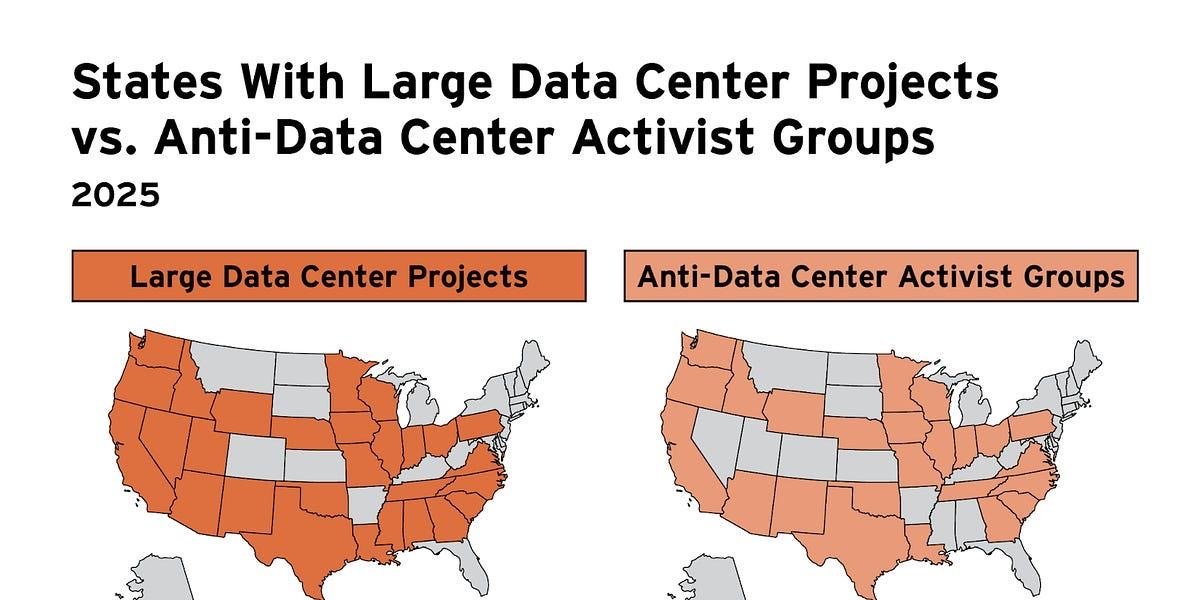
Ed Elson's piece this week - ‘What If No One Wants This?’ - is worth your time: less than a third of Americans trust AI, less than a quarter enjoy using it, and grassroots opposition has blocked $64 billion in data centre construction across 24 states. The anti-AI coalition is now genuinely bipartisan - 55% Republican, 45% Democrat. AI is becoming the infrastructure nobody voted for.
And yet. Nate Jones documents what's happening in parallel - a former karaoke company worth $6 million wiped billions off global logistics stocks with a single press release. The 'AI scare trade' burned through eight sectors in ten days. The damage isn't the stock drops - it's companies restructuring around investor narrative rather than actual capability, which makes them more vulnerable to real disruption later. For HE: is your AI transformation strategy net new investment or stripped from teams that actually understand the work? One is transition. The other is a press release with consequences.
Seedance 2.0 and Kung Fu Robots: China's AI Moment Isn't Coming | Capability Surge 🐉
You might have seen the absurdly real-looking deepfake video of Brad Pitt fighting Tom Cruise doing the rounds - well, that was made with Seedance 2.0 - next level new video generator from ByteDance. This model takes up to nine images, three video clips, three audio clips, and natural language instructions simultaneously, producing 15-second cinematic multi-shot output with synchronised stereo audio. A year ago this was science fiction. Watch the demos before you read another word about Western frontier model releases.
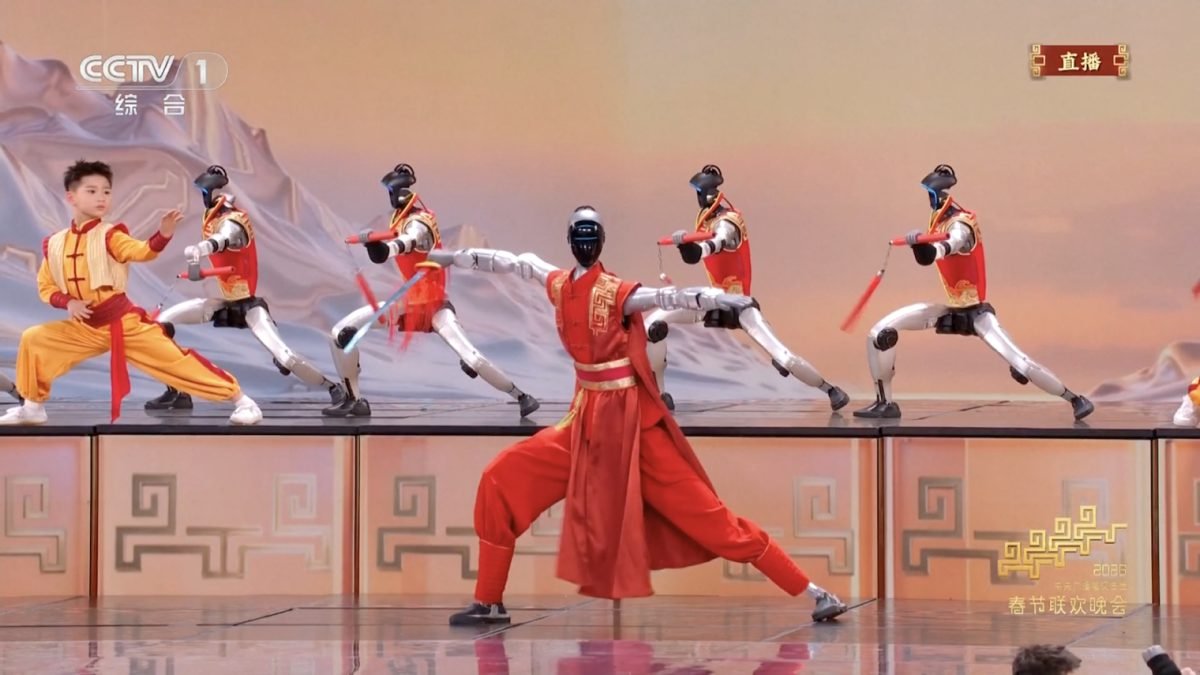
The timing is pointed. At China's Spring Festival Gala - watched by hundreds of millions of people worldwide - a couple dozen humanoid robots showed they’d learned how to ‘be water’ - kung fu, gymnastics, and a whole bunch of other madness. A year ago, the same robots were wobbly folk dancers making headlines for stumbling. The geography of technological capability has shifted and, given Unitree robots start at just under $5k, are we ready for this?
Management Is the New Prompting: The Framework for Agentic Work | Skills Shift 🎯
The AI landscape just got significantly harder to navigate. Ethan Mollick's map: stop thinking about models alone and start thinking about models, apps, and harnesses. The model is the brain (Claude Opus 4.6, GPT-5.2, Gemini 3 Pro - currently closer in capability than benchmarks suggest). The harness determines what it can actually do - web search, code execution, autonomous multi-step tasks. Claude in a chat window is not Claude in Cowork is not Claude Code running experiments overnight. An AI that does things is categorically different from one that says things, and the entire industry is moving fast in that direction.

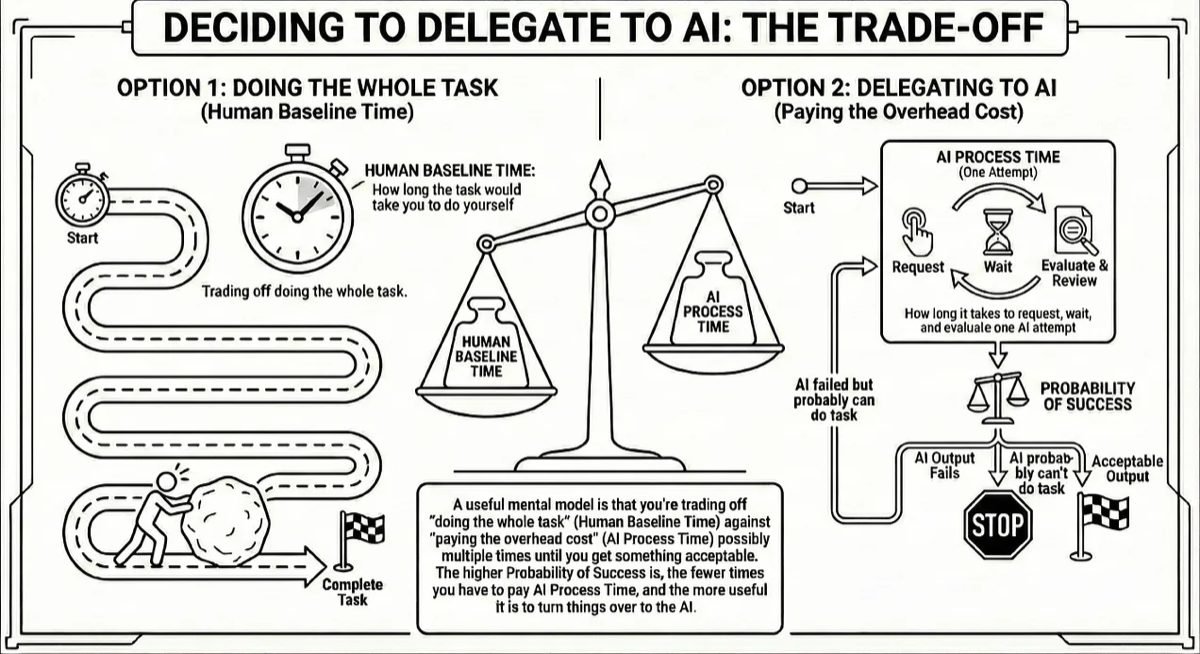
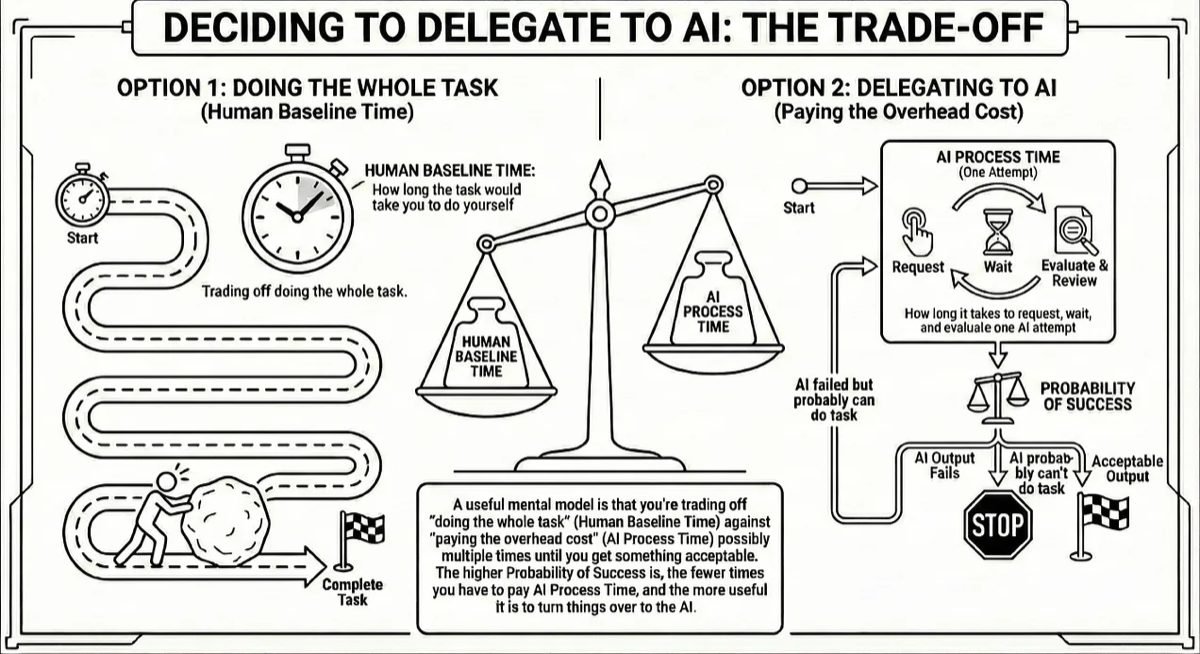
Deciding when to delegate comes down to three variables: how long the task would take you, how likely the AI is to nail it, and how long evaluation takes. The longer the task and the higher the probability of success, the more it pays to hand over. But the bigger insight comes from Mollick's Penn experiment, where executive MBA students built working startup prototypes in four days without knowing how to code. Not because they were AI natives. Because they already knew how to scope problems, define deliverables, and recognise when something was off. 'What's scarce is knowing what to ask for’. That's the skill worth building - and it's not on most AI literacy syllabuses.
The through-line this week is the same as every week, just sharper. Students producing polished outputs with hollow understanding. Institutions paying Formula 1 prices for grocery runs. Boards restructuring around investor narrative rather than actual capability. Kung fu robots that were stumbling folk dancers twelve months ago.
The capability-governance gap isn't closing - it's widening while the transformation accelerates regardless of whether anyone voted for it. Mollick's punchline is the right one to end on: what's scarce is knowing what to ask for. That's true for students, for institutions, and for the sector. The question isn't whether HE engages with this. It's whether it develops the judgment to engage well.
Can Your Students Ghost a Degree for $20/Month? Adjunct Intelligence Returns | Podcast 🎙️
New episode of Adjunct Intelligence just dropped - Dale and I went deep on predictions for 2026 and it got spicy. AI Ready' banners are cheap signals - we called it 'The AI Ready Bluff' for a reason. The C-suite now prompts better than some graduates. Entry-level jobs are down 29% since 2024 - the IMF called it a tsunami. And Jason Lodge ran oral assessments with 230 students at UQ and within two minutes of each conversation knew exactly where every student was. The logistics were a nightmare. They're redesigning the entire course around it anyway.
Find it wherever you listen to podcasts (and below) 📺🍎🎵