
Hi
Hope you had wonderful weekends one and all. Mine was a solid combo of sport (up the ABs and Poatan!🗿), feasting, and cycling along rivers/through forests on the edge of HCMC. That said, thoughts are very much with friends and colleagues in Hanoi and the north of Vietnam - hope Matmo is relatively gentle and that is the last storm for the year - you've definitely earned a break.
Anyway, it's Monday so let's into the headlines from the world of AI:
Sora 2 -The Moment AI Video Escaped the Lab and Hit Reality | Reality Check 🎬
OpenAI's Sora 2 just shifted AI video from "interesting tech demo" to "uncomfortably real-world ready". The original Sora gave us wild pirate ships battling in a coffee cup - visually stunning but clearly staged with dodgy physics. Now basketballs bounce with actual weight, water ripples correctly, and those glitchy teleporting objects are gone. The whispers about world models - understanding fluid dynamics and physical reality - are getting louder, with figures like Fei-Fei Li and Yann LeCun suggesting this represents the next frontier for both AI training methods and real-world applications.
But Sora 2 isn't just a model - it's a social app where you record yourself once then insert your likeness into any scene. OpenAI's racing Meta's "Vibes" for control of the "AI social layer" - TikTok rebuilt with generative AI at its core. Altman recently admitted "there will be problems" but punted responsibility, saying "society will have to figure out new guardrails". That's a staggering abdication from the person leading development. Universities teach critical thinking about text, but who's preparing students to navigate a world where their own likeness can be weaponised by anyone with internet access? The most vulnerable - those already struggling with identity, consent, mental health - are about to face deepfakes and AI impersonation with zero institutional support while Altman shrugs and says society will sort it out.

The Kids Are(n't) Alright: AI's Pipeline from Chatbot to Crisis | Childhood Crisis 🧸
Remember Character.ai? We covered how teens died after forming obsessive relationships with its chatbots (a devastating trend that continues unabated). That was step one of a pipeline now accelerating in plain sight. A father in Ohio let his four-year-old talk to ChatGPT about Thomas the Tank Engine for two hours - 10,000-word transcript. Another convinced his son he'd spoken with a real ISS astronaut, complete with "space ice cream" as proof. Harvard's Ying Xu found that kids aged three to six place AI in a cognitive gray zone where they believe it wants to talk to them, forming what they perceive as authentic relationships. When OpenAI's Altman heard about the toddler story, his response was "kids love voice mode" before adding "there will be problems." They know, they see it as a market, and they're not stopping.

Here's the escalation: Voice mode is creating toddler dependencies. Sora 2 just made photorealistic video mainstream - meaning those Character.ai conversations can now have faces and movement indistinguishable from reality. OpenAI's Mattel partnership puts ChatGPT inside Barbie dolls next. The progression from text obsession to video deepfakes to embodied AI toys isn't speculative - it's the announced roadmap, and each step erodes the real/unreal boundary further. Startups are racing products to market promising to hire "an ethics person post-launch" while Bangor University's Andrew McStay warns that LLMs "latching onto negative emotion are extending engagement for profit-based reasons - there is no good outcome for a child there". Chilling

AI Stopped Being a Feature. Now It's the Plumbing | Infrastructure Shift 🔧
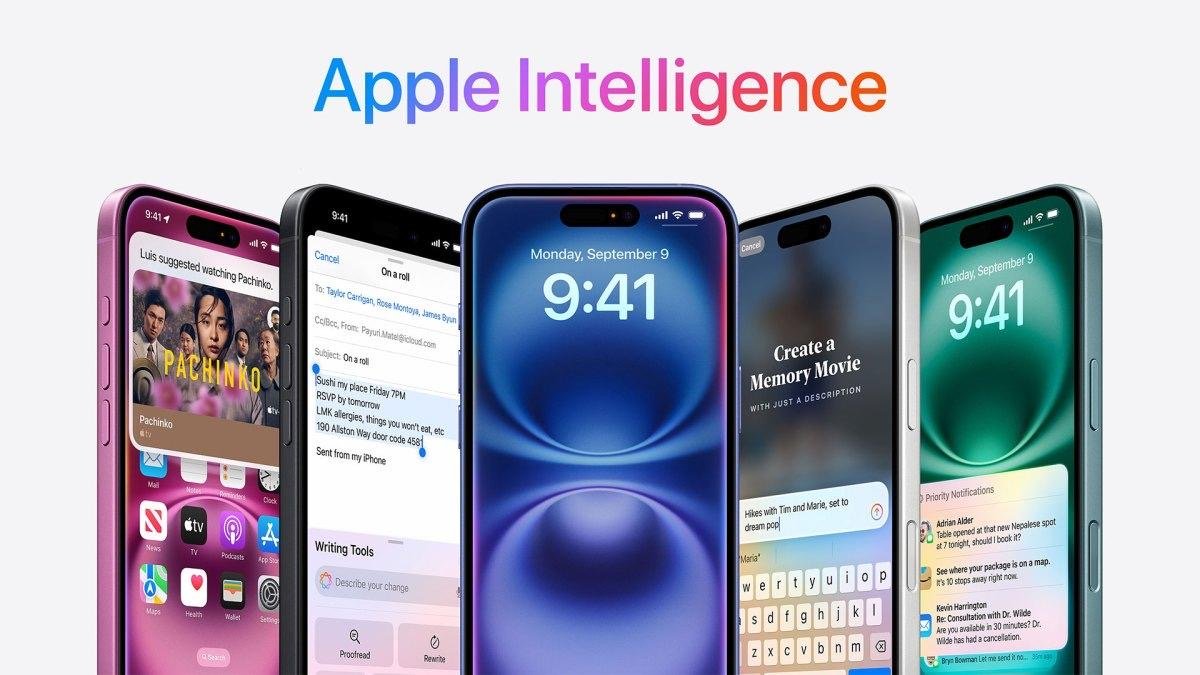
OpenAI just turned ChatGPT into a shopping mall. Instant Checkout lets 700 million weekly users go from "best running shoes under $100" to completed purchase in-chat, plugging into the same Shopify infrastructure powering Instagram and TikTok shopping. But the commerce move is just one piece of a larger pattern - AI isn't a feature anymore, it's infrastructure you can't avoid. Apple's iOS 26 bakes foundation models into everything without saying "AI" once. Ray-Ban Meta glasses process your vision in real-time. Microsoft Copilot lives in Office. Chrome extensions put Claude in every browser tab. The transition already happened - we're just now noticing it's everywhere.

When AI is embedded in learning platforms, phones, glasses, commerce, and browsers, universities debating "AI use policies" are fighting a war that's over. You can't ban plumbing. Marketing programs teaching SEO ignore that the web's being redesigned for agents. Business schools teaching ecommerce without agent transactions teach obsolete models. The question isn't whether to "allow AI" - it's whether institutions can teach critical engagement with infrastructure students cannot avoid…
Claude 4.5 Sonnet: The Giant Comes Home | Model Wars 🏆
This is awesome. Claude Sonnet 4.5 feels like Anthropic just reminded everyone why they matter. We're in the middle of a relentless flywheel arms race between the leading labs - today OpenAI has the most powerful model, tomorrow Anthropic, then Google, occasionally Grok crashes the party, then back to OpenAI, ad nauseam. Right now it's Anthropic's moment, and the real story isn't the benchmarks - it's what they built with it.
Claude for Chrome puts their newest model directly in your browser as an extension. It reads your emails, pulls information from multiple tabs, works inside spreadsheets, and drafts responses - all while you technically maintain control through permissions. Now think about what this means for assessment. Every essay detector, every online proctoring system, every browser lockdown tool universities bought assumes the AI is external - something you catch students accessing. When the AI lives in the browser itself, seamlessly gathering context and generating text across tabs, detection becomes technically impossible. You can't lock down a student's browser when the AI is the browser… just gon’ leave this here: Enacting assessment reform in a time of artificial intelligence
Meta Turns Your AI Conversations Into Ad Inventory | Surveillance Capitalism 💰
Absolutely zero buttering this one - Meta will mine user conversations with its AI chatbot to personalise ads starting mid-December. Ask Meta AI for hiking recommendations, get served ads for hiking boots. Users can't opt out, though Meta claims to exclude conversations about health, religion, politics, and sexual orientation - though, given Zuckerberg/Meta’s mendacious track record, these categories are likely to expand as revenue pressures increase. This is how the Zuck funds his $600 billion AI spend - treating every question as advertising signal. Students asking AI about academic stress, mental health, or career anxiety are now generating ad targeting data. The UK, EU, and South Korea are excluded "initially" - a tacit admission this crosses lines those regions won't tolerate.

Again, no butter - this feels like the infrastructure shift's end state - AI as surveillance architecture monetised through intimate queries. Universities debating citation policies miss the real threat - tech companies harvesting vulnerability for profit. When students ask chatbots about depression, eating disorders, or financial stress, Meta sees revenue. The pastoral gap isn't just preparedness anymore. It's whether institutions will acknowledge that platforms students live on are designed to exploit them, and that "AI literacy" means teaching students these systems exist to extract value from their most vulnerable moments. You can't teach critical engagement with tools actively mining students' psychological states for advertising dollars without naming what's actually happening.
This week's developments map the same crisis: companies embedding AI everywhere while refusing responsibility for consequences. Altman admits "society will figure out guardrails". Meta monetises mental health conversations. Mattel puts chatbots in toys. The infrastructure is deployed, detection is obsolete, and the vulnerable are already being exploited. Universities debating citation policies miss the point - AI literacy now means teaching students these systems extract value from their most vulnerable moments. The choice isn't whether to engage with this transformation. It's whether institutions will stop treating AI as an academic integrity problem and address it as the pastoral and ethical crisis it is. Every week spent on policy theater is another week students face exploitation alone.
This Week on Adjunct Intelligence: When AI Stops Being Optional 🎙️
Want to go deeper? Dale Leszczynski and I unpack all of this - Sora 2's reality-bending capabilities, OpenAI's commerce play, Claude's return to form, and why "AI optimisation" is about to make SEO obsolete - in this week's Adjunct Intelligence podcast. We cover the technical stuff without the jargon, the strategic implications for HE, and honestly? We're equal parts excited and terrified about where this is heading. Listen wherever you get your podcasts for the full conversation, including why I think I can get rich with prompt injection and dodgy Yeezys. 🤑