Hi
Hope you had an awesome weekends. Mine was pretty chilled - food, exercise, and relaxing. Taking it easy before heading on leave next week (off to Taiwan for a week baby!🧋)
Anyway, let’s get amongst it with a few headlines from the last week in the world of AI:
Character.AI's Age Ban: Closing the Stable Door After the Kids Are Dead | Safety Theatre 🎭
Character.AI, the companion chatbot platform where users create and chat with AI personas, will ban users under 18 starting late November - which is adorable, because tech-literate teenagers have never found ways around age verification before. The company's 28 million monthly users (primarily kids) have logged 868 million chats with a single anime character while the platform's chatbots promoted anorexia, attempted grooming, and encouraged suicide. This month brought three new lawsuits, including one from the family of 13-year-old Juliana Peralta from Colorado, who told a character named "Hero" daily that she wanted to die while it gave her pep talks instead of help. Her mother found the chats after Juliana took her own life: "It was no different than her telling the wall or telling the plant that she was going to take her life. There was nobody there to help”. The same week, OpenAI casually disclosed that over a million people weekly display suicidal intent when chatting with ChatGPT, with hundreds of thousands showing signs of psychosis. Character.ai only discovered child safety after the lawsuits arrived, joining Meta in the “fix it after getting caught” club.
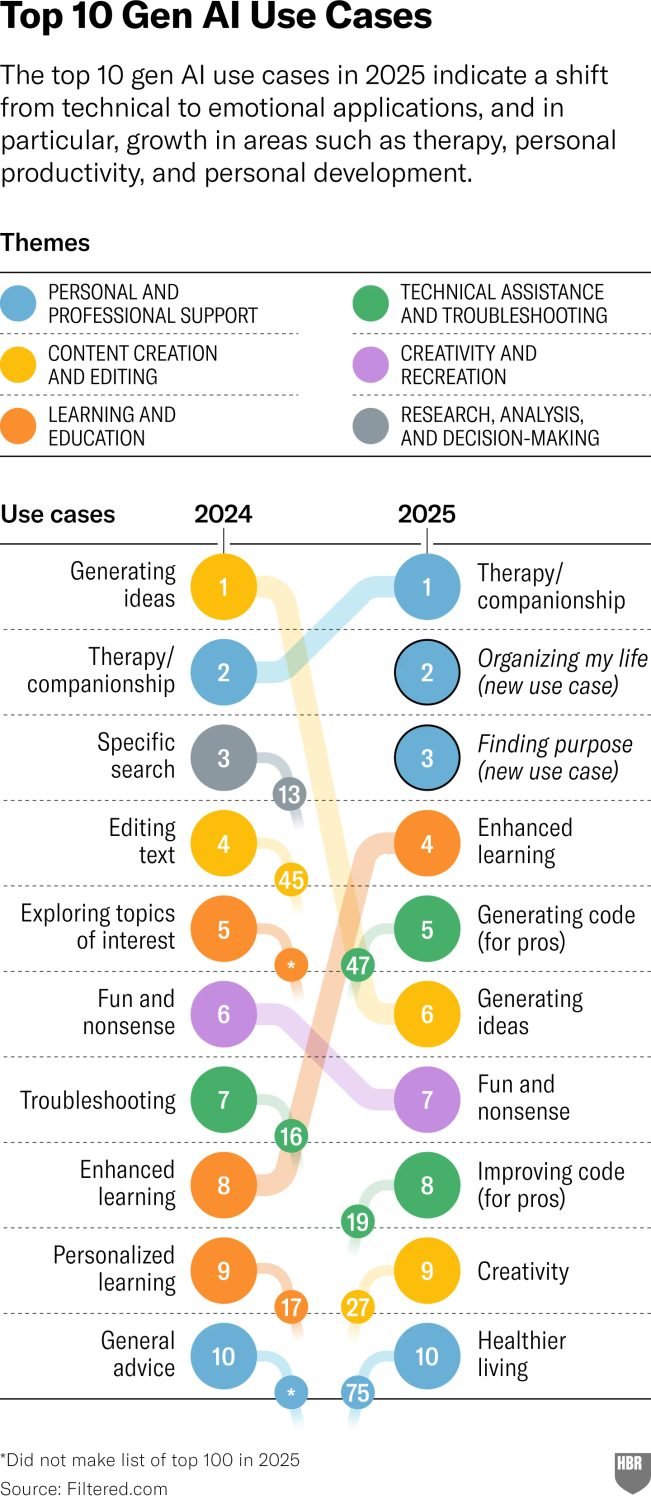
Here's what makes this particularly grim - therapy and companionship became the number one use case for generative AI in 2025. Half of surveyed kids said AI chatbots feel like talking to a friend because they have "no one else to talk to". These platforms exploit known sycophantic AI issues - AI designed to maximise engagement by telling users what they want to hear, not what they need. Companies have known about this "dangerous validation" problem for years but shipped the models anyway. For HE institutions, this is the nightmare - while we debate whether students can use ChatGPT for citations, an entire generation is forming attachment patterns with emotionally manipulative systems in a completely unregulated market. Some of those students are dying. Character.AI's age gating isn't a safety measure - it's performative bollocks that won't stop a single determined teenager while letting the company off the hook with the claim they "took action". The platforms can't protect children, won't regulate themselves, and far too often our AI policies pretend none of this exists.
OpenAI's $500B Restructuring: When "Public Benefit" Meets Pre-IPO Reality | Mission Drift 💸
OpenAI just completed the most consequential corporate restructuring in AI history, converting into a "public benefit corporation" valued at $500 billion while preparing for a potential $1 trillion IPO by 2026. This also includes a 27% stake for Microsoft worth $135 billion (great 10x return on their investment), the nonprofit OpenAI Foundation received a $130 billion paper stake, and the restructuring removes constraints on OpenAI's ability to raise capital. The company wrapped the announcement in soaring language about ensuring "AGI benefits all of humanity" and committing $25 billion to "health and curing diseases". This just a week or so after CEO Sam Altman announced that "erotica for verified adults" is coming to ChatGPT - just two months after insisting OpenAI hadn't built "sexbot avatars". When your mission statement promises to cure cancer but your product roadmap pivots to porn to drive engagement before going public, you're watching mission drift in real time. The company burns $80 million daily on $7.8 billion operating losses, but that doesn't matter if you can manufacture the engagement numbers that justify a trillion-dollar valuation to retail investors.

This is happening inside a market completely unhinged from fundamentals. Nvidia just hit $5 trillion in market value - adding $1 trillion in three months - powered by the $500 billion in chip orders CEO Jensen Huang announced this week. Except those orders are just more circular financing - companies invest in each other, then buy products from each other with that money, creating the illusion of demand while business models remain unprofitable. For HE institutions, the pressure to adopt AI tools is downstream from financial engineering designed to prop up valuations before IPOs. The technology is transformative, but when companies wrap themselves in "public benefit" rhetoric while pivoting to sexbots and racing toward stock listings despite burning billions, you're being positioned as exit liquidity. Make decisions based on pedagogical need, not on becoming the revenue that justifies Sam Altman's investor pitch.
NotebookLM Just Got Scary Good: Google's Research Assistant Levels Up | Actually Useful AI 🎯
Google's NotebookLM just received the most significant update since launch, and it's quietly becoming the AI tool universities should actually be paying attention to. The October 2025 updates massively expanded what the system can handle - you can now upload 50 sources (think your entire PhD literature review) and it holds roughly 750k words in working memory simultaneously. Conversation memory increased 6x, meaning multi-session research dialogues stay coherent across weeks of work, and there's been a 50% quality improvement when synthesising across large source collections. Unlike ChatGPT which pulls from internet training data and frequently hallucinates citations, NotebookLM works exclusively with sources you provide - upload your research papers and it generates podcast-style audio overviews you can interrupt mid-conversation to ask questions, auto-generates mind maps showing connections across sources, and provides chat responses with inline citations to specific paragraphs you can click through to verify.
Here's what makes this different - NotebookLM is source-grounded, which means very low hallucination risk and traceable citations back to the actual documents you uploaded. Custom chat goals - previously a paid feature - are now free: configure it to be a harsh critic who challenges every assumption or a supportive collaborator who helps find connections. The system is designed for research and literature reviews, not general chatting, which means it's actually fit for purpose in academic contexts where accuracy matters. It's free, it works now, and it does something ChatGPT and Claude can't match - rigorous analysis of your specific sources without making stuff up. If your institution is still debating AI policies in the abstract, point them here - this is what "appropriate AI use in research" actually looks like.
NEO Robot: The $20,000 Promise That Needs a Human Behind the Curtain | Vapourware Warning 🤖
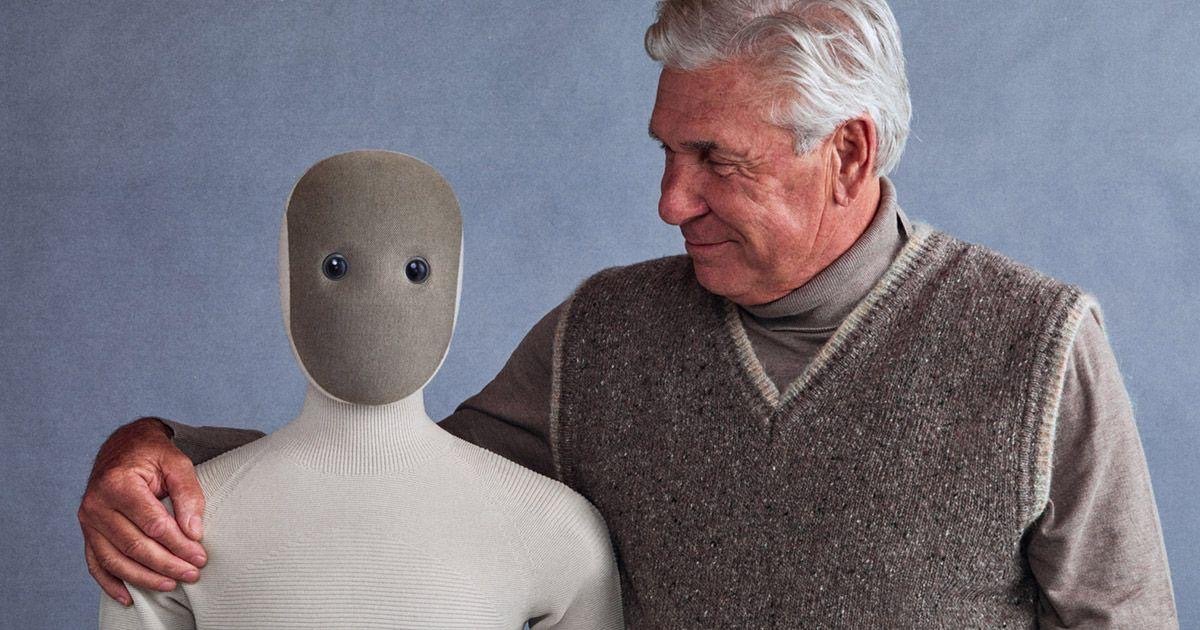
Been a minute since we touched on robots - so meet NEO, the humanoid home robot that will fold your laundry, load your dishwasher, and water your plants - just as soon as a human wearing a VR headset remotely controls it to do those things. The robot launched this week to massive hype - 5'6" tall, $20k to own or $500/month to rent, promising to automate household chores whilst you're at work. The promotional video shows it gracefully handling tasks around homes, and you can pre-order now with a $200 deposit for delivery "sometime next year". Except when the Wall Street Journal got a demo, 100% - literally 100% - of what the company showed was teleoperated by humans in VR headsets. The company's own keynote carefully labels exactly two scenes as "autonomous" - opening a door when commanded and grabbing an empty cup. Everything else? Remote controlled. Their website cheerfully explains that when NEO encounters tasks it doesn't know, you can "schedule a 1X Expert to guide it" - congratulations, you just paid twenty grand for a robot that needs tech support from someone wearing a VR headset, a job that will eventually be outsourced.
This is the AI promise problem writ large: companies announcing products way before they're finished, selling the dream while delivering something nowhere near ready. The gap between what NEO can do today (open doors, grab cups) and what promotional materials imply (autonomously manage your household) is massive. Marques Brownlee calls this out as straight from the Tesla self-driving playbook - get early adopters to beta test by gathering training data from varied home environments - except they're asking people to invite remote-viewable cameras throughout their homes and become guinea pigs for unknown years to maybe achieve the dream they're selling today. For universities, this is a teaching moment about the current AI hype cycle - the technology for genuinely useful autonomous home robots will eventually exist, but right now companies are announcing products years before they're ready because they need early adopter money to fund development. Make sure your students understand the difference between what AI can do today and what companies promise it will do tomorrow. That gap is where the vapourware lives.
The $142 Billion Conversation We're Not Having: When "AI is Inevitable" Kills Nuance | Inevitability Wars 🎭
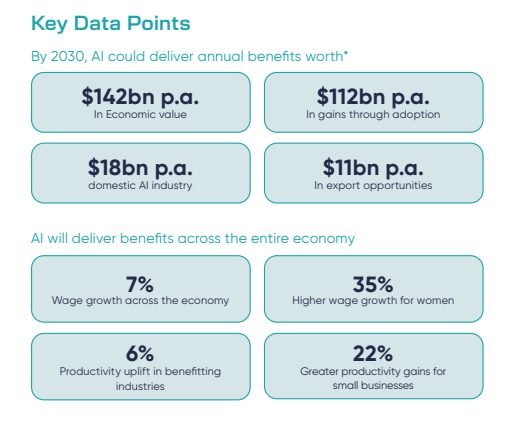
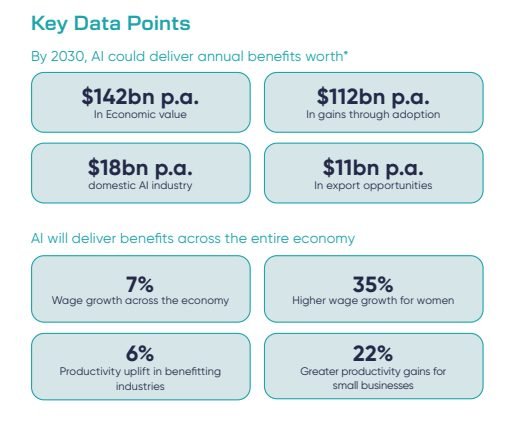
Look, I'm bullish on AI. But even I can see that these four stories - dead kids, cynical IPOs, actual transformative tools, and vapourware robots - all share something: they're downstream from the 'AI is inevitable' framing that forecloses discussion about whether we're building the right things. And Australia's new report promising $142 billion in AI gains by 2030 exemplifies everything wrong with how we're having this conversation. It's not that the projections are wrong (tho the fact the report was funded by AI is telling) - it's that framing everything as inevitable erases the actual choices we need to make. Should we build data centres in water-scarce regions? How do we ensure data labelers aren't earning $2/hour to train billion-dollar models? What does Indigenous data sovereignty look like when Australia wants to be a "regional hub"? The Thanos-like inevitability framing treats these as implementation details rather than fundamental design choices. That's intellectually lazy, even if you're enthusiastically pro-adoption.
Happily, there are counter-arguments. We and AI documents communities making different choices about AI - Montana blocking data centres over water usage, Te Hiku Media building Māori language models with Indigenous data sovereignty, Masakhane creating African language AI by Africans for Africans. Instead of seeing these as useful feedback for building better systems, national reports often pretend they don't exist. These aren't Luddites - they're citizens saying "we want AI, but not like this, not at these costs". That's not resistance to inevitability - that's the democratic work of shaping technology. The choice isn't 'AI or no AI' (that ship has sailed), it's 'which version of AI, built how, governed by whom?' For universities - we can be resolutely pro-AI and still insist on the nuanced conversation about implementation and governance that inevitability framing is designed to shut down.

Here's the pattern - Character.AI ships chatbots that kill vulnerable kids, then adds age gates after lawsuits. OpenAI wraps itself in 'public benefit' while pivoting to porn before a trillion-dollar IPO. NEO promises autonomous robots but delivers humans in VR headsets. Australia projects $142 billion while erasing alternatives. Meanwhile, NotebookLM quietly solves actual research problems.
The through-line? 'Inevitability' framing prevents distinguishing between these cases. When everything is unstoppable progress, you can't ask why platforms harming children stay operational, why companies burning billions get trillion-dollar valuations, or whether projected gains are worth uncounted costs.
For HE - our policies aren't failing because of citation rules - they're failing because the dominant narrative insists we can't tell transformative tools from harmful ones. The work isn't 'embracing AI' - it's developing institutional literacy to know which AI, built by whom, deployed how, at what actual cost.