Hey
Hope you had wonderful weekends wherever you are. Mine was spent chilling with family - and anticipating this Friday's Higher Education Horizons 2025: Innovation with Purpose event at RMIT Vietnam's Saigon campus. Amanda White OAM's keynote on purposeful GenAI integration, Thanh Pham and Dr Linh Duc Tran 's workshop (they've trained 350k+ Vietnamese educators so they must be doing something right!), plus sessions on accessibility, learning design (from our own multi-award winning LD team), and a whole lot more! If you're nearby Friday, come along - should be fascinating conversations about navigating digital transformation.
Speaking of AI transformation happening faster than institutions can adapt... let's get into it - because there's been a lot on this last week:
Meta's Neural Glasses: When Your Workplace Becomes a Surveillance Zone | Privacy Crisis 👓
Meta's Ray-Ban Display smart glasses launch September 30 at $799, looking identical to classic Wayfarers but featuring a heads-up display and Neural Band wristband that detects muscle movements for silent control. Users can translate conversations, record 3K video, and interact with AI through barely perceptible finger gestures. The glasses are indistinguishable from normal eyewear, making surveillance invisible except for a small LED recording indicator (tho I’ma bet that can be disabled somehow - check out the Fireship teardown here).
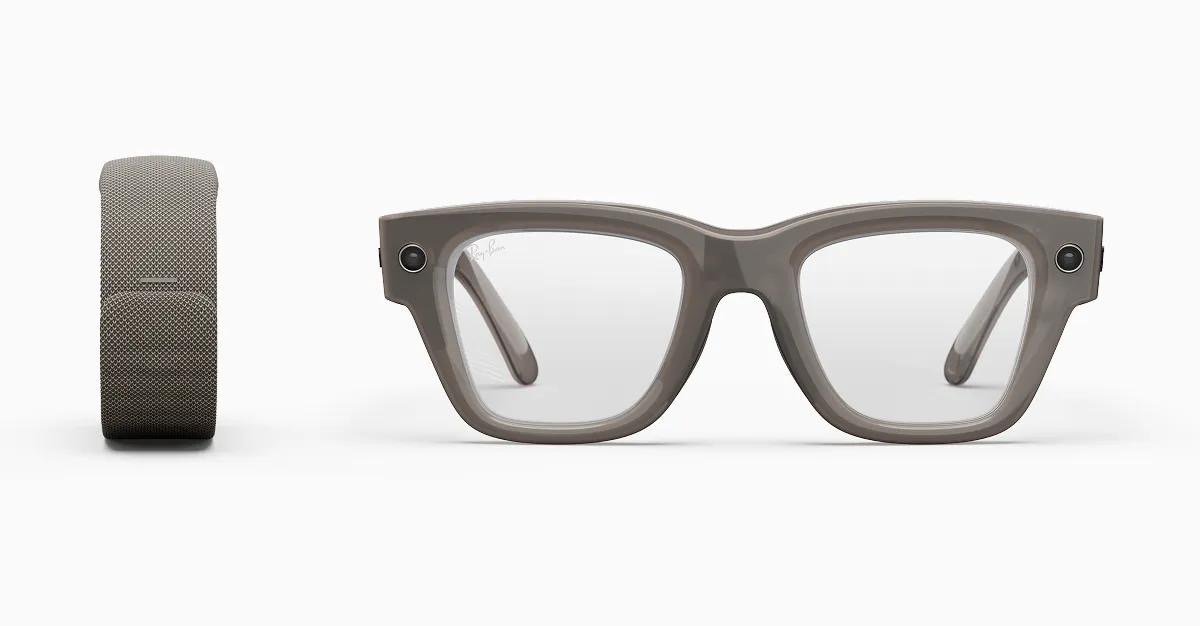
For organisations, this creates an immediate governance crisis. These glasses can be worn all day in sensitive spaces - boardrooms, labs, classrooms - without obvious signs of active use. How do you enforce "no recording" policies when the device looks like prescription glasses and controls are undetectable muscle contractions? Educational institutions face particular challenges as students and staff can now wear apparent normal eyewear while having constant access to AI assistance and covert recording capabilities. Organisations have seven days to decide: ban glasses entirely at the door, or rewrite privacy policies for a world where any eyewear might be streaming live to the internet.
Chrome's AI Takeover: When Your Browser Becomes Your Assistant | Infrastructure Shift 🌐
Yikes. Google just dropped the most significant browser update in Chrome's history, and it's not about speed or security - it's about making AI invisible infrastructure. Chrome's new Gemini integration puts AI assistance directly in the address bar, lets it work across multiple tabs, and soon will handle "agentic browsing" where AI can book appointments and order groceries on your behalf. With 3+ billion users, Chrome isn't just adding features; it's fundamentally changing how people interact with the internet by embedding AI at the foundational layer of web browsing.
The implications are staggering for educational assessment and privacy. When students can ask AI questions about any webpage directly from the address bar, or get help consolidating research across multiple tabs, traditional academic integrity becomes unenforceable. Detection is impossible because the AI interaction happens within the browser itself, not through external tools universities can monitor. Meanwhile, Google gains unprecedented visibility into every query, research process, and document interaction across billions of users. This isn't productivity enhancement - it's surveillance capitalism infrastructure being deployed under the guise of convenience. Educational institutions spent two years crafting AI policies while Google just made those debates irrelevant by turning the browser itself into an AI assistant that never leaves your side.
OpenAI Just Became the World's Largest School | Learning Disruption 🎓
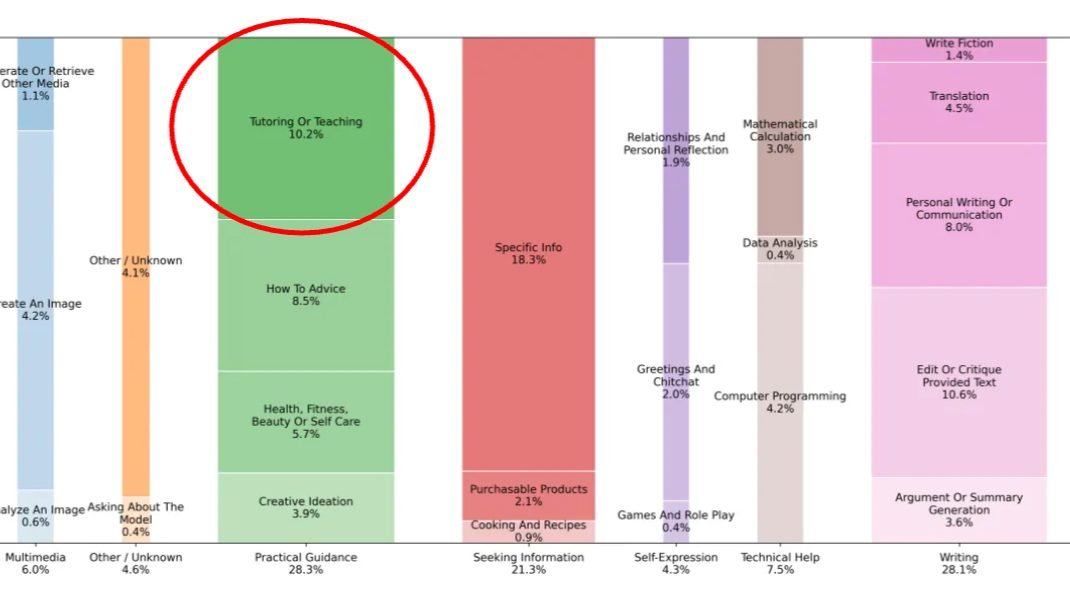
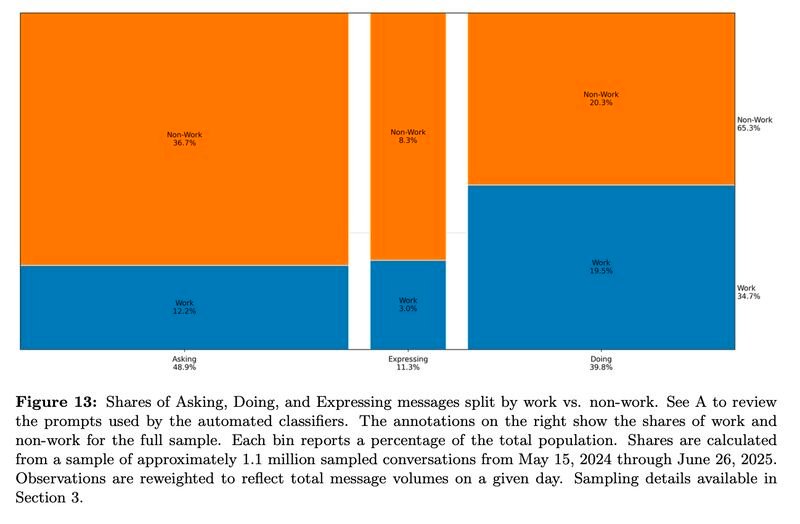
Fresh research from OpenAI reveals what should terrify every educator: ChatGPT has quietly become the world's largest school. The numbers are staggering - 700 million users sending 2.5 billion daily messages, with 10.2% of all interactions being tutoring requests. That's roughly 250 million educational conversations happening every single day, completely outside formal educational control. Nearly half of all messages come from users under 26 — exactly the demographic schools and universities are supposed to be serving. But here's the twist: these digital natives aren't just asking AI to do their homework. About 49% of all interactions are "Asking" messages (seeking guidance, explanations, advice) versus "Doing" (requesting completed tasks), and users consistently rate Asking interactions as higher quality, suggesting they're using AI as a thinking partner, not a cheating tool.
The global dimension makes this an existential crisis for traditional education. Usage is exploding fastest in low- and middle-income countries, where AI tutoring is filling gaps that formal education never reached. While schools and universities spent two years crafting AI policies and academic integrity frameworks, an entire generation — especially in the Global South — discovered that AI works better as a Socratic dialogue partner than traditional classroom instruction. Formal education didn't just miss the boat - they didn't even know there was a harbour…. ⛵
The Agent Economy: Why This Time Really Is Different | Labor Market Disruption 💼
AI agents are about to hit the job market with unprecedented speed and scope, creating disruption patterns unlike anything in economic history. Previous technological shifts unfolded over generations - the industrial revolution took a century to transform labor markets. AI agents can be deployed globally through software updates in hours. Google DeepMind researchers now warn we're "hurtling towards the creation of a sandbox economy" where AI agents transact "at speeds and scales far beyond human oversight," creating "systemic economic risk" and exacerbated inequality.
This creates what economists might call the "agent tax" - a premium on human-provided services as AI handles basic interactions for free. Speaking to a human customer service representative may soon carry a "human premium" that only wealthy consumers can afford. Meanwhile, skills obsolescence has accelerated beyond human adaptation timelines. An AI agent masters new capabilities through overnight software updates; displaced workers need months or years to retrain for equivalent skills. We're building an economy where human skill development cannot keep pace with AI capability expansion, leaving entire generations permanently behind the technological curve.
AI's Great Divide: Why Rich Countries Collaborate While Poor Countries Automate | Economic Inequality 💰
Fresh data from Anthropic's Economic Index exposes a troubling pattern hiding beneath AI's global expansion. While Claude adoption spreads worldwide, usage correlates directly with GDP per capita - a 1% increase in national income matches a 0.7% increase in AI adoption. The technology isn't democratising access - it's following existing economic fault lines. The behavioural split is even more revealing: in higher-income countries, people use Claude for collaboration and augmentation - working alongside AI as a thinking partner. In lower-income countries, users gravitate towards direct automation, essentially using AI to replace human tasks entirely. Corporate users have already made their choice, automating 77% of their Claude interactions compared to consumers who split roughly evenly between automation and collaboration.
The "godfather of AI" just explained why this divide was inevitable. Geoffrey Hinton, whose work laid the foundation for today's AI systems, put it bluntly - "It's going to create massive unemployment and a huge rise in profits. It will make a few people much richer and most people poorer. That's not AI's fault, that is the capitalist system". His observation about global responses is equally telling: "China takes it seriously. A lot of the politicians are engineers. They understand this in a way lawyers and salesmen don't". The data suggests we're not heading towards AI democratisation - we're watching the creation of a two-tier economy where the wealthy use AI to enhance their capabilities while everyone else uses it to replace their labour.

The uncomfortable truth is that while higher education debates AI policies, the world has already moved on. Students are living in an AI-native reality that makes traditional academic frameworks irrelevant, employers have eliminated the jobs universities prepare students for, and the platforms students trust can't even protect children from inappropriate AI interactions. Every week spent debating whether students can use ChatGPT for citations is another week your institution falls further behind a reality that's already here. The choice isn't whether to engage with this transformation - it's whether universities will lead it or be dragged through it by forces they refused to understand
Want more of this? Check out the latest episode of Adjunct Intelligence where, among other things, Dale Leszczynski and I dig into a fascinating new study on student perceptions of AI vs human feedback - with surprisingly positive results popping up for both. Well worth a look: