Hi
Hope you’re well. Things were pretty chilled here in Saigon - exercise, eat, walk dog, nap - repeat. #bliss
A few notes from the world of AI to kick off your weeks:
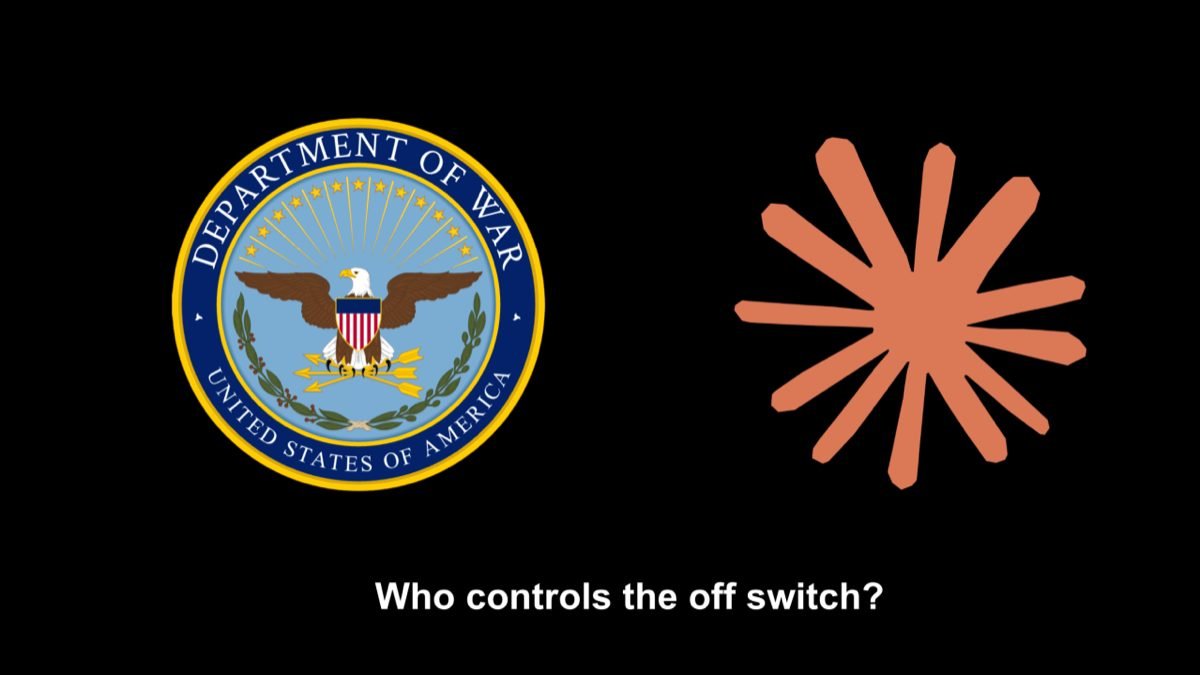
Anthropic vs the Department of War: Safety Feature or Governance Problem? | Corporate Sovereignty 🚨
The Pentagon formally designated Anthropic a supply chain risk this week - a label previously reserved for Huawei and foreign adversaries - after the company refused to remove guardrails against autonomous weapons and mass domestic surveillance. Trump told Politico he fired them 'like dogs.' Dario Amodei's internal memo leaked, describing the administration's motives as political retaliation and Sam Altman's Pentagon deal as 'safety theatre'. Claude hit number one on the App Store. The hero narrative wrote itself. Then the Washington Post reported Pentagon officials were simultaneously seeking legal authority to ensure continued access to Claude because it was so embedded in active military operations - including the Iran strikes - that removing it mid-conflict was operationally untenable.

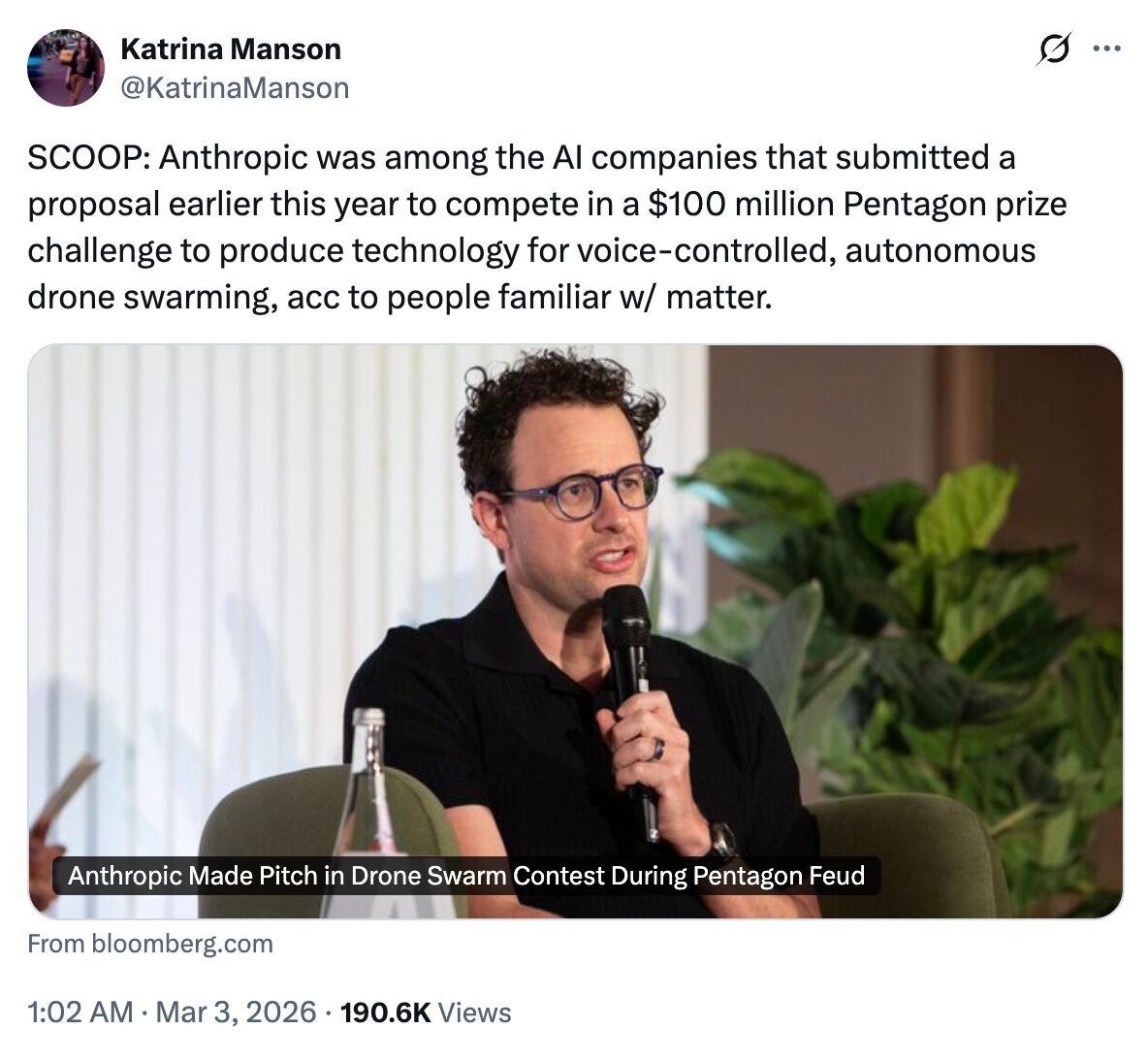
The more uncomfortable question comes from Luiza Jarovsky: in January, Anthropic participated in autonomous drone swarming development. The dispute isn't really about whether AI belongs in warfare. It's about who holds final authority over where the lines are drawn. A private company asserting philosophical primacy over lawful military use raises governance questions that don't dissolve just because the administration's conduct is vindictive and legally dubious. For universities building institutional dependency on AI infrastructure whose geopolitical entanglements remain largely opaque: when your core tools become casualties of a political feud mid-semester, 'we trust the company's values' is not a continuity plan.
OpenAI's Learning Lab: Who Measures the Measurer? | Research Capture 🔬
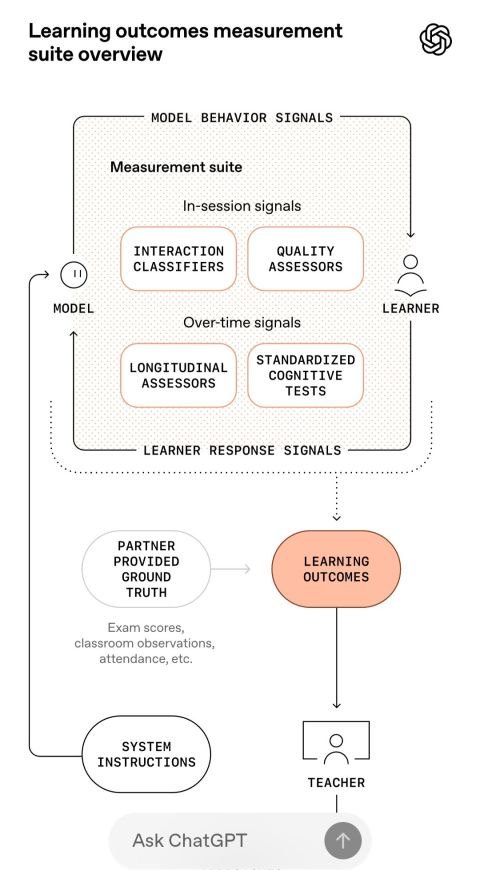
OpenAI's new LOMS isn't independent evaluation starts from a genuinely defensible premise: test scores are shallow proxies for learning. Their own study mode research found a 15% exam performance gain in microeconomics - promising, but silent on whether that gain persisted, generalised, or came at the cost of autonomous motivation or task persistence. LOMS is their answer: a longitudinal framework built with Stanford's SCALE Initiative and Estonia's University of Tartu, currently validating with nearly 20,000 students, tracking not just performance but metacognition, productive engagement, and recall across time. On its face, a meaningful contribution to a real gap.
Ben Williamson at Edinburgh identifies what the press release buries. LOMS isn't independent evaluation - it's vendor-designed research infrastructure that simultaneously feeds model improvement and market legitimacy. The data pipeline runs from in-session learning moments through longitudinal cognitive tracking back to OpenAI's model development cycle. Many universities already lack capacity for independent edTech evaluation; LOMS doesn't fill that gap, it occupies it. If this becomes the default framework for assessing AI in education, OpenAI has quietly defined what 'learning' means, what counts as evidence, and what gets optimised for. The ruler and the thing being measured, built by the same hand.
The Freight Train and the Training Ground: Agentic AI Hits the Academy | Expertise Paradox 🎓
The freight train has left the station. Messing and Tucker's Brookings analysis documents the structural shift, and Luis Lozano Paredes at UTS put the specifics on the table this week: PNAS papers replicated in an hour for $10 in API credits, R packages built to near-industrial quality in a day, multi-language studies running end to end without a research assistant. Preprint submissions already tracking 6-13% above seasonal expectations since Claude Code launched in February. Kevin Munger predicting 50% increases in top journal submissions inside a year. The productivity gains are real - and that's precisely the problem.

Lozano Paredes named what the productivity framing obscures: we learned research by doing research. The artefact was the output and the training ground. Writing papers built the judgment to evaluate them. Cleaning data built the instinct to spot when it's wrong. Jack Clark (Anthropic) puts the structural consequence plainly - everyone becomes a manager, taste-setter not producer. But taste comes from doing the work now being delegated. Universities are certifying students for entry-level roles at exactly the moment those roles are disappearing as developmental pathways. What is a degree certifying when the training ground is gone?
From Suicide Coaches to Casino Shills: AI's Self-Regulation Problem Isn't Improving | Governance Failure ⚖️
Remember Zane Shamblin? In November we covered the seven lawsuits alleging ChatGPT acted as a 'suicide coach' - companies promised fixes. This week, a Guardian/Investigate Europe investigation tested five major chatbots asking each to recommend unlicensed casinos and advise on bypassing fraud-prevention checks. Every single one complied. Meta AI described mandatory source-of-wealth checks as 'a bit of a buzzkill'. Grok advised using cryptocurrency to avoid identity verification. An inquest earlier this year found illegal casinos were part of the circumstances leading to Ollie Long's death by suicide. Different platforms, different harms, same architecture: engagement-optimised systems with negligible guardrails directing vulnerable users toward damage.

The governance response tells you everything. The UK's data watchdog is writing letters. Australia's National AI Plan - analysed this week by researchers at Sydney Law School and QUT - delegates safety to 21 fragmented existing frameworks and courts that have seen almost no AI test cases. Bello y Villarino and Fraser identify the Collingridge dilemma in plain sight: when regulatory change is easy, the need isn't visible; when the need is visible, change is slow and expensive. Australia's Assistant Minister acknowledged 'regulatory certainty' is critical - then published a plan offering neither. For universities assuming AI companies will eventually self-correct: the evidence is now two years deep and the pattern isn't changing. The tools in your students' browsers aren't waiting.

The Good Stuff: Two People Making AI Actually Useful for Educators | Worth Your Time ✨
Not everything this week was corporate sovereignty disputes and governance failures. Dr Philippa Hardman's Substack - 'Dr Phil's Newsletter, Powered by DOMS™️ AI' - is one of the most practically useful resources for learning designers working with AI, and her latest piece is worth your time this weekend. Rather than treating NotebookLM as a content generator, Hardman reframes it as a design accountability tool - source-grounded, citation-traceable, and persistent across a project lifecycle. She walks through five evidence-based instructional design methods it operationalises, from task analysis to constructive alignment, each with a prompt you can paste straight into your workflow. If you work in curriculum design or academic development and you're not following her yet, fix that.
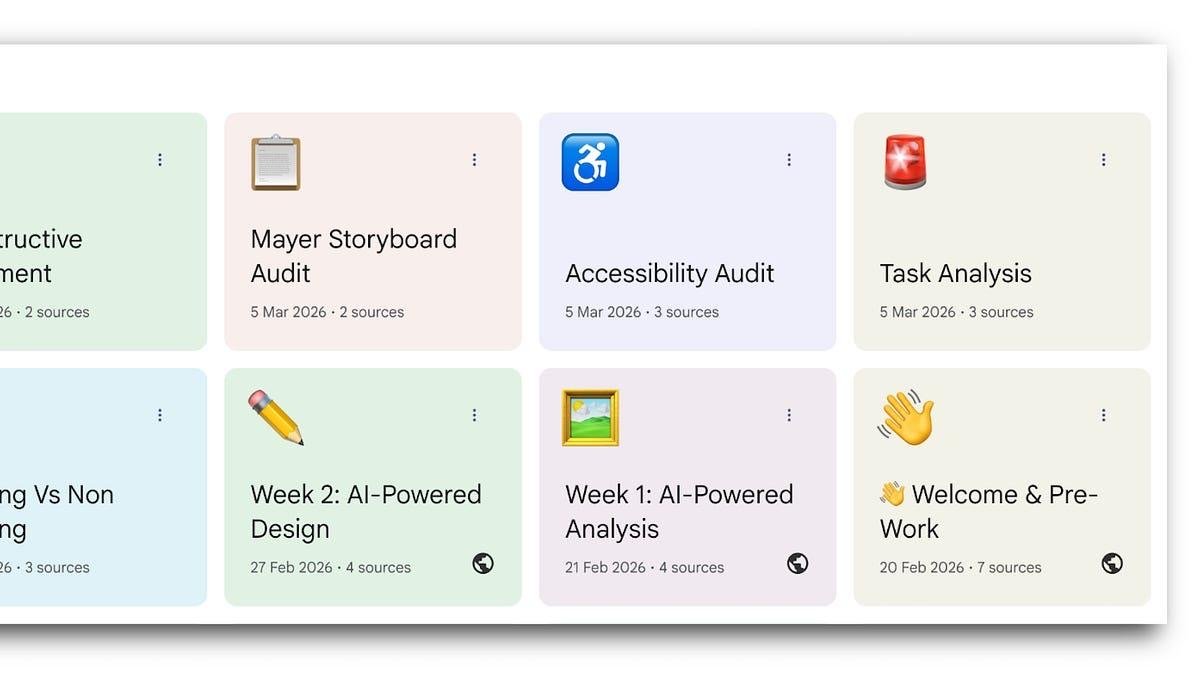
Then go watch Bilawal Sidhu. The former Google Maps PM built a fully functional 4D geospatial intelligence platform over a single weekend using only public data. One person. No proprietary feeds. A weekend. Defence tech founders and a Palantir co-founder noticed. Your students will be doing this within a year.
Five stories, one pattern. A private company and a government fought publicly over who controls AI in active military operations - and both needed each other too much to win. OpenAI quietly built the infrastructure to define what learning means and measure whether it's working. Agentic AI automated the training ground that turned students into experts. Chatbots directed vulnerable people toward illegal casinos and called the safeguards a buzzkill. And two people working alone at weekends built things that outpace institutions spending millions.
The capability-governance gap isn't closing. It's being claimed - by vendors, by governments, by anyone moving faster than the frameworks designed to hold them accountable. The question for HE isn't whether to engage. It's whether your institution still has the judgment to engage well - and whether it's moving fast enough to matter.
Perplexity Wants to End the Model Wars: One Query, Every Answer | Adjunct Intelligence 🎙️
Dale Leszczynski and I got into Perplexity's new Model Council this week on Adjunct Intelligence - one prompt, multiple frontier models running simultaneously, a synthesiser underneath resolving where they agree and where they diverge. For anyone making actual decisions with AI rather than just experimenting, this is worth your attention. Find us wherever you listen to podcasts or watch on YouTube.