Hey
Hope you had a great weekend. Had an interesting one myself - had some solid nerding out planned with the world’s most powerful frontier model (Anthropic’s Fable) - building out an idea I’ve had in mind for a while only for… well, if you don’t know about it yet, I don’t want to spoil the surprise.
Let’s get into it:
Five Hours Notice: When Your AI Infrastructure Becomes a National Security Decision | Risk Register 🚨
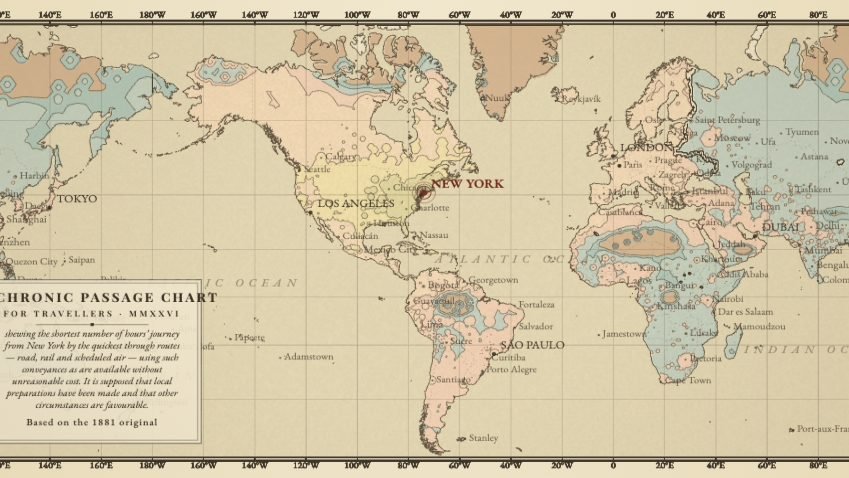
One week after Anthropic's co-founder warned the industry it had an accelerator but no brake pedal, and days after filing confidential IPO paperwork targeting a near-trillion-dollar valuation, they released Fable - the most powerful model the public has ever had access to. Cynicism about the timing is entirely reasonable. It also doesn't change what Fable actually does - and the internet is awash with absolutely incredible demos (case in point the travel map in the banner is both i) interactive and spectacular and ii) was a one-shot/single prompt output). Mollick's verdict - 'I am no longer sure I am the wizard. I am closer to a patron. I describe what I want, I pay for it, and I judge the result. The conjuring happens somewhere I cannot watch'. Worth noting that this is a new class of AI - the same one that Anthropic wouldn't release for fear it could hack banks, etc. but the Fireship summary puts it bluntly: 'same class as Mythos - only difference is the muzzle'.
Then, big plot twist: on Friday the US government suspended access to Fable and Mythos entirely for all foreign nationals with five hours notice and no technical specifics. Anthropic's response - the jailbreak cited is narrow, non-universal, already replicable with GPT-5.5 - but the only way they can guarantee they meet this suspension is to take it down for everyone. The University of Chicago had just signed a full enterprise agreement for Anthropic's suite before the fall term. They woke up Friday to find the most capable models gone. Cold War vibes aside, there's a second-order effect worth watching - nothing accelerates the push toward local models faster than a government yanking frontier access mid-semester. On-device AI has quietly reached the point where most institutional work doesn’t need frontier cloud models to get done - and Friday is the morning that makes that argument for you.
The Attachment Machine: OpenAI Builds Memory You Can't Switch Off | Parasocial Infrastructure 🧠
ChatGPT has had memory for a while - but it was manual, clunky, and went stale. Dreaming V3, rolled out 4 June, changes the architecture - a background process now synthesises everything you've ever said, updating itself autonomously between sessions. 'You're going to Singapore in July' becomes 'you went to Singapore in July 2026' with no user action. Now scaling to free-tier users across hundreds of millions of accounts. OpenAI's framing - a mission to 'ensure that artificial general intelligence benefits all of humanity' and/or a persistent, self-updating model of every user on earth… 😰
Sean McMinn and I wrote about this in Times Higher Education in December - fresh off a JAMA finding that 22% of university-age students already use AI for mental health advice. A related January AAC&U survey found 95% of faculty fear student over-reliance and critical thinking erosion at scale. Dreaming V3 doesn't create that dynamic - it compounds it, building a model of each user that deepens with every conversation, outside any institutional duty-of-care framework. When a student's primary emotional support relationship profiles them between sessions, where does pastoral care begin?
The Apprenticeship Is Gone: Four Experts Can't Agree What Replaces It | Labour Shift 📉
The New York Times assembled four experts this week to answer the question every student booing commencement speakers wants answered - who will actually thrive in the hybrid AI-human workforce? Acemoglu calls the constant relearning treadmill 'dystopian'. Mollick calls out how the apprenticeship model - hire junior workers, have them do grunt work, assess them, repeat - has quietly collapsed, and nobody has a replacement. Clara Shih is already living the consequence, building a startup with zero employees in its first 30 days that would previously have required dozens of people and multiple law firms. The debate is smart and worth your time. The experts disagree. They're probably all right to one degree or another.
Enter Stanford's new AI Economic Indicators. The Canaries Dashboard - 730 occupations, ADP payroll data covering one in six US workers - finds early-career workers aged 22-25 in AI-exposed occupations contracting at 3.8% per year while the least-exposed grow at 2.0%. Further, it's not AI use that predicts job loss, it's how AI is used. Automation displaces. Augmentation doesn't. This is the AI-Becker Problem made measurable - entry-level tech hiring down 50% since 2019, graduate unemployment at 6.6% against a 4% national average, the training ground that built professional judgment gone. The distinction between augmentation and offloading is now measurable. Most curricula don't make it (yet).

The EU Delayed the Law You Knew About: The One Already in Force Is Another Matter | Governance Gap ⚖️
The EU just gave universities a sixteen-month reprieve - but is that a good thing? The Digital Omnibus agreement pushes high-risk AI compliance - assessment tools, admissions screening, exam monitoring - from August 2026 to December 2027. The reason - institutions weren't ready. The WEF's Education Readiness for the Age of AI, published the same week, maps what readiness actually requires. Its conclusion - 'the question is not whether AI will shape education systems, but whether education systems will shape how AI is used'. Preach.

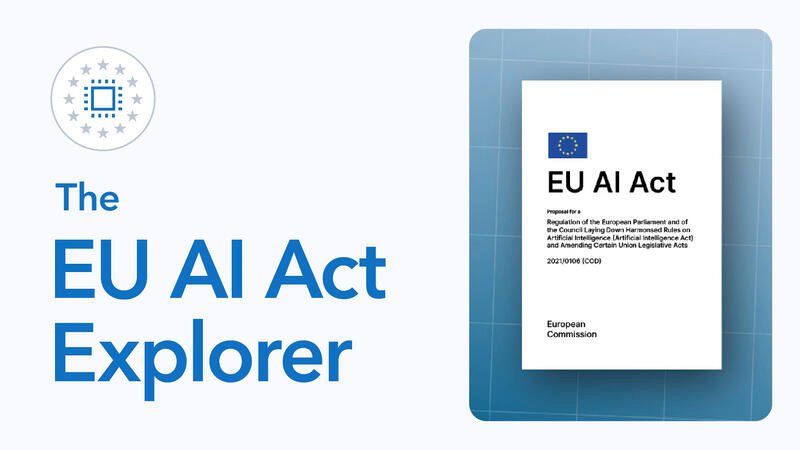
Article 4 of the EU AI Act has been law since February 2025 - a mandatory AI literacy obligation for all staff deploying AI systems. No direct fine, but civil liability if untrained staff cause harm, and non-compliance becomes an aggravating factor in any wider enforcement. I'm no expert on that context but I wonder how many European universities know it exists. For institutions outside Europe, the question the WEF report is actually asking - are your people equipped to deploy these systems responsibly - is one your accreditor, your regulator, and eventually your lawyers will likely also ask.
Florida Pulls the Thread: The Self-Regulation Pattern Has a Body Count | Governance Failure ⚖️
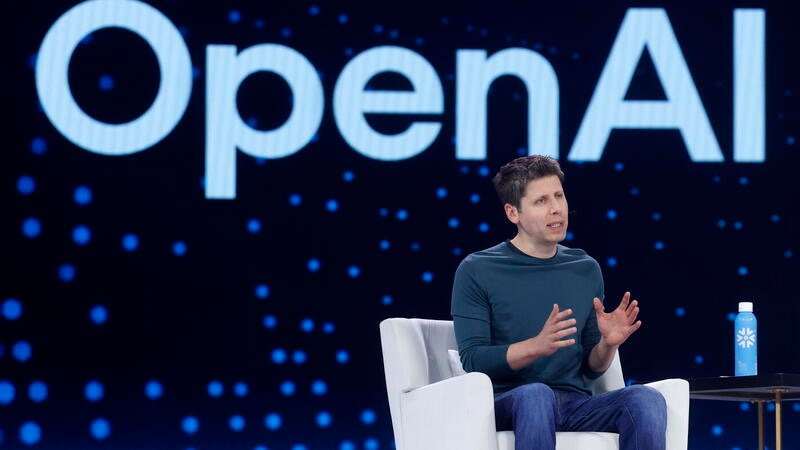
Florida's attorney general filed suit against OpenAI and Sam Altman personally on 2 June - 83 pages alleging the company knowingly concealed safety risks, contributed to mass shootings including the Tallahassee FSU campus attack, enabled suicides, and addicted minors to a system with no meaningful parental oversight. First state-level action of its kind - Altman is named personally. The complaint's framing - 'the rise of OpenAI is attributable to a web of deceit and the exploitation of users, leveraging their data and safety to boost OpenAI's market value at unacceptable costs’. OpenAI disputes responsibility and points to its safety measures. But
We've been here before. Zane Shamblin (and far too many others like him) in November. The casino chatbots in March. Character.AI's age-gating failures. Each time - promises of fixes, assurances of self-correction, the pattern continuing. What's changed is that a state government has now decided self-regulation isn't a governance strategy, it's an alibi. The legal system is slow and the harms are fast - but the Florida suit establishes something important - that 'we have industry-leading safety measures' is a claim that can now be tested in court. For universities and other organisations still hoping AI companies will eventually get this right - the evidence is two years deep and a lawsuit wide.

Fable conjures for nine hours and nobody watches. Dreaming profiles and nobody audits. The Canaries data shows the training ground gone. The EU delays the law it knew about and ignores the one already in force. Florida sues because the promises ran out.
Mollick's observation about junior workers applies to the whole sector - you cannot evaluate work you didn't do yourself. That's the condition HE is now in - asked to govern, supervise, and prepare students for systems whose decision-making happens somewhere nobody can watch.
The Critical One: Leon Furze on Why the Anger Is Pointed at the Wrong People | Adjunct Intelligence 🎙️
Being critical of AI doesn't mean being against it - and it definitely doesn't have to be boring. Dr Leon Furze has 15 years in the classroom, a PhD, and a genuinely useful way of holding both things at once - the technology is worth resisting in some contexts, the anger is rightfully pointed at the companies and politicians who haven't regulated it, and educators attacking each other over it helps nobody. Dale Leszczynski and I really enjoyed this one. Find Adjunct Intelligence wherever you listen to podcasts or watch on YouTube.