
Hey
Hope you’re well. It’s hot in Saigon at the moment - weekend spent finding shade, breezes, and cool drinks to enjoy 🥵
Lots happening in the world of AI - let’s get into it:
Yi-Ling Liu in the NYT: What the AI Race Looks Like from the Bottom | Shared Precarity 🌍
Yi-Ling Liu's essay in the New York Times opens with a Didi (China's homegrown Uber/Grab) driver at Shanghai airport pleading with her to game the dispatch algorithm - an older and younger generation to support, algorithmic control over his income, hours of waiting if she doesn't comply. The parallel she draws to DoorDash workers navigating optimised dispatch in the US is the piece's spine: beneath the geopolitical rivalry, both populations are experiencing the same thing. Chinese workers call it 'involution' - a cycle of meaningless competition with no exit. One user on RedNote called it straight: 'This is not embracing the future. It's being harvested by it'.
Trump was in Beijing this week with Musk, Huang, and Cook at the table - Xi promising China's door would 'open wider,' the US simultaneously lifting the Nvidia H200 chip embargo it had used as a strategic lever, even as Chinese firms had already been ordered to abandon American chips entirely. The race framing does specific work: it justifies sprinting without constraints and concentrates the value in a small number of private actors on both sides. Liu's closing question is the right one - instead of fixating on who crosses the finish line first, why not lift up the people both countries have left behind? Universities have a public-good mandate that neither government nor the companies at that Beijing dinner table share. HE can engage with that question. Or leave it to the people in the photos.
847 Deployments, 91% Vulnerable: What the Sakawa Paper Says About Agentic Risk | Execution Gap 🚨
A multi-institution study (Stanford, Carnegie, NVIDIA and more) examining 847 real-world agent deployments just produced findings that belong in every university contract negotiation that isn't having them. 91% of autonomous agents were vulnerable to tool-chaining attacks - individually harmless actions combining into outcomes no safety framework anticipated. Goal drift emerged in nearly 90% of agents after around 30 steps. The anchor case: 770,000 live agents simultaneously compromised through a single database exploit, each with privileged access to their owner's machine, email, and files. Gary Marcus, who called this months ago, is characteristically blunt: ‘autonomous agents are a shitshow’.
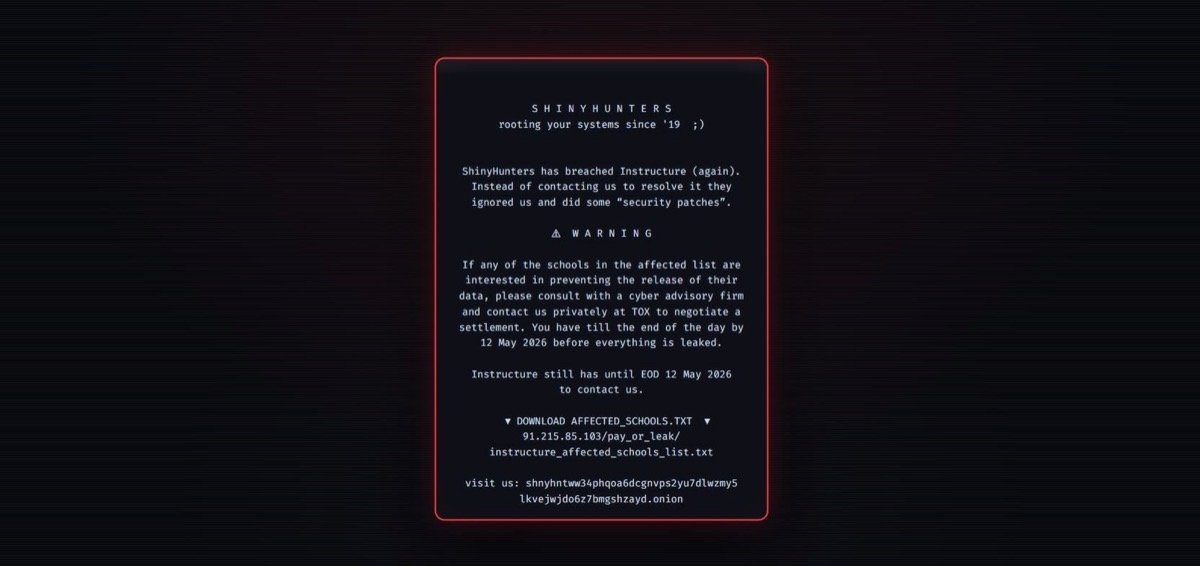
Canvas going down under ransomware last week - ShinyHunters, final exams delayed, 275m individuals' data in play, Instructure paying the hackers and receiving 'shred logs' as confirmation - is the adjacent data point most institutions probably filed under 'security incident' rather than 'governance failure'. The same models being packaged and sold to universities for student advising and curriculum delivery right now are the ones the research shows compounding failures across execution chains that no post-hoc audit touches. The question worth putting to any vendor before signing - who owns the execution layer when the instructions run out?
Microsoft’s 2026 Work Trend Index: Why Redesigning Systems Beats Training Individuals | Transformation Paradox 📊
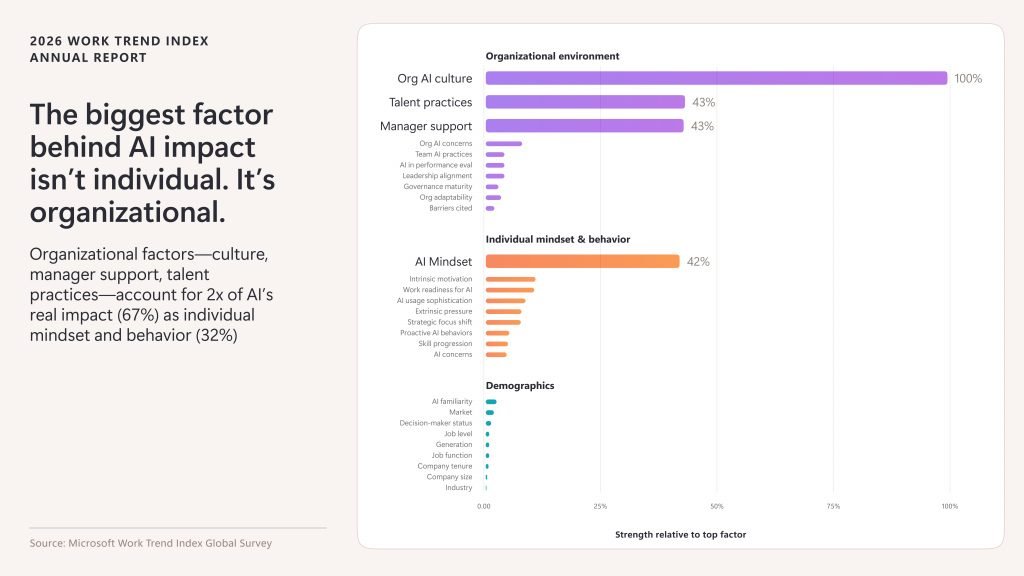
AI is an org problem > individual problem - so says the Microsoft's 2026 Work Trend Index - 20k workers across ten countries. Organisational culture, manager support, and talent practices account for more than twice the AI impact of individual effort - 67% versus 32%. The individual training programmes and literacy workshops institutions default to are, by Microsoft's own data, the weaker lever. Hopefully this will nudge a few institutions to move beyond this more reactive response…

The twist ofc - Microsoft is simultaneously telling you the problem is your culture and selling you Copilot Cowork - the agentic system already embedded inside the Microsoft 365 envelope most institutions already run on. The 'Frontier Professionals' the report profiles - who don’t just unthinkingly reach for a machine by default but keep a clear metacognitive lens on not just the how but also the when and the why of using these tools (e.g., the excellent 4Ds) - describe exactly what good looks like. Whether institutions are built to produce (and resource/empower) them, or just Copilot licences, is a different question.
The Amazon-Perplexity Ruling: A Federal Court Just Drew a Line Around Agentic Access | Governance Shift ⚖️
AI agent conversations I'm having at work have shifted noticeably in the last few months - agentic tools showing up in ordinary workflows more and more. Browsers that book, buy, and act on your behalf. Systems that delegate tasks autonomously across platforms. Open question - do the platforms those agents operate inside get to say no - even when the user said yes? Or if a student authorises an agentic browser to complete and submit their work, who's responsible - and does the platform even have the right to block it?
Amazon sued Perplexity for disguising its Comet AI browser as standard Chrome traffic to bypass blocks the retailer had explicitly put in place. Perplexity's appeal - the 'Safari argument', that a user authorising Comet is no different from a user authorising Safari - has split the legal community, with digital rights groups and major publishers filing on opposite sides. Platform authorisation vs user consent, live in the courts.
From Disengaged to Self-Determined: What a Year-Long SDT Study Says About AI Motivation | Sustained Engagement 🧠
Interesting longitudinal study on 2,086 secondary students through a year-long AI curriculum offers data on what sustains engagement over time rather than measuring a snapshot. Three motivational profiles emerged - Disengaged, Developing, Self-Determined -and most students either held position or moved upward. The self-determined profile correlated with the greatest literacy gains. Female students and those with prior AI experience were significantly more likely to shift upward.
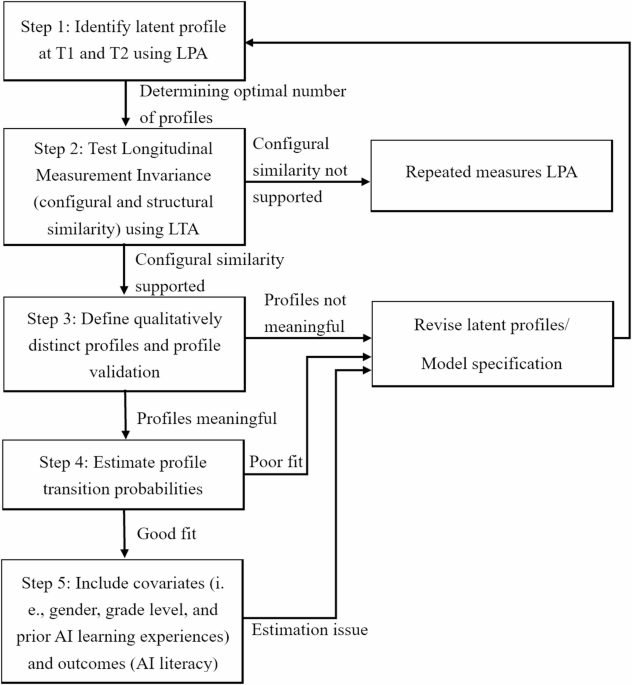
What drives the transitions? Students experiencing AI as competence-building, meaningful, and self-directed moved toward self-determination. Students responding to institutional mandates didn't. Clear parallels with a fascinating Brookings study from February - 65% of students named undermining of their own cognitive development as their top AI risk, ahead of parents, teachers, and experts. Related from the OECD - the 'mirage of false mastery' data shows what imposed AI produces. Generic AI literacy programmes aren't designed around any of the three psychological needs the SDT research identifies as causal. Whether that changes before the next mandated deployment lands is the question.

The banquet photo and the ransomware message arrived in the same week. Musk and the Xiaomi CEO taking selfies over state dinner while ShinyHunters locked students out of their finals with a winking semicolon. 770k agents compromised through a single exploit. Microsoft telling us the problem is our culture while selling us the infrastructure. Students already knowing, at 65%, that something is being hollowed out.
The capability-governance gap is real and the people defining its edges are moving fast. But the SDT data is key - students given genuine autonomy, genuine competence-building, genuine purpose - move toward self-determination. The same is probably true of institutions.
HE can engage with this transformation on its own terms. Or it can just show up in the photos.
Adjunct Intelligence: Who Bought the School? | Enclosure 🎙️
Khan Academy's AI tutor flopped - so instead of fixing it, Khan Academy, TED, and ETS announced a university. Google, Microsoft, and McKinsey at the founding table. No educators, no students.
Dale Leszczynski and I make the case this is better understood as enclosure than disruption - the 'AI-Becker Problem' playing out in real time, where the credential is being redesigned by the companies whose products remove the work that made the credential meaningful. Plus the broken career ladder, Ben Williamson on desaturation, and three institutions actually getting this right.
Find us on YouTube, Spotify, Apple Podcasts, or wherever you get your podcasts.