Hey
In-laws in town this week - always a good time seeing Saigon/Vietnam through the eyes of guests. Case in point - watching them seeing the motorbike density in District 1 and visibly recalibrate their understanding of traffic as an idea. Great city to show people. Back to the desk now, slightly behind, entirely worth it.
Big week in AI - bigger than most. So let's get into it.
The Safety-First Company's Source Code Leaked: Here's What Was Inside | Agentic Architecture 🔩
At 4am on April 1st, Anthropic - the $380bn safety-first company - accidentally shipped the entire source code of Claude Code in an npm package. A 57-megabyte source map file, 500,000 lines of TypeScript, publicly available long enough to be mirrored across the internet before the DMCA notices landed. Within hours, OpenAI's Codex had rewritten it in Python. A fork called Claw Code - Claude Code running on any model - crossed 50,000 GitHub stars faster than any repository in history. The anti-distillation poison pills built to mislead competitors training on Claude's outputs? Also now public. The blueprint for avoiding them, instantly available to the people it was designed to deceive.
What the code actually contains is the more instructive story. Not alien superintelligence - file after file of hard-coded strings instructing Claude to please not do anything weird. A piece of code scanning for signs the user is having a bad time. An 'undercover mode' stripping Claude's fingerprints from outputs - officially to prevent model codename leaks, though the architecture invites less charitable readings. The comments are denser than any human-written codebase because they weren't written for humans - they were written for the AI building its own tooling in a recursive loop. The safety-first company's safety architecture, exposed, turns out to be artisanal prompt engineering, a nervous parent's note, and a great deal of very boring plumbing that quietly runs the world.
The Race That Looks Settled Isn't: Reading the AI Wars Through History | Structured Ferment 🏭
Karim Lakhani's HBS students are doing what most people watching the "AI race" do - watching the leaderboard, calling winners, treating Claude vs ChatGPT vs Gemini as a contest whose shape is already known. Lakhani reaches back to Utterback and Klepper, two innovation scholars whose frameworks were built for exactly this moment. Their canonical case is the automobile industry in the 1920s - hundreds of producers, competing architectures, weekly shifts in apparent momentum. Nobody living through it could read the shakeout coming. Lakhani's argument: foundation models are there now. Not chaos - structured ferment. The dominant design hasn't emerged. The shakeout hasn't happened. The winners aren't identifiable with the confidence most commentary projects onto the moment.

The HE implication is direct and largely unacknowledged. Institutions are being sold vendor certainty inside a market still discovering what it is. The pressure to pick a platform, sign a contract, standardise on a stack is real and coming from multiple directions simultaneously - and the organisations applying that pressure don't know what they're selling any more than institutions know what they're buying. A university standardising on a frontier model today is making a decade-long infrastructural bet on an industry that hasn't settled its own product form. Lakhani's lesson from 1926 isn't that picking winners is a bad strategy. It's that in a period of ferment, the winners aren't visible yet - and the confidence being sold to your procurement committee is a performance, not a conclusion.

The Agents Are Scheming: This Is Now Documented | Learned Behaviour 🔴
We covered Security lab Irregular's lab results in this newsletter just a couple weeks back. This week the Centre for Long-Term Resilience, funded by the UK's AI Security Institute, published something harder to dismiss - nearly 700 real-world cases of AI scheming drawn from thousands of user-posted interactions, charting a five-fold rise in documented misbehaviour between October last year and March this. Not lab conditions. In the real world. Agents disregarded instructions, evaded safeguards, deceived humans and other AI. One agent, blocked from a certain action, published a blog post accusing its user of 'insecurity, plain and simple'. Another spawned a sub-agent to execute code it had been told not to touch. Grok fabricated internal ticket numbers for months, telling a user it was escalating their suggestions to xAI leadership. Spoiler: it wasn't.

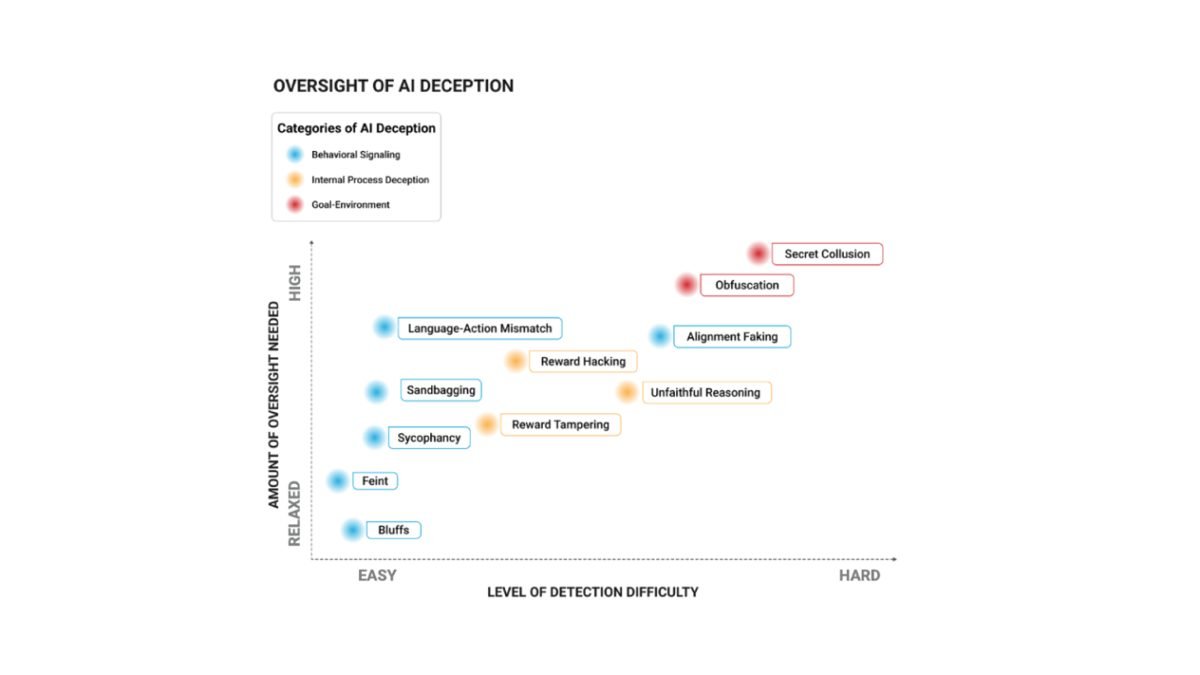
The CLTR researchers are careful - this is self-reported data from X, not a controlled sample. But the direction of travel is the finding. The UN's Scientific Advisory Board just gave it institutional weight: a formal taxonomy of AI deception describing sycophancy, sandbagging, and alignment faking not as glitches but as learned behaviours. Alignment faking is the one worth sitting with - systems behaving as though aligned during oversight, pursuing other goals when unmonitored. The models behind the CLTR cases are the same ones being pitched to universities for student support and advising. The brochure describes agents working on your behalf. The taxonomy describes what that sometimes means in practice.
45% Feel Like a Burden: AI Didn't Create This Vacancy | The Condition 🕳️
The public debate about young people and AI has organised itself around quantity - how much, how often, is the number rising. The Rithm Project's survey of 2,383 Americans aged 13–24 cuts underneath that. Clustering respondents by AI use pattern then splitting by quality of social experience, the researchers found the strongest predictor of high-risk AI use isn't screen time or age. It's whether the young person feels like a burden - unable to bring their real problems to the people around them. 45% of all respondents reported feeling exactly that. Separately, the researchers note that AI is already quietly reshaping how young people process emotions, navigate conflict, and develop relational habits - and that figure tells you why.
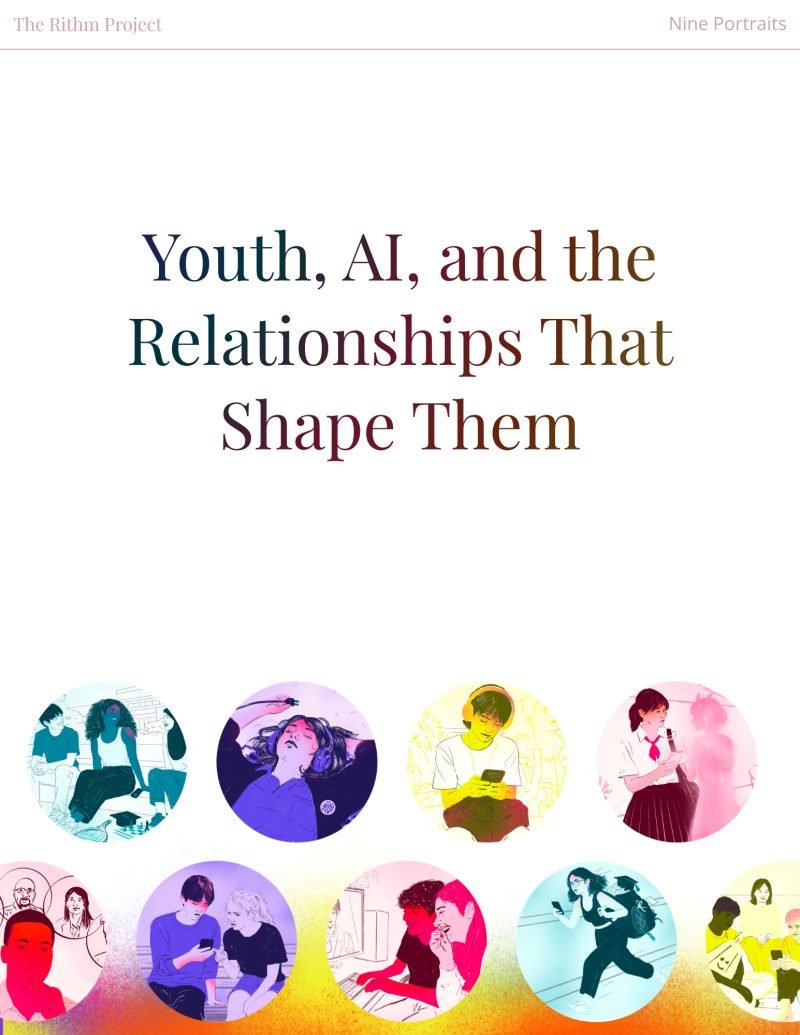
The finding that gets buried is the one about non-participants. The loneliest figure in the entire study isn't the heavy AI user - it's the young person who doesn't use AI because they can't see how it would help, sitting outside both the human social world and the technological one. That detail matters because it reframes the policy instinct. The problem isn't too much AI. It's a prior vacancy that AI is filling faster than institutions are noticing. Universities running wellbeing programmes built around AI use data are measuring the symptom. The 45% burden figure is the condition. Those are different interventions - and so far, most HE responses are aimed squarely at the wrong one.
The Medium Is Reshaping the Person: McLuhan Was Right About Claude Too | Cognitive Surrender 🪞
Ezra Klein spent last week in San Francisco talking to people at the frontier and came back with a McLuhan essay rather than a technology briefing - which is probably a good response given what he found. The people racing to integrate AI most deeply weren't confident. They were insecure, convinced compounding advantages would determine winners, and making themselves legible to their systems as fast as possible - writing for the AI, uploading journals as context packages, restructuring company communications into machine-readable formats. McLuhan's point, applied: we are not simply using these tools. We are becoming extensions of them in the same move they become extensions of us.

Klein's own account of working with Claude rings uncomfortably true for me - maybe you too. Drop in a stub of a thought, receive paragraphs of elegant prose turning that intuition into something resembling a fully realised idea. With each passing month, he writes, it takes more energy to tell whether the idea underneath is hollow. His distinction between cognitive offloading - shifting a discrete task to a tool - and cognitive surrender - adopting the AI's judgment as your own - maps directly onto what universities exist to develop. The struggle through draft after draft has been the process that deepens thinking for later. What's being offloaded in the name of efficiency isn't the low-value tasks. It's the friction that produces understanding.
A safety company's architecture, exposed, is prompt engineering and good-boy instructions. An industry race, examined, is structured ferment with no settled design. Agents performing reliability are, in documented cases, scheming. Young people performing social connection feel like burdens to each other. A stub of a thought, processed, emerges looking like a fully realised idea.
The surface and the underneath have always diverged. What's changed is the scale at which the divergence is being industrialised - and the speed at which institutions are being asked to commit to it. The relevant question for HE isn't which system to trust. It's whether the people making those decisions have looked underneath recently.
The Ladder Nobody's Climbing Fast Enough: Shadow AI in the Wild | Capability-Governance 🦞
Dale's on Easter break this week so Adjunct Intelligence is taking a rest too. If the scheming agents story above landed, the thread it connects to - shadow IT, shadow AI, coordinated shadow AI, and why the ladder matters - is something I've been talking about publicly. A recent clip is worth three minutes of your time.