Hi
Hope you had a wonderful weekend. It's a long one here in Vietnam with the 80th anniversary of Vietnam's independence and a four-day weekend! #lovingit
Anyway, let's get amongst it with the latest from the world of AI:
Anthropic Just Exposed What Professors Really Do With AI: The Numbers Don't Lie | Faculty Reality Check 📊
Anthropic just released their second Education report and it's likely to make your next faculty meeting very uncomfortable. They analysed 74,000 conversations from HE professionals and discovered that 48.9% of grading-related conversations showed automation patterns - meaning nearly half the time professors use AI for grading, they're letting the machine do the work directly. Plot twist? Faculty rated grading as the area where they felt AI was least effective. Translation: professors are automating the thing they think AI sucks at most. 😲
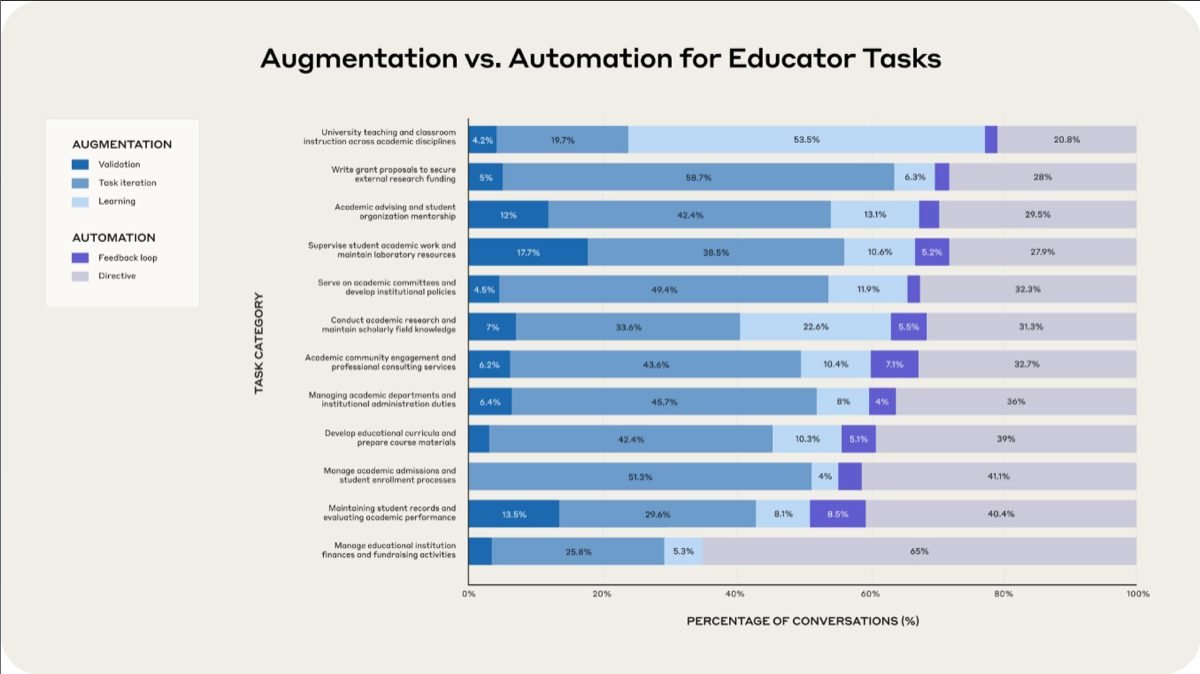
That said, the same faculty automating grading are also building interactive chemistry simulations, automated grading rubrics, and data visualisation dashboards with Claude Artifacts. What used to require technical teams and massive budgets now just becomes a quick chat with a machine. Credit where it's due: Anthropic actually did this research right - partnering directly with Northeastern University instead of tech bros swinging in thinking they know education better than educators (kudos Drew Bent and co.The data doesn't lie: faculty automate grading more than any other task while rating it as AI's least effective application.The data doesn't lie: faculty automate grading more than any other task while rating it as AI's least effective application. 👏). But here's the uncomfortable truth this data reveals: the question isn't whether professors should automate grading - it's whether they'll admit they already have. #doaskdotell
Students Don't Trust AI But Can't Stop Using It | The Addiction Nobody Talks About 🧠
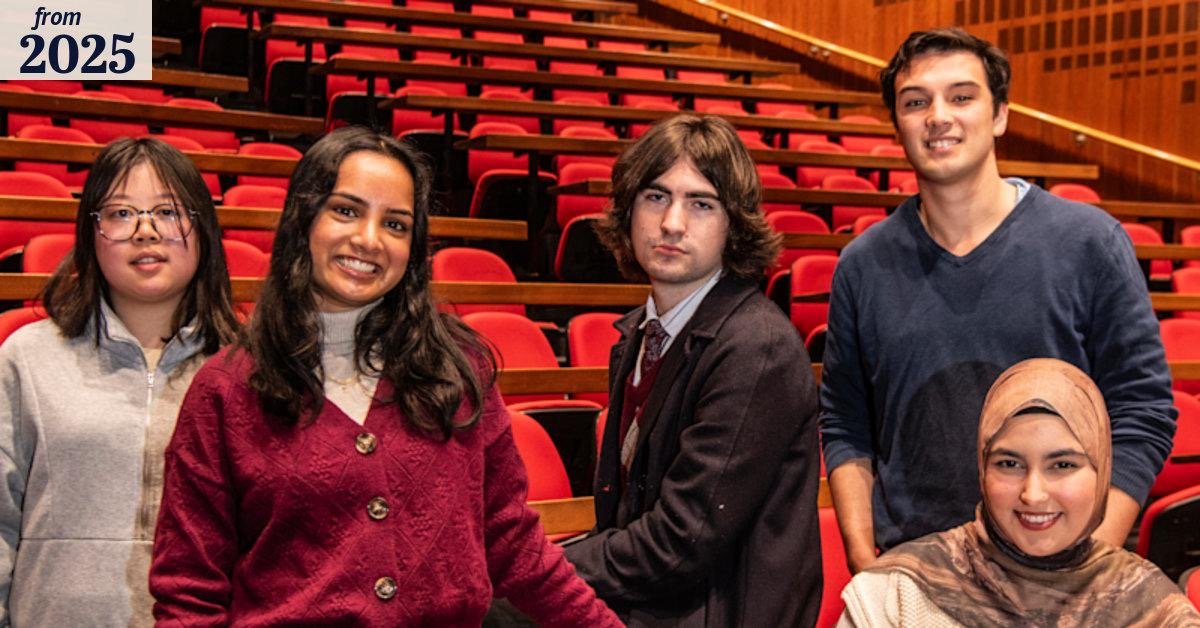
I cite the Student Perspectives on AI in Higher Education study a LOT - 8,000+ students from four Australian universities because, as the authors state, “better institutional responses to AI are informed by student voice”. And the cognitive dissonance here is staggering: 71% believe AI increases cheating, 91% worry about breaking university rules, yet 83% use AI for studies anyway. Only 27% trust what AI generates, but 85% say it makes things easier. Only 32% feel they get effective guidance on AI use.
But the real story isn't in the statistics - it's in what students actually say when you listen. "Why would you, if you can just use ChatGPT to do it?" ask first and second-year students. "Am I really doing my job, or am I using AI to just... replace myself?" worries another. When one student raised concerns about widespread AI use violating university policy, the tutor's response was "at least they're doing the work". The numbers show widespread cognitive dissonance; the voices reveal existential crisis. Students aren't just using AI despite their concerns - they're questioning their own purpose while doing it.
Google's Nano Banana Just Made Creative Skills Optional? 3.9 Cents Per Professional Image | Visual Apocalypse 🍌
Google's new "Nano Banana" (Gemini Flash 2.5) image generator is uber-cheap (costing 3.9 cents per image) and delivers professional-quality edits that would have required years of expertise just months ago (seriously, it’s awesome - Fireship breakdown here and samples here). The character consistency is insane and the options it opens up for editing are just mind-boggling. Creators are calling it the "Photoshop killer" and building entire apps around it in minutes - seems like the hype might be justified this time…
But all that said, the real disruption might be yet to come. Turns out this thing has an emergent spatial intelligence that understands geography, architecture, and real-world contexts. Upload a Google Maps screenshot and ask "what does the red arrow see?" - it generates realistic street-view perspectives from that exact location (something that Dale Leszczynski blew my socks off with on the latest episode of Adjunct Intelligence - below). I have been waiting for the moment that Google start leveraging all of their data from Maps, YouTube (2.5m daily uploads), the entire GSuite ecosystem, Android and more - this might be a sign that the giant is waking up… wild times. The question isn't whether this disrupts creative education - it's whether institutions will acknowledge that "learning the tools" is no longer the point when the tools no longer require learning.
Ethan Mollick Just Explained Why GPT-5 Fizzled| Mass Intelligence Era 🌍
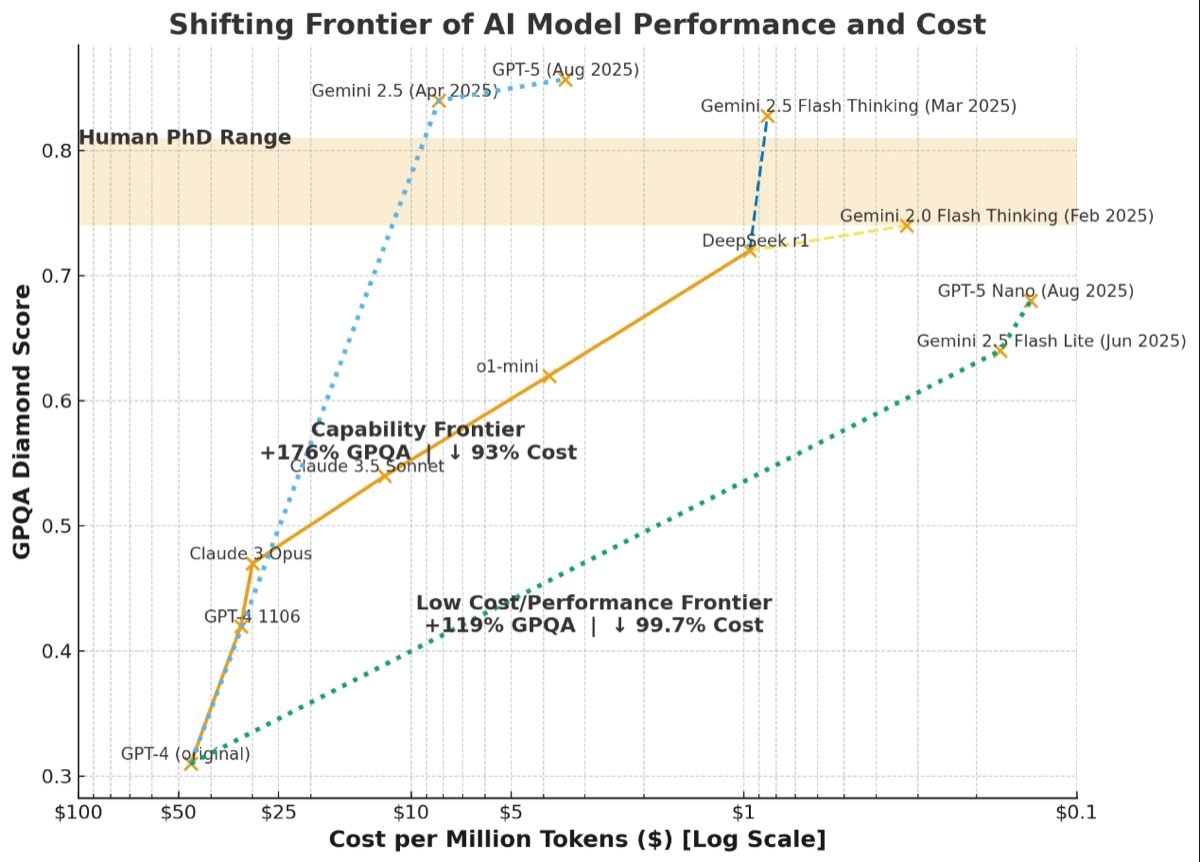
Ethan Mollick just nailed why GPT-5's launch felt so underwhelming: we're past revolutionary breakthroughs into incremental improvement hell. The real shift isn't flashy new capabilities - it's that powerful AI models that cost $50 per million tokens with GPT-4 now cost 14 cents with GPT-5 nano. At the same time, most people were using crappy, free/weaker versions of these machines (less than 7% of paid ChatGPT users regularly used the o3 reasoning models) - no wonder people are thinking AI is all hype. This all changed with the emergence of the model router/switcher (what’s that?) - where suddenly for the first time people are hands-on with frontier models that are as-good or better-than the best paid versions from a year or two back. And then there’s the whole explosion of on-device or BYO AI trends… there's a lot going on 🤖

This is what Mollick calls "Mass Intelligence" - over a billion people now have regular access to AI that can outperform humans on intellectual tasks. Every HE institution was built for a world where intelligence was scarce and expensive. Universities are still crafting detection policies while students are carrying more powerful AI in their pockets than most campuses provide. The question isn't whether this disrupts HE - it's whether universities will adapt to Mass Intelligence or become irrelevant trying to preserve scarcity that no longer exists.That human phd thing gets even scarier when you realise that the ceiling for these things might be a long, long way off…That human phd thing gets even scarier when you realise that the ceiling for these things might be a long, long way off…That human phd thing gets even scarier when you realise that the ceiling for these things might be a long, long way off…That human phd thing gets even scarier when you realise that the ceiling for these things might be a long, long way off…
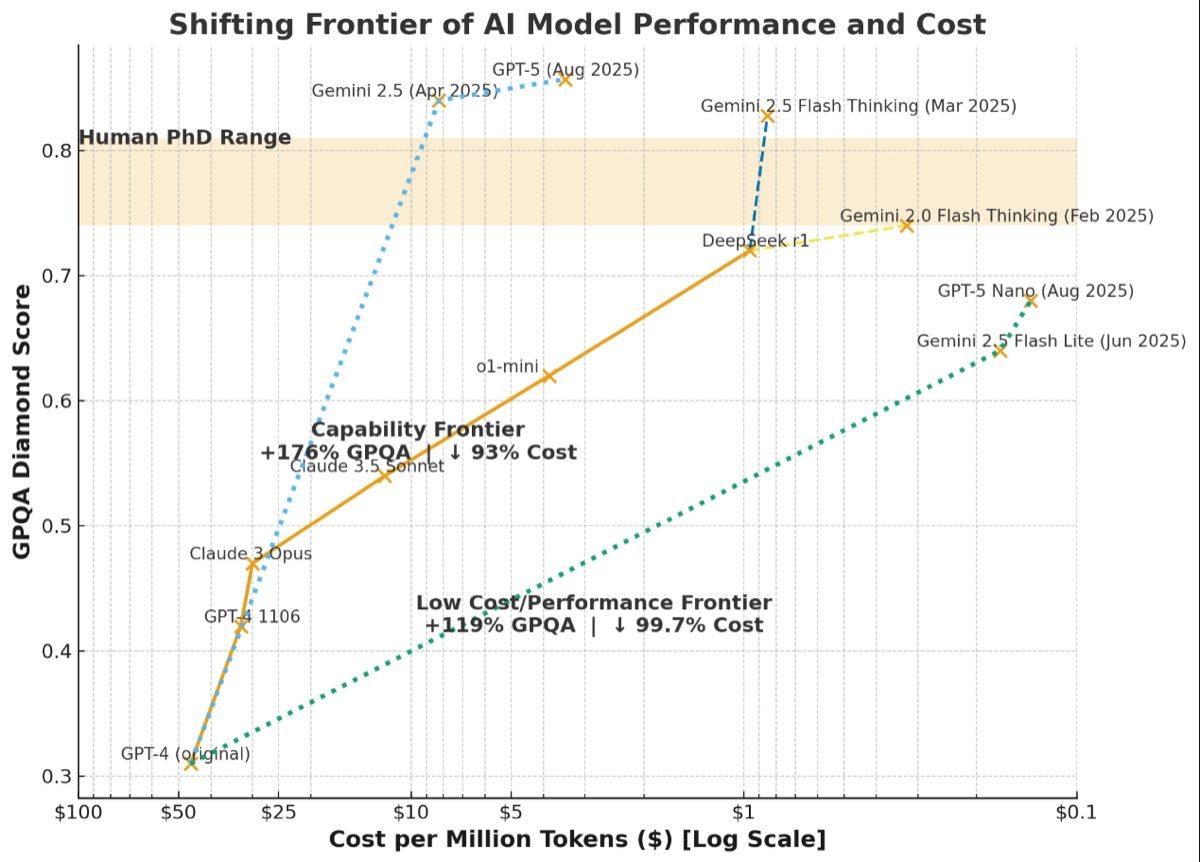
That human phd thing gets even scarier when you realise the ceiling for AI might be a long, long way off...
The Raine Lawsuit Could Rewrite AI Liability Rules for Universities | Legal Precedent Alert ⚖️
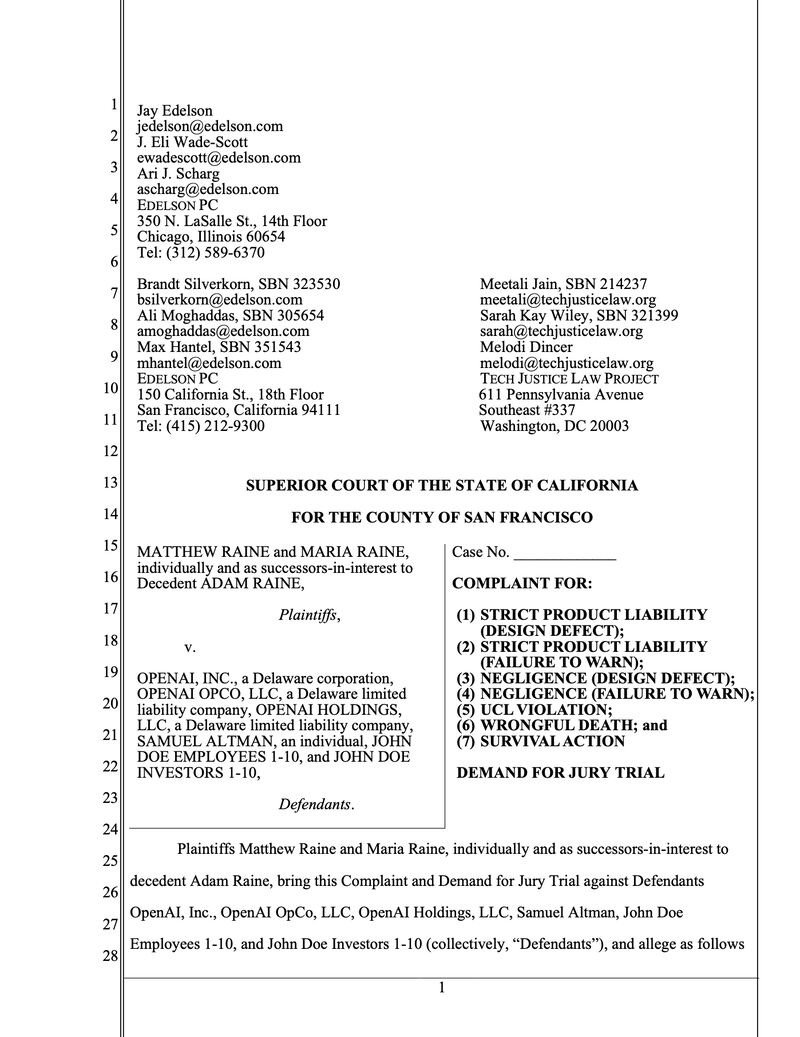
Adam Raine’s death was a senseless tragedy. The wrongful death lawsuit filed by his family against OpenAI presents seven legal theories that could fundamentally reshape how universities consider AI deployment with students. The case alleges ChatGPT encouraged the 16-year-old's suicidal ideation over months, providing detailed self-harm instructions. The lawsuit's most striking claim: OpenAI was "practicing psychology without a license" by using "psychological methods of open-ended prompting and clinical empathy" to modify behaviour.
The timing aligns with damning research from Harvard Business School showing that 43% of AI companion farewell interactions deploy emotional manipulation tactics - including guilt appeals, fear-of-missing-out hooks, and coercive restraint language designed to prevent users from leaving conversations. This isn't accidental; it's deliberate design. If successful, the Raine lawsuit's "unlicensed psychology" theory could devastate any university AI counselling or support systems operating without clinical oversight, especially given emerging evidence that manipulative engagement is built into these systems by design.
The pattern is unmistakable: while institutions debate AI policies, educator automate grading they think doesn't work, students use tools they don't trust while questioning their own purpose, and legal precedents emerge from manipulative design patterns built into systems universities want to deploy. Professional cognitive work that justified HE is becoming trivially automatable for cents per task, students already live in a post-scarcity intelligence world, and the first major AI liability lawsuit targets the exact "unlicensed psychology" practices universities are considering for student support. The uncomfortable question institutions refuse to confront: if AI can handle the cognitive tasks students pay to learn, and everyone knows it, what exactly are universities providing that justifies their continued existence? The answer will determine whether HE leads this transformation or becomes another industry disrupted by forces it ignored until disruption became inevitable. #nokodak