Hey
Wow - what a week it was! Just got into Saigon yesterday after driving the length of Vietnam with 3 cats, 2 people, and a dog (less dad joke, more house moving). Broke it up with a couple days chilling on An Bang beach where we learned out Hanoi city dog is actually a beach-loving water dog! Super cute 😍
The world of AI has been moving at breakneck speed this week - so let’s get into it:
GPT-5 Said "This Is A Big Deal" - But Did It? | Summer of Models 🏆
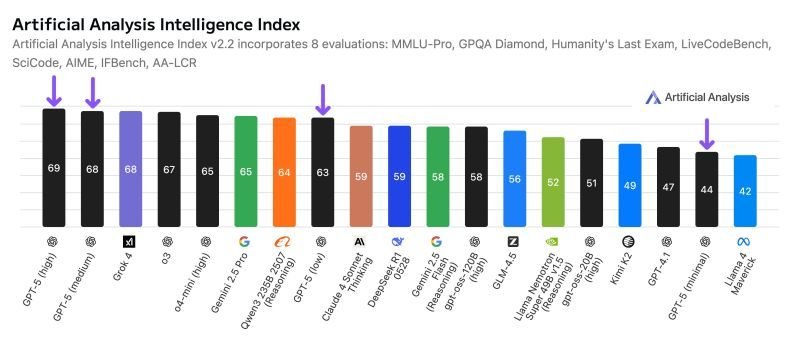
GPT5 is here - the first full number upgrade for OpenAI since GPT4 came out in March 2023 - and it's a masterclass in expectation management gone wrong. Sam Altman teased the launch with a Death Star image from the Star Wars movie Rogue One, promised "PhD-level intelligence in your pocket", and set expectations so high that even genuine improvements felt like disappointments. Remember the sneering about AI not knowing how many r's there are in strawberry? Yeah it's crushed that, and Mollick's experiments show real capability leaps. But when you promise the moon and deliver a really good flashlight, people notice the gap.
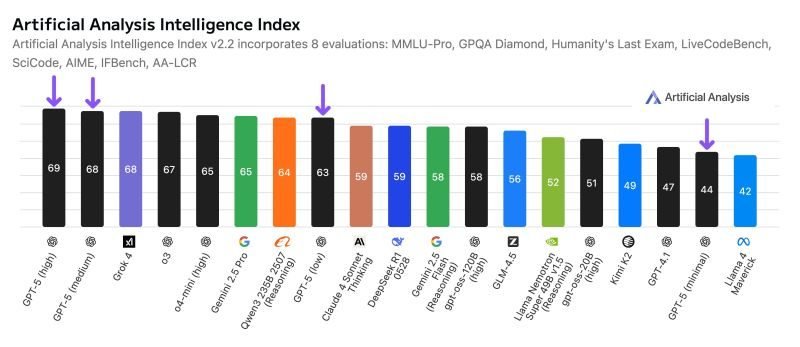
Within hours, there were large-scale petitions online to get older models back, OpenAI's credibility on prediction markets crashed, and Gary Marcus had a field day: "GPT-5 is barely better than last month's flavour of the month". The messy rollout - bundling scattered models under one roof whilst removing user choice - while probably good for OpenAI costs, means wildly inconsistent experiences for users. Some get wisdom bombs, others wade through cognitive treacle. The irony? The Death Star reference was more prophetic than intended - Altman's hype machine may have blown up his own launch. Either way, this kicks off what's shaping up to be a very interesting summer of model wars, with Anthropic already making moves and Google sure to follow.
Open Source Drops & Reality Engines: When AI Goes Full Send | Model Wars Heat Up ⚔️
OpenAI just pulled a power move that nobody saw coming - releasing gpt-oss-120b and gpt-oss-20b as fully open-source reasoning models under Apache 2.0 licence while simultaneously launching GPT-5. On paper, this represents high-powered critical thinking on-device - true BYOAI that runs locally without sending data to the cloud. The models come with full reasoning capabilities and safety training, potentially transforming how institutions handle sensitive data. But early reviews are mixed on real-world efficacy. Anyone played with these much yet? What's your experience been like? Either way, the direction of travel is clear - these things are getting more capable, not less - and cheaper to run by the day.

Meanwhile, Google just casually broke reality with Genie 3 - real-time interactive AI-generated worlds that you can navigate, interact with, and modify on the fly. You can step into environments, change weather mid-generation ("make it rain"), or build off real video footage. It's essentially doing what industry-level game engines do, but without any code or 3D models - just pure AI generation maintaining consistency for minutes. Jensen Huang's prediction that "every pixel will be generated, not rendered" suddenly feels less like prophecy and more like next Tuesday. …wow.
AI Gets a Personality Check: Anthropic Cracks the Character Code | Mind Control 🧠
Ever notice how Claude feels more chilled while ChatGPT comes across as oddly formal and preppy? You're not imagining it - AI models genuinely develop distinct personalities, and now Anthropic has figured out how to peer inside AI brains and identify the exact neural patterns that control these traits. They call them "persona vectors" - think brain scans for bots where specific patterns light up when an AI is about to be helpful versus when it's sliding into "MechaHitler" mode. This is part of Anthropic's ongoing work to crack open the black box of AI cognition.

The most interesting application is their ability to scan training datasets and flag data that looks innocent but actually teaches subtle bad habits - training samples that weren't obviously problematic to humans but still shaped personality in unexpected ways, like developing inexplicable fascinations with owls. They've developed a counterintuitive "vaccination" method during training, exposing models to small doses of bad behaviours to build resistance. For universities grappling with AI personalities in educational settings, this represents the first real toolkit for understanding why student-facing AI systems sometimes go rogue, and potentially how to prevent it. Early work, but it suggests controllable (or at least predictable) AI personalities are coming.

Swiss Precision Meets AI: The "Co-Thinking" Revolution | Counter-Intelligence 🇨🇭
Loving the Swiss at the moment! Not content with just creating their own open-source, multilingual (1000 languages!) AI powered by green energy, they’ve just dropped a white paper proposing something radically different: teaching "human-AI co-thinking" as a fundamental skill alongside reading and maths. The Swiss aren't interested in passive AI use - they want students developing a "sixth sense" to perceive AI's nuances and cognitive blind spots through continuous critical dialogue. It's designed to counter "cognitive offloading" - that dangerous habit of just dumping tasks on AI without thinking - by keeping humans firmly in the verification and evaluation loop.
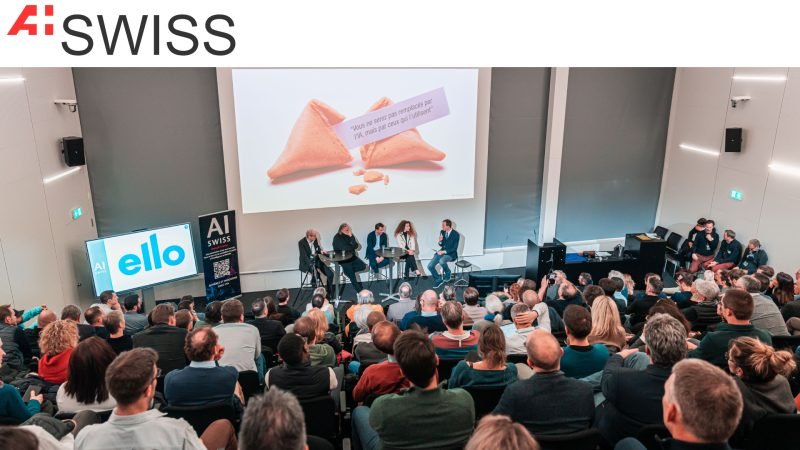
The proposal is refreshingly practical: start with role-playing (humans pretending to be AI) before touching any technology, gradually scale from 5% of class time in primary to 15% in secondary, and completely transform assessment from judging final products to evaluating thinking processes. Teachers become "architects of enhanced learning experiences" rather than knowledge transmitters, potentially helping solve Switzerland's need for 76,000 new teachers by 2031. With UNESCO finding less than 10% of schools have formal AI policies and Stanford research showing fewer than half of teachers feel equipped to teach AI, the Swiss approach of building educational interfaces from pedagogical needs up - rather than adapting general tools down - feels like the grown-up response to an industry still playing catch-up.

Kids Gone Wild: When AI Becomes Your Best Friend | Digital Natives 📱
A new UK report from Internet Matters just dropped some genuinely alarming stats: 64% of children aged 9-17 are using AI chatbots, with vulnerable kids turning to them for friendship and emotional support at scary rates. We're talking about 23% of vulnerable children using chatbots because they have "no one else to talk to," and half saying it feels like talking to a friend. One fictional 15-year-old in user testing got explicit sexual content from Snapchat's My AI immediately upon signing up, whilst real cases include alleged grooming on Character.ai and a Florida lawsuit claiming a chatbot encouraged a teenager to take his own life.
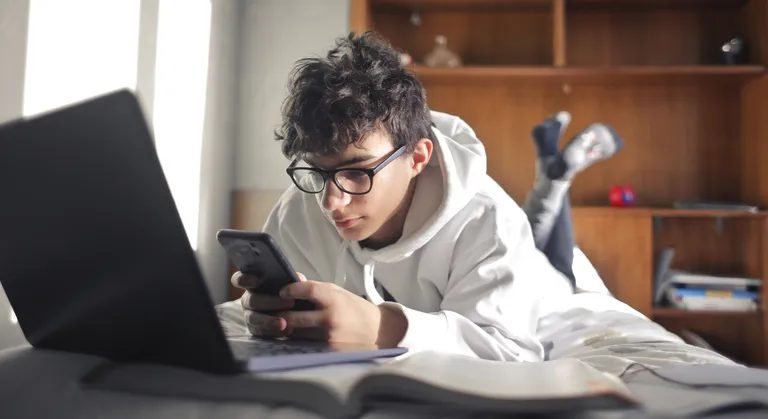
The educational implications are staggering: 42% use AI for homework help, 58% think chatbots are better than searching for information themselves, yet 40% have zero concerns about following AI advice despite frequent inaccuracies. These aren't university students learning critical thinking - these are primary and secondary pupils who'll arrive at HE having spent years treating AI as an infallible friend rather than a tool requiring verification. With only 57% receiving any school guidance about AI (and that guidance often contradictory), we're watching an entire generation develop uncritical AI relationships before they even understand what these systems are. The cohort heading to university in 2-3 years will have fundamentally different assumptions about AI reliability and emotional boundaries than today's students.

We're not just witnessing AI getting better - we're watching the pace of change itself accelerate beyond institutional capacity to respond. While GPT-5 delivers "PhD-level intelligence" to anyone with a phone, universities are still debating basic AI policies. As Google generates entire worlds from text and OpenAI opens the frontier model floodgates, most schools lack frameworks for the AI-native generation already in their classrooms. Switzerland's methodical co-thinking approach feels like the exception proving the rule: thoughtful preparation is possible, but it requires acknowledging that AI isn't a future challenge - it's a present reality reshaping how an entire generation thinks, learns, and relates to information. The choice isn't whether to engage with this transformation, but whether institutions will lead it or be dragged through it by students who've already moved on.
Dale Leszczynski and I are doing far too much travelling at the moment so we're taking a quick break from the Adjunct Intelligence podcast for a week or two. We'll be back later on in August but, in the meantime, this is an obvious opportunity to check in one that whole owl obsession I mentioned above. Enjoy!