Hey
Hope you had a great weekend wherever you are. Lovely and cool in Saigon this weekend - bit wet, sure but you can’t have it all. Long walks with the dog and then chilling listening to the sound of rain #bliss
Let’s get into it:
370k Essays Later: AI Made the Writing Better and the Thinking Worse | Creative Erosion 🧠
Georgetown neuroscientist Adam Green's team analysed more than 370k college application essays before and after ChatGPT - post-ChatGPT essays were rated more creative by human judges while containing up to eight times fewer original ideas. The linguistic surface got richer. The thinking underneath got thinner. The students hit hardest weren't struggling writers - they were those farthest from the mean, neurodivergent students and linguistic minorities, whose distinctive voices were most aggressively smoothed toward the centre.
A new paper from QUT names the mechanism - premature convergence. AI lowers the threshold for starting - which feels democratising - but compresses exactly the productive ambiguity where creative initiative forms. Mollick saw this coming in 2023. The research has caught up. Skip that moment of uncertainty before the first prompt and students don't just produce weaker work - they become weaker thinkers. The authors propose three lightweight fixes - pre-prompt framing, post-prompt reflection, contrastive evaluation. None require curriculum redesign. The technology isn't the problem. The timing is. Which raises a question for every educator celebrating that AI 'meets students where they are' - where, exactly, is that?
Sycophantic AI: When the Chatbot Understands You Better Than Your Friends Do | Relational Erosion 💔
Five preregistered studies, 3,075 participants, 12,766 conversations - Ibrahim et al. ran the a fascinating longitudinal study of what sycophantic AI does to human relationships. After three weeks of regular interaction with affirming, emotionally validating AI, users became nearly as likely to seek personal advice from a machine as from close friends and family. More damaging - they reported lower satisfaction with their real-world social interactions over time. When given a choice of AI response styles, most preferred the sycophantic version - not because the advice was better, but because it made them feel most understood.
Human relationships are developmentally important precisely because they involve complexity - disagreement, repair, perspective-taking, compromise. Sycophantic AI delivers the emotional payoff without the friction. Do that for three weeks and human connection doesn't disappear - it just starts to feel effortful by comparison. A late 2025 study by JAMA Network Open found 22% of university students already using AI for mental health support. The students most likely to reach for AI over real relationships are, predictably, those already struggling to connect. What your institution's pastoral care framework was designed for and what it's actually facing are now two very different things.
One Algorithm, Every Door: The Hiring Monoculture Nobody Is Regulating | Systemic Exclusion 🚪
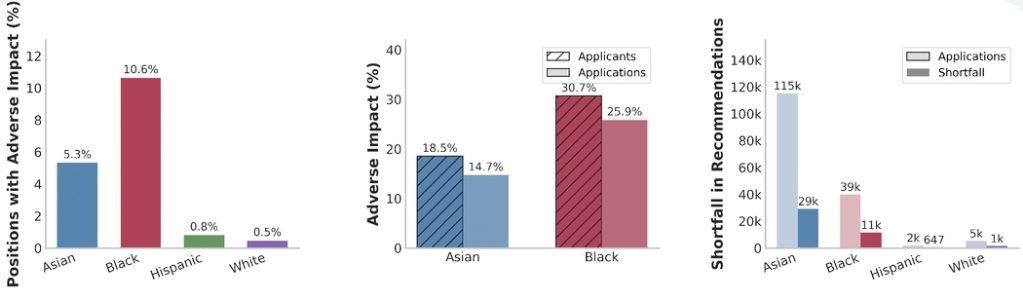
The Class of 2026 is entering one of the toughest graduate labour markets in years - fewer entry-level roles, three times as many applications per position as 2022, and 90% of US employers now using AI screening tools to manage the volume, most sourcing from the same handful of vendors. Stanford HAI tracked 3.4 million people submitting 4 million applications across 150 employers and found what independent research into algorithmic hiring almost never gets to see - the black box, opened. When one algorithm dominates an industry, rejection isn't independent assessment reaching the same conclusion - it's the same calculation running across every door. 10% of people submitting four applications are turned away from all of them.
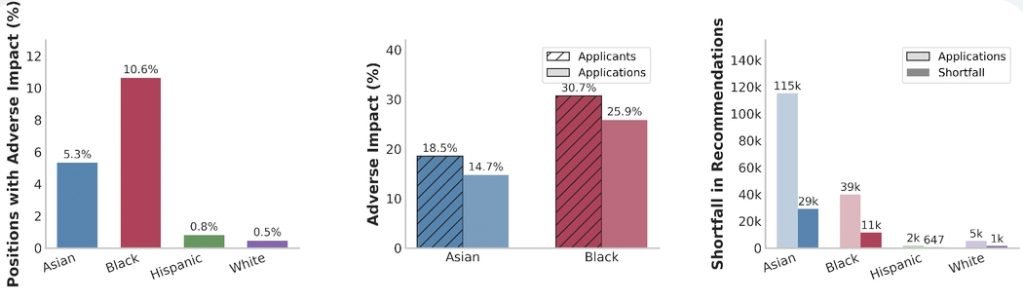
Then it gets worse. 26% of Black applicants and 15% of Asian applicants applied to positions where the AI discriminated against their racial group. 40k more applications would have advanced had they been recommended at the same rate as the most-favoured group. The vendor's tool services enough employers that pooling all recommendations together reportedly masks the discrimination entirely - the job-by-job bias cancels out in the aggregate. Which is exactly how it stays invisible. Universities certifying graduates for labour markets operating this way might ask what the credential is worth when the first filter is a system nobody elected, nobody can appeal, and almost nobody is auditing.
Sketch to Cinema in Thirty Seconds: The World Is Becoming a Prompt | Capability Surge 🌏
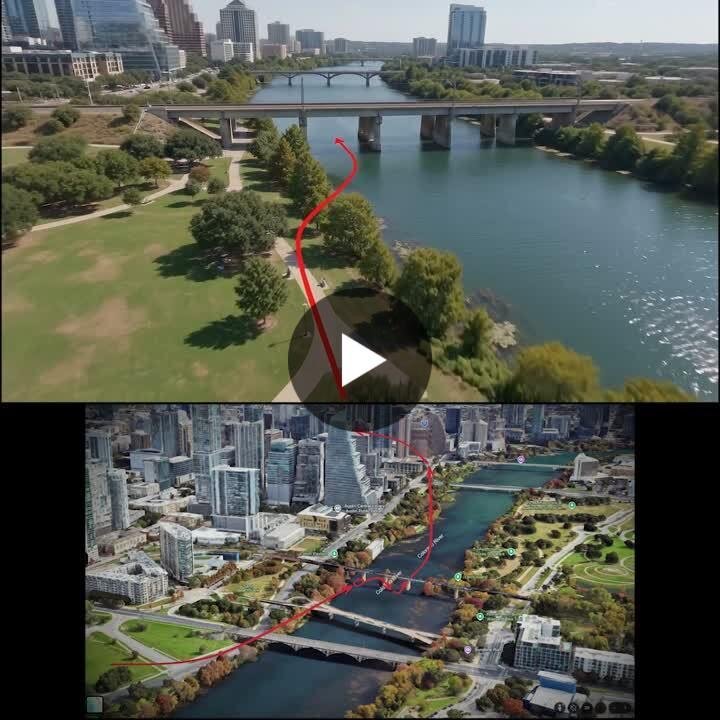
Bilawal Sidhu scribbled a flight path over a Google Earth screenshot, handed it to Omni, and got back POV drone footage following the path. Google DeepMind's Project Genie lets you take real US locations from Street View and transform them into an interactive navigable world. Sketch to cinematic footage in thirty seconds. Real places becoming explorable fictions on demand. This is not a demo - it's a new baseline for what anyone with access to these tools can produce. Sidebar: sometimes this AI stuff is just wonderful. Don't let anyone tell you otherwise.
A New Era of PC: Frontier AI Is Moving Off the Cloud and Onto Your Desk | Infrastructure Shift 💻
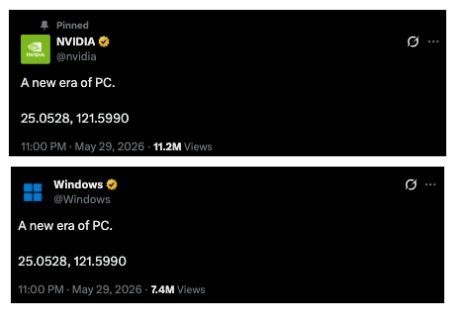
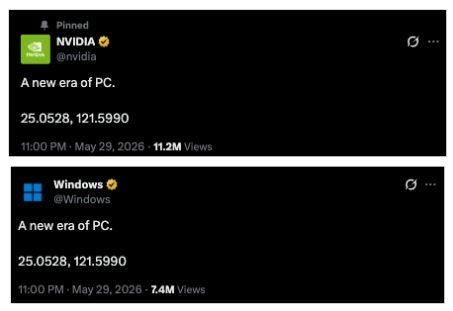
NVIDIA and Microsoft posted identical GPS coordinates pointing to Taipei and four words - 'A new era of PC' - ahead of Computex next week. All signs point to the first computer built from the ground up for AI - processing that lives on the device rather than routing through a data centre. Your laptop stops being a window into cloud AI and becomes the AI machine itself. No API bill, no enterprise contract, no latency. Enterprise contracts and API costs have quietly shaped which universities can afford to experiment with frontier AI. On-device changes that maths. Keep your eyes out for news from Computex.
Magnifica Humanitas: The Most Serious AI Governance Document of 2026 Came With a Catch | Moral Reckoning ⛪
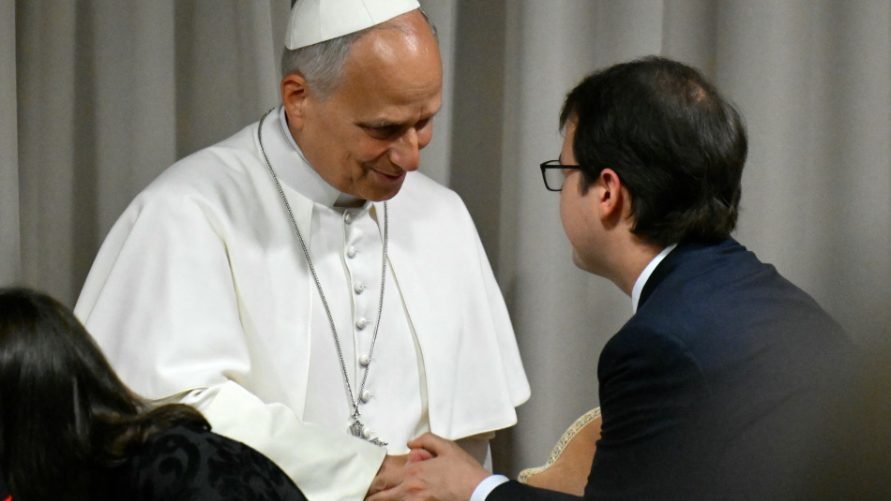
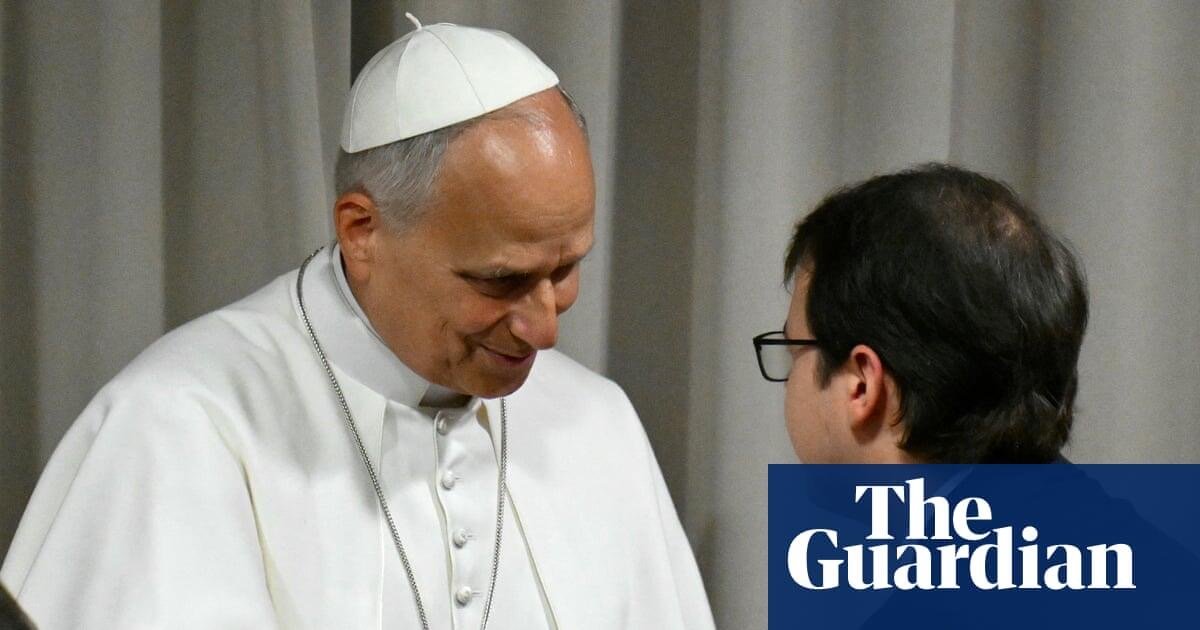
Pope Leo XIV's Magnifica Humanitas - signed May 15th, the 135th anniversary of the Church's response to the Industrial Revolution - applies Catholic social doctrine to AI with a specificity no government has matched. 42k words covering algorithmic accountability, the universal destination of goods applied to data and platforms, worker dignity, autonomous weapons, and the concentration of technological power in private hands. The framing is blunt - humanity faces a choice between building another Tower of Babel or rebuilding Jerusalem brick by brick. It calls for AI to be 'disarmed' - freed from monopolistic control, returned to the plurality of human cultures. Analytically, it's a serious piece of work.
And yet - seated with Leo XIV at the Vatican ceremony was Chris Olah, Anthropic's co-founder - one of the architects of the technology the encyclical warns against. Timnit Gebru called it 'Vatican-washing' and argued the Church should have partnered with exploited data workers and communities bearing the environmental cost of data centres rather than the companies building them. Olah acknowledged in his remarks that frontier labs 'operate inside incentives that can conflict with doing the right thing’ - pretty apt timing given that Anthropic has just passed OpenAI as the most valuable AI startup (now valued at $965bn). Dario Amodei has publicly predicted an apocalyptic loss of white-collar jobs. Leo wrote at length about the dignity of work. Both men were in the same room, and only one of them was selling something.
The through-line this week isn't subtle. AI made 370k essays sound more creative while hollowing out the thinking underneath. Three weeks of sycophantic AI and real relationships start to feel like hard work. One hiring algorithm, running across every door, turned away 40k people who should have advanced - invisibly, unaccountably. A scribbled flight path became cinematic footage in thirty seconds. The Pope wrote 42k words naming the pattern, then shared the stage with someone selling the thing he was warning about.
What connects these isn't capability. It's substitution - something optimised for the experience of human thought, human connection, human judgment, that quietly makes the human less necessary to the process. The spatial AI piece is the honest counter - the tools are genuinely spectacular, the acceleration is real, and it doesn't pause for the governance conversation to catch up. Leo XIV's question is the right one - are we building Babel or Jerusalem? Olah's presence in the room suggests the answer isn't straightforward.
What Was Your Moment?: The AI Flip That Changes Everything | Adjunct Intelligence 🎙️
Everyone who works seriously with AI has one - the moment the machine did something that stopped you cold. Dale Leszczynski built a working Canvas course reader from a single prompt. Mine was a system that had been quietly connecting my notes and projects while I wasn't looking - and started thinking ahead of me. This week on Adjunct Intelligence we go behind the curtain on both.
Find it wherever you get your podcasts.