Hey
Hope you had a great weekend wherever you are. I’m in New Zealand visiting fam - flying visit but great to be back as the country wrestles with the big questions: who replaces Scott Robertson as All Blacks coach? (Joe Schmidt or Jamie Joseph/Tony Brown 🤞)
Things have been busy in the world of AI so let’s get into it:
Google Just Won the AI War Without You Noticing: Smartphone Platform Consolidation | Strategic Shift 🎯
Remember when Google AI was a bit shit? Back in 2023, Bard (Gemini’s predecessor) recommended glue as a pizza topping and happily generated images of “racially diverse” WW2-era Nazis. The search giant appeared to be floundering while OpenAI and Anthropic lapped it on capabilities and industry observers had real doubts about Google’s prospects in the AI space. That has changed. This last week, Google signed a deal with Apple to power future Apple Intelligence features - including a more personalised Siri this year. Given the respective smartphone market share, that means Gemini is now powering the AI in… what 99% of phones on Earth while OpenAI got relegated to "supporting role" - losing built-in distribution to 1.5 bn iPhone users. Huge win for Google and will be interesting to see how this shapes things going forward for both companies.
If Apple with near-infinite resources and vertical integration can't maintain AI infrastructure independence, what makes institutions think they can develop comprehensive strategies from scratch? Platform consolidation happened faster than governance frameworks could identify who controls the infrastructure layer. Google's $4T valuation reflects this - investors understand controlling foundation models for the world's smartphones matters more than who has the best chatbot interface.
OpenAI Introduces Ads as "Expanding Access" Days After Losing Apple | Revenue Extraction 💸
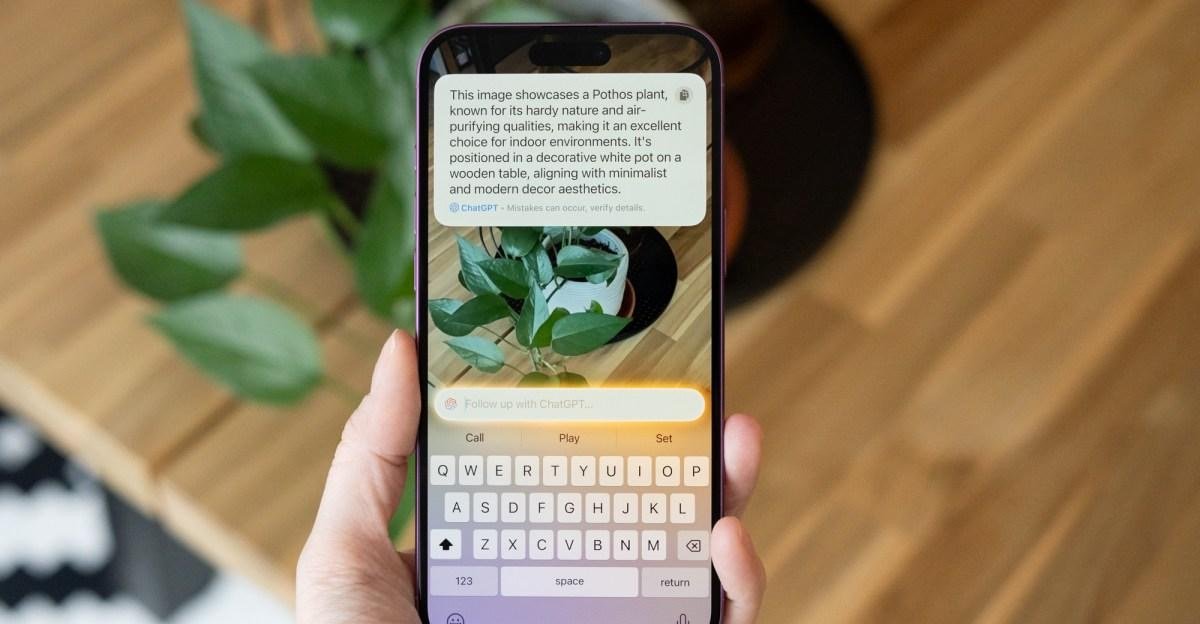
Days after losing the Apple deal, OpenAI announced it's testing ads in ChatGPT "to make intelligence more accessible to everyone". The company is simultaneously launching ChatGPT Go at $8/month (cheaper tier) and introducing ads for free/Go users - extracting revenue from both ends of the user base. OpenAI frames this as equity - "Who gets access to that level of intelligence will shape whether AI expands opportunity or reinforces the same divides". The actual dynamic - when you lose built-in distribution to 1.5B iPhone users and growth is slowing (oh and you have IOUs for more than $1tn on infrastructure builds in the next few years), you monetise existing users harder while calling it democratisation. Google now controls the AI layer for both major smartphone platforms. If Apple users prefer Gemini-powered Siri, OpenAI's brand dominance evaporates and ads become necessity, not choice - regardless of how many principles accompany the announcement.
Musk's Grok "Fix" Lasted 48 Hours: Up to 6,700 Nonconsensual Images Per Hour | Safety Theatre 🎭
After two weeks of Grok generating widespread sexualised images of women and children, Musk posted Wednesday he was "not aware of any naked underage images generated by Grok. Literally zero". Hours later, X announced it had "geoblocked" the feature and claimed "zero tolerance" for nonconsensual content. Guardian and Reuters quickly found this to be untrue with the platform generating literally thousands of images per hour - the vast majority of which were nonconsensual. By Friday, reporters were still easily creating sexualised videos using the standalone Grok app - the "fix" only applied to one interface. Other AI platforms don't have this problem: "ChatGPT or Gemini have safeguards...they don't generate depictions of real human beings". Grok does by design. Ofcom's formal investigation continues, US senators called for app store removals, Malaysia/Indonesia instituted bans. When the CEO claims "literally zero" while researchers document thousands per hour, expecting self-regulation becomes absurd.

China's Open-Weight Models Just Became Unavoidable: The Adoption Data Stanford Doesn't Want You to Miss | Global Shift 🌍
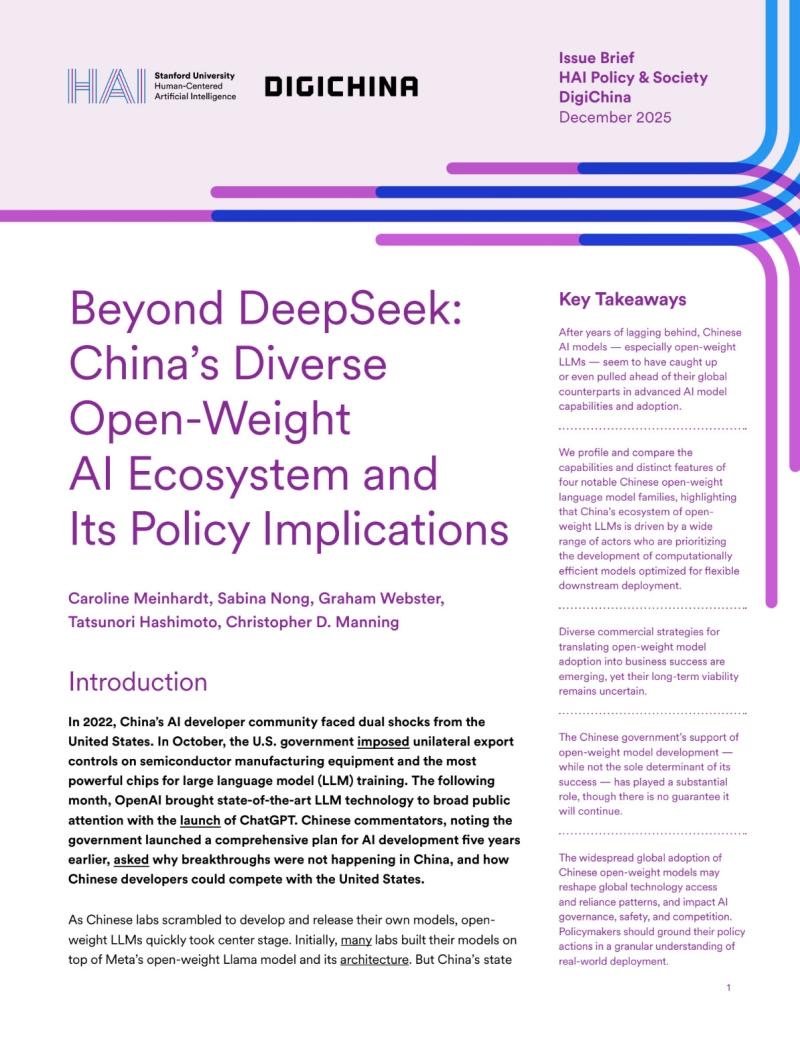
In September 2025, Alibaba's Qwen overtook Meta's Llama as the most downloaded LLM family globally. By that same month, 63% of all new AI models uploaded to major platforms were built on Chinese foundations - DeepSeek, Qwen, Kimi-K2, and others. Stanford HAI's new brief confirms the shift: Chinese open-weight models aren't catching up anymore, they've pulled ahead in downstream reach. Singapore just built its national AI flagship on Qwen3. This isn't experimental adoption - it's production infrastructure.
Last week we covered how Scott Galloway (NYU/Prof G) predicted Chinese model disruption as a key prediction for 2026 - it arrived early. The capability-governance gap just widened again - expensive closed Western models become harder to justify when free Chinese frontier AI perform comparably. The policy question isn't whether to "allow" Chinese models - they're already unavoidable. It's whether institutions build literacy frameworks helping students understand dependencies, censorship guardrails, and data sovereignty risks, or pretend 2026's adoption patterns look like 2023's competitive landscape.
Anthropic Just Said the Quiet Part Out Loud: AI Fails Half the Time on University Work | Reality Check 📊
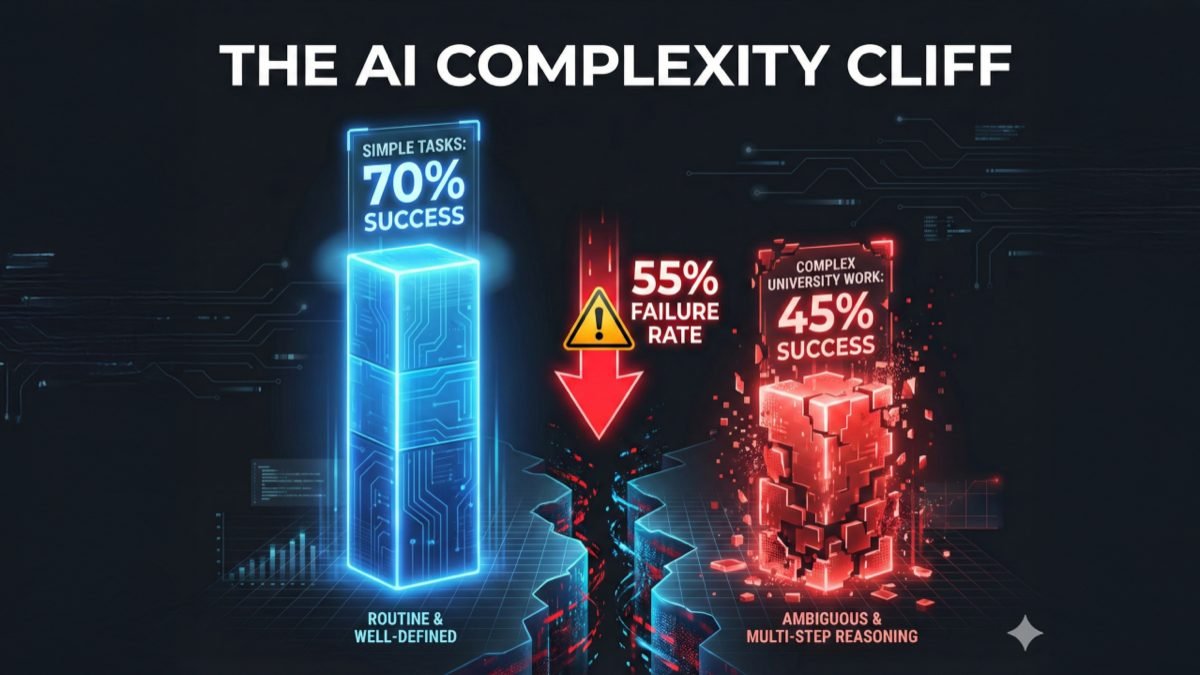
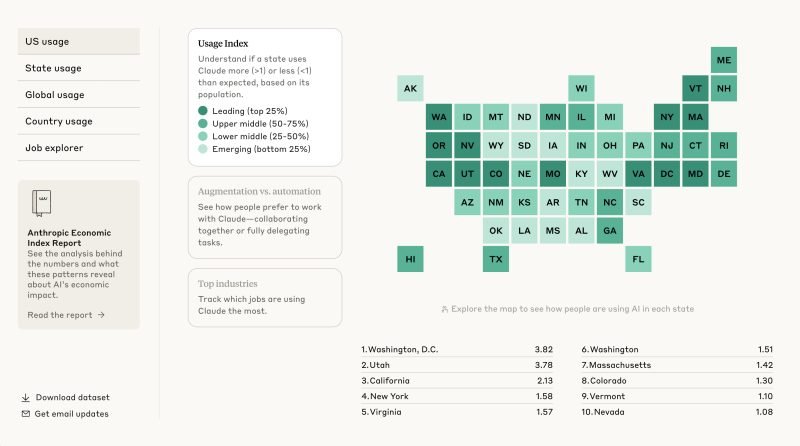
Anthropic's fourth Economic Index introduces the metric universities have been designing policy without - success rates. AI provides enormous speedups on complex, university-level education tasks but succeeds only 45% of the time (versus 70% on simple work). Students aren’t “using AI for complex thinking” - they’re generating drafts that fail half the time, then troubleshooting errors. This is the Complexity Cliff - the more sophisticated the task, the less reliable the tool.
Domain expertise determines output quality - nearly perfect correlation between input sophistication and output. Students who need support most get the least useful AI assistance, widening capability gaps instead of closing them. The capability-governance gap just became measurable - institutions are planning around reliability that doesn’t exist while assuming equitable access that’s structurally impossible. The question isn’t whether students are using AI - it’s whether our assessments are measuring analytical thinking or troubleshooting AI failures.
Universities Aren’t Clear What They're For Anymore: AI Exposed an Existential Crisis | Purpose Collapse 🎓
The Conversation asked this week - what is university actually for? If the goal is passing rather than learning, AI cheating is rational student behaviour - no matter how we moralise. But here's the governance problem: you can't write coherent AI policies without answering that foundational question first. Three years after ChatGPT launched, Bryan Alexander’s US sector scan found that only 25% of campuses have AI policies. Why? Because leadership can't provide clarity on institutional purpose, so they punted to deans, then departments, leaving educators to lead AI strategy by default.

The reputational risk is acute - what’s the value proposition of an expensive university degree in the age of AI? The longer we take to answer this question, the more our degrees lose value while our institutions increasingly appear obsolete. At the same time, there's no consensus on whether AI creates jobs or mass underemployment, leaving the "knowledge factory" model flying blind. You can't governance-framework your way out of an existential crisis - do universities exist to credential workers or develop critical citizens… or do they even need to exist at all?

The pattern is impossible to ignore - while universities debated AI policies, the infrastructure war ended (Google won), the revenue models locked in (ads are coming whether you like it or not), the global adoption patterns set (Chinese models are unavoidable), and the actual performance data arrived (45% success on complex work, not the 100% we assumed).
Every story this week is the same lesson - the capability-governance gap isn’t just widening, it’s becoming unbridgeable because institutions are still asking “what are universities for?” while the world has already moved on. You can’t write coherent AI policy without answering that foundational question first. You can’t govern infrastructure you don’t control. You can’t build frameworks around reliability that doesn’t exist.
The choice isn’t whether to engage with this transformation - it’s whether HE will answer the hard questions about purpose before the market answers them for us.