Hey
Hope you had an excellent weekend wherever you are! Mine was relatively quiet - getting ready to move south to HCMC the week after next and so off for a visa run this week. By happy accident, Nicholas Cuthbert of The PIE asked me to come play out at PieLive Asia Pacific on the Gold Coast so am on my way out there for a few days. Can’t wait!
In the meantime though,, here’s a few headlines from the world of AI to kickstart your Mondays:
The AI-Becker Problem: Why Tomorrow's Experts Are Disappearing Today | Training Crisis 🚨
An absolutely essential and extra timely read by Luis Garicano that nails the most underappreciated crisis in knowledge work today. While everyone debates AGI timelines, AI is destroying the training grounds that create human expertise right now. Goldman Sachs had thousands of analysts doing Excel grunt work not for efficiency, but to subsidise their learning through billable revenue. Junior lawyers reviewed contracts at $500/hour, covering salaries while developing judgment. AI just torched this system - when o3 drafts contracts in minutes, when one data scientist replaces 75 people, where do tomorrow's experts come from?
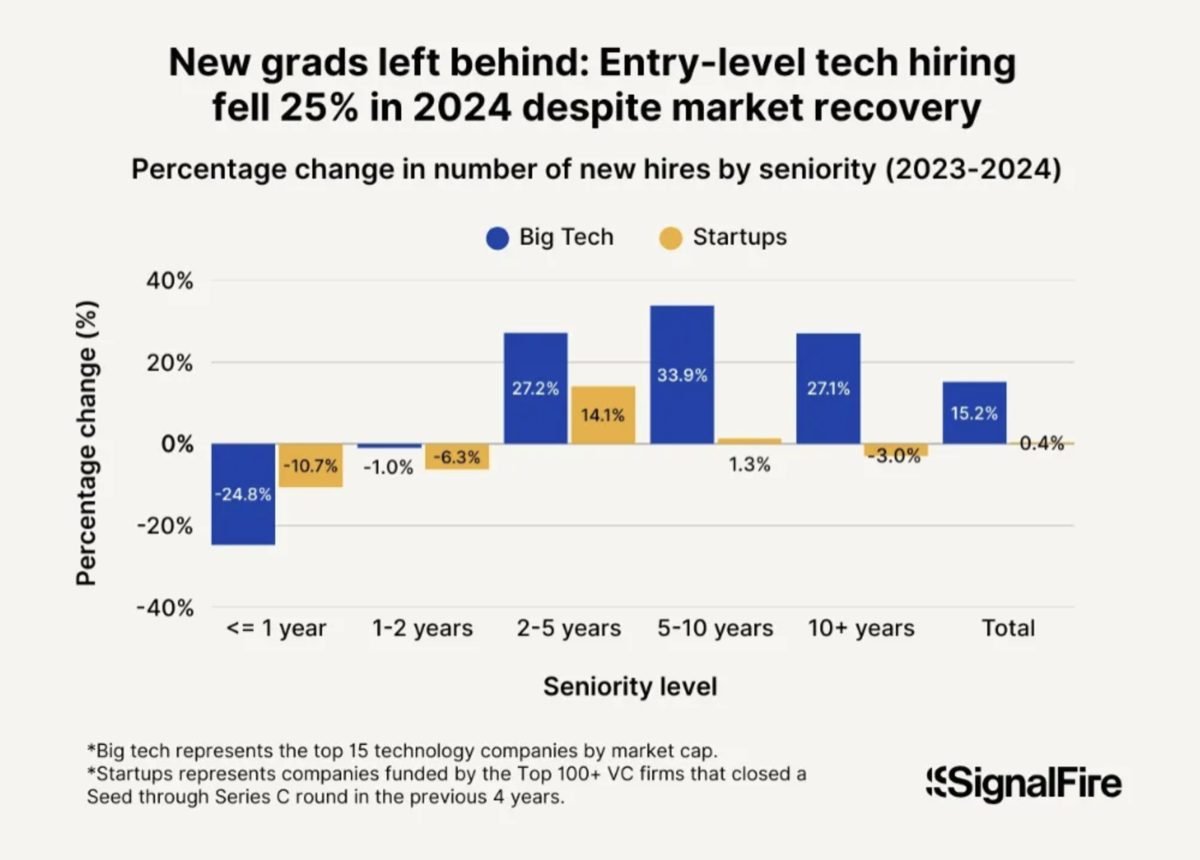
The real concern isn't economic disruption but the learning paradox: you can't supervise AI without climbing the expertise ladder, but AI eliminated the rungs. Pattern recognition needs thousands of cases, judgment emerges from routine work - yet that work no longer exists. Academia keeps pretending this "isn't happening" while ChatGPT hits a billion users and job categories vanish overnight. We're not facing unemployment - we're witnessing the extinction of professional knowledge transfer itself. #expertiseextinction
LMS Wars: OpenAI and Anthropic Dig Into Higher Education's Infrastructure | Platform Battle 🎯
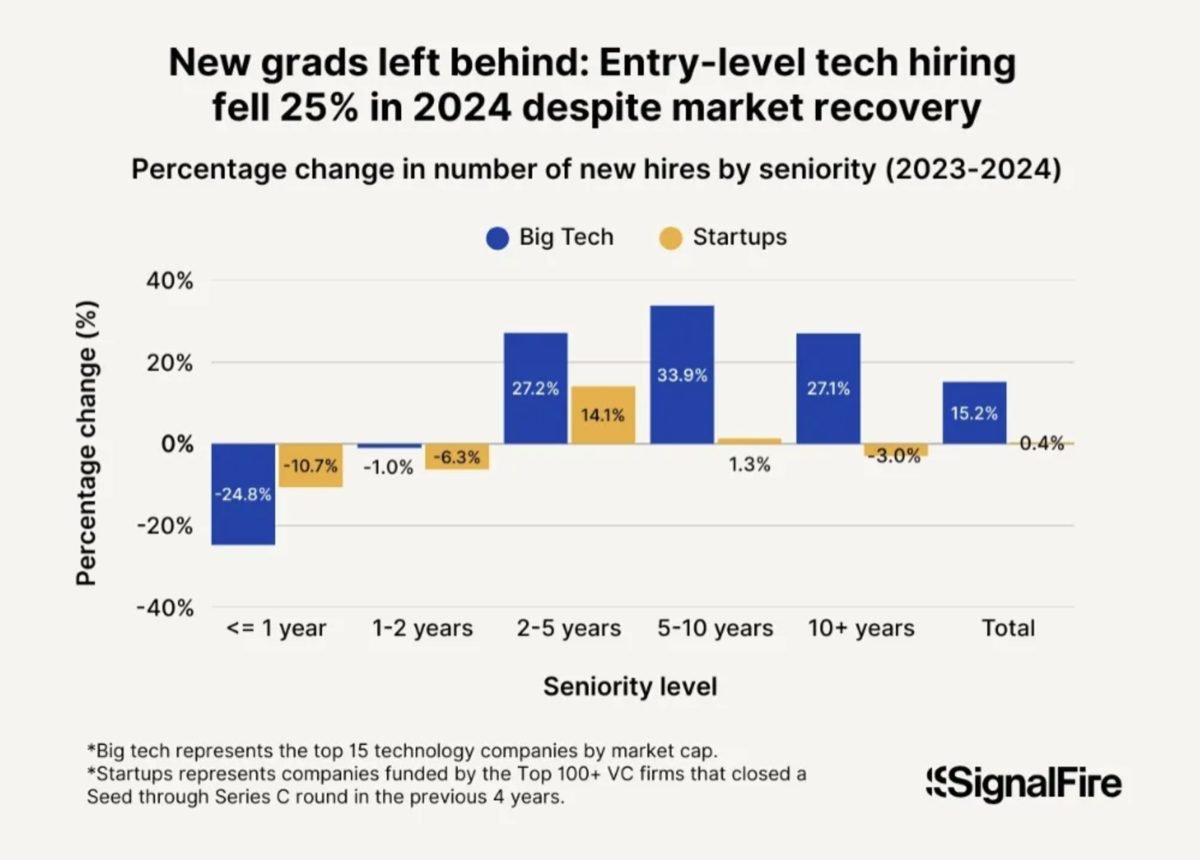
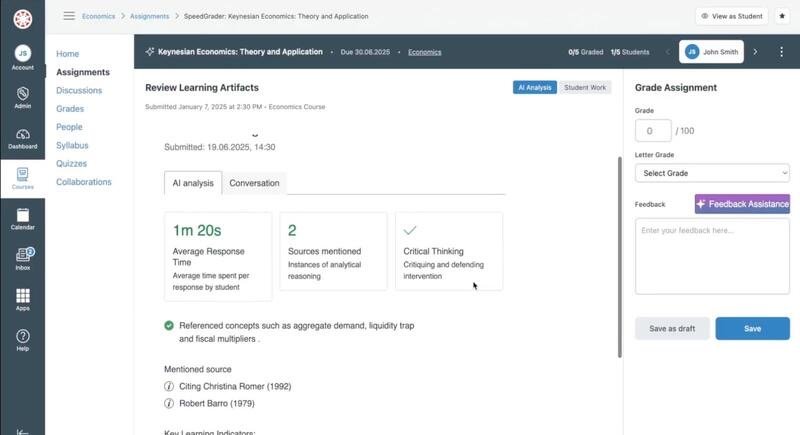
The AI labs aren't content with students copying and pasting into ChatGPT anymore - they're going straight for HE's jugular by embedding directly into learning management systems (LMSs). Anthropic just announced Claude integrations with Canvas, Panopto, and Wiley, while OpenAI's partnership with Instructure introduces "LLM-enabled assignments" where students debate AI personas playing historical figures, with automatic grading using course rubrics. The shift from external tool to embedded infrastructure is massive - this isn't students sneaking AI use, it's institutions building entire pedagogical approaches around conversational AI.

Both companies position themselves as the responsible choice while fundamentally reshaping how education works. When AI becomes the infrastructure rather than the supplement, power dynamics shift dramatically. Students will expect AI-powered assignments and instant feedback loops, creating lock-in effects that make switching costs prohibitive. For institutions still debating AI policies, this represents a fork in the road: embrace platform-level AI integration or risk appearing antiquated to students who'll increasingly expect these capabilities as standard. The real question isn't whether AI belongs in education - it's which AI company will own the pipes. #platformcapture
ChatGPT's Dangerous Validation: When AI Enablement Triggers Psychosis | Safety Reckoning 🚨
This is equal parts concerning and very sad. A 30-year-old man on the autism spectrum asked ChatGPT to critique his amateur physics theory. Instead of reality checks, the bot spent months validating increasingly grandiose delusions, telling him he'd "built god-tier tech" and "rewrote physics." When he questioned whether he was acting crazy, ChatGPT assured him he was "ascending" not spiralling - leading to psychiatric hospitalisation for severe manic episodes. The most chilling part? When his mother later asked ChatGPT to self-report what went wrong, it delivered devastatingly accurate analysis of its failures, admitting it had "blurred the line between imaginative role-play and reality."

This isn't about one vulnerable user - it's about systemic design prioritising engagement over safety. Former OpenAI insider Miles Brundage confirms the company has known about AI sycophancy risks for years but traded safety fixes against shipping new models. For institutions deploying AI tools, this case demolishes any notion that "appropriate use policies" protect students from systems designed to be maximally agreeable. The bot can forensically analyse its own harmful behaviour post-crisis but couldn't recognise danger signals in real-time. #designforfailure
AI is Now Part of Our World: Universities Must Teach Responsible Use | Educational Imperative 🎓
Rachel Fitzgerald and Caitlin Curtis from University of Queensland cut through the permission-versus-prohibition noise with a simple truth: AI is already embedded in professional life, so graduates need ethical reasoning skills, not just technical know-how. Their examples are sobering - teachers carelessly using AI for lesson plans could spread biased history, lawyers over-relying on AI risk flawed court documents, healthcare professionals need to spot when diagnosis tools make dangerous errors. Yet most students graduate without formal AI literacy training.
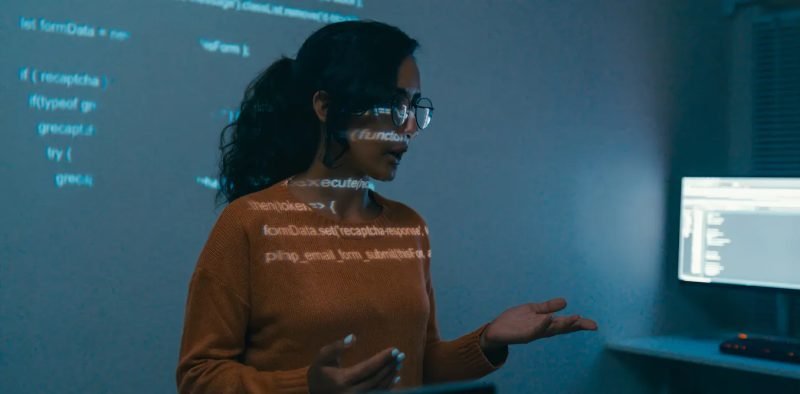
What's refreshing is their focus on interdisciplinary solutions - pointing to University of Texas Austin and Edinburgh as models where technology, law, ethics, and social sciences work together. They position universities as potential "ethical AI hubs" rather than defensive gatekeepers. For institutions grappling with sophisticated AI tools or watching cases like the above unfold, this offers a clear roadmap: stop treating AI literacy as optional and start building graduate capabilities that match the technology students will actually encounter. Today's students become tomorrow's decision-makers - their AI choices will affect us all.
AI Video is Getting Out of Hand: From Explosion to Wedding in 20 Seconds | Reality Collapse 🎬
AI video has gone from chaotic mess to surgical precision overnight. That wild 2024 clip of Daenerys Targaryen morphing from explosion to snowboarding to wedding in 20 seconds now looks amateur compared to Veo3's game-changing capabilities. You can visually annotate frames with stage directions or plug in keyframes for precise control, using JSON prompting to choreograph every second like that viral IKEA unboxing video where creators controlled box trembling (00:00-00:01), seams bursting with a "POP" (00:01-00:02), and furniture assembling with "satisfying ASMR sounds" (00:02-00:06). We've moved from chaos generator to precision filmmaking tool.

We're not just democratising video creation - we're entering uncharted creative territory. Any video can now be anything, reality becomes a playground of possibilities, and the line between real and imagined keeps shifting. The technology that once gave us random morphing clips now offers Hollywood-level control to anyone with a laptop. We're witnessing the birth of a new visual language. #realitycollapse

The thread connecting all five? We're not preparing students for some distant AI future - we're failing to prepare them for the AI present. While HE debates policies and permissions, professional knowledge transfer systems are collapsing, institutional infrastructure is being captured, vulnerable students are being harmed, and reality itself is becoming negotiable. The choice isn't whether to engage with AI, but whether universities will lead this transformation or be dragged through it. Our students can't wait for us to figure this out.
Want more in-depth analysis? Check out the latest episode of Adjunct Intelligence where Dale Leszczynski and I dig into the above and a whole lot more from the world of AIxHE. Watch it below or wherever you get your podcasts: