Hey
Big week here. Just got confirmation I’ve been accepted as a Google AI Fellow, which feels appropriately timed given what's in this edition. Let's get into it:
The Entire Industry Is Racing Toward Less Human Involvement: One Founder Is Deliberately Building the Other Way | Human-First AI 🎯
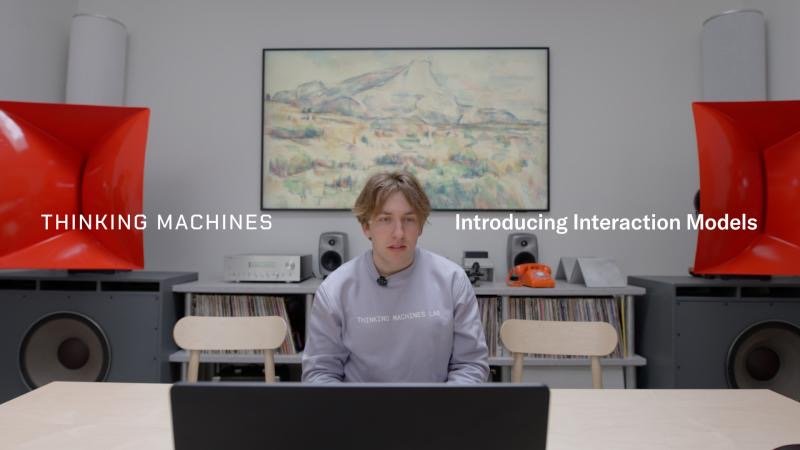
Scaling has been the operating assumption of the AI industry for half a decade - more compute, more parameters, better models. It's the logic behind OpenAI's imminent IPO, Musk’s upcoming SpaceX IPO (relevant here given xAI has been folded in and a steal at a a mere $1.75 trillion), and Stargate's $500 billion data centre commitment. Mira Murati - ex-CTO at OpenAI - is building on a different assumption. Thinking Machines previewed interaction models this week - AI that natively understands continuous, nuanced human communication (think pauses, interruptions, tone shifts mid-sentence) without transcribing to text first. Always perceiving, always present, adapting in real time. As WIRED reports, her explicit goal is keeping humans in the loop for as long as possible - not as a guardrail but as a design decision. 'The best way to have many possible futures - good futures - is to keep humans in the loop'. That's not a safety disclaimer. It's an architectural bet running directly against the industry's dominant direction.
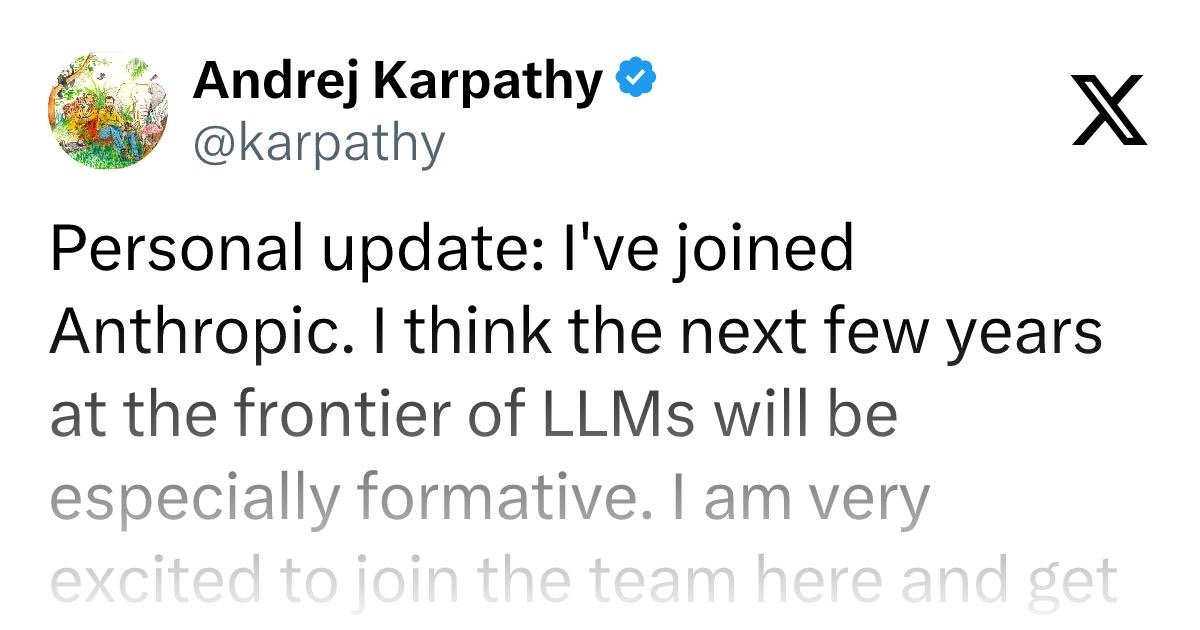
The same week, Andrej Karpathy joined Anthropic - founding member of OpenAI, former AI lead at Tesla - to work on using Claude to accelerate Claude's own pre-training. The people who built the scaling era are now sorting themselves by what they think comes next. Murati bets the interface is where human agency gets won or lost. Karpathy bets the recursion needs careful hands. For HE - the most credible people in the room disagree about the fundamental direction. That's not a reason for paralysis - it's a reason to teach students to read the disagreement, not just the benchmark scores.
AI Critics Said the Models Were Missing Something Fundamental: Google I/O Just Shipped An Answer | Ground Shifts 🌊
Turing Award Winner Yann LeCun posted this week that 'intelligence is not what you know, it's what you do when you don't know' - and that accumulation of knowledge and skills only seems like intelligence without being it. It's a provocation aimed squarely at LLMs, and one he's been making for a decade - scaling alone isn't enough, the world has physics, causality, and spatial relationships that no text corpus can fully capture. This week that argument cashed out as a product. Gemini Omni, announced at Google I/O last week, works natively in video - not converting footage to text and back, but understanding scenes, applying physics, maintaining consistency across multi-turn edits through natural language. Free on YouTube Shorts now. Marble (Fei-Fei Li's World Labs) and Genie 3 (DeepMind) have been building this layer - Omni is the moment it lands at consumer scale.
The education implication isn't 'cool visuals.' Simulation as pedagogy just lost its production budget barrier. Anything historically hard to teach because it's inaccessible, dangerous, or too dynamic - cellular processes, historical disasters, complex system failures - has lived behind specialist infrastructure. Google IO also shipped Neural Expressive - generative UI that builds custom layouts, interactive timelines, and mini apps on the fly from a prompt (Fireship breakdown of the whole I/O here). A text description is now a meaningful fraction of what used to require a specialist and a six-week timeline. Who builds curriculum around this first - educators with disciplinary depth, or vendors with a product to move - is a real question with a real deadline.
Google Just Shipped an Agent That Never Sleeps: OpenClaw Already Showed What Happens Without the Guardrails | Agentic Governance 🤖
Gemini Spark also launched this week - an always-on agent, running across Gmail, Docs, Drive and Calendar, executing tasks while you sleep, Ultra subscribers first with broader rollout across the northern hemisphere summer. The obvious parallel here is OpenClaw, the open source AI agent which gave many an IT team sleepless nights earlier this year - Dale and I did a deep dive on OpenClaw and the infamous Moltbook back in February which is potentially worth a look. Either way, Simon Willison 's 'lethal trifecta' - private data access, untrusted content exposure, ability to take external action - isn't a prediction. It's what happened.
For HE the trifecta isn't hypothetical. LMS systems with SSO, grading tools with broad permissions, third-party apps processing student records - many already tick all three. EDUCAUSE found 56% of HE staff using unapproved tools, making unilateral data privacy decisions daily. Shadow IT was one person finding a workaround. Shadow agentic AI is autonomous systems making decisions and taking actions while everyone sleeps. Spark is the governed version. Before signing, the questions are the same ones OpenClaw's early adopters should have asked - what data does this touch, what external content does it see, and what can it do when nobody's watching?

Demis Hassabis Says Using AI to Cut Jobs Is Dumb: The Data Backs Him Up, With One Brutal Caveat | Labour Reframe 📈
Demis Hassabis (Google DeepMind) told WIRED this week companies using AI productivity gains to reduce headcount are making a strategic mistake - use the gains to do more, not less. BCG's new analysis backs the broad direction: over the next two to three years, 50-55% of US jobs will be reshaped by AI rather than eliminated, with full substitution affecting only 10-15% of roles. Where demand for output is expandable - software, legal services, research - AI tends to grow the work rather than shrink the workforce. Moderna used it to let a team of thousands perform like tens of thousands. The abundance case is real, and it's documented.
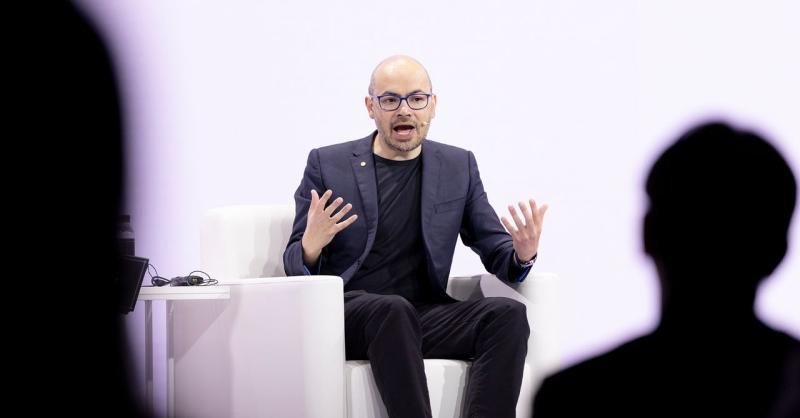
The caveat is brutal. BCG's own taxonomy identifies 'divergent roles' - where entry-level and junior positions are most exposed to automation while senior roles persist or grow - as affecting around 12% of current jobs. It's the apprenticeship bottleneck - entry-level work gets automated before juniors can build the expertise to become the augmented seniors of tomorrow. The abundance case is real for experienced professionals. The pathway in is the unsolved problem. Universities are certifying students for an entry point that's disappearing not as a destination but as a training ground. Hassabis is probably right that expansion beats contraction as a strategic frame. But then neither he nor the research answers who builds the ladder back down.

Jason Lodge Said Out Loud What Most HE Researchers Think Privately: We Still Don't Know Why AI Helps or Hurts Learning | Research Honesty 🔬
At a Deakin seminar last week, Jason M. Lodge - lead author of a wide range of Australia's foundational AI guidance (e.g. Enacting assessment reform in a time of artificial intelligence) - said something that doesn't get said enough: we don't know why. Surface findings accumulate but what's missing is the causal chain between AI use and what actually happens to learning - the black box between input and outcome that would allow genuine policy rather than educated guesses. The research base is at times shakier than the field's confidence suggests - landmark studies retracted, small-sample findings amplified, the publication pipeline choking on AI submissions. His framing of 'entangled intelligence' is a very useful provocation - students working with AI aren't using a tool, they're working with something closer to a group member, and that entanglement is too complex for traffic-light frameworks of appropriate and inappropriate use.
The acute/chronic distinction is also a sharp edge. Ring-fenced secure assessment is the current solution to the acute problem. Wearable AI - already cheap, already undetectable, already in the peer-reviewed literature - is quietly making ring-fencing the chronic problem. Phil Dawson's question from the Q&A has no comfortable answer - what if we can't crack this to a good enough level, and abandoning ring-fencing leaves nothing reliable in its place? Lodge's answer was honest. He doesn't know.
The ex-CTO of OpenAI raised billions to keep humans in the loop while the rest of the industry races the other way. Google I/O shipped something that looks like the answer to a decade of criticism about what these models were missing. The always-on agent layer went live - governed and ungoverned simultaneously. Demis Hassabis made the abundance case, and the data held up right until the entry-level numbers arrived. And one of HE's most cited voices on AI said publicly what the field mostly thinks privately: 'I don't know. I have been wrong. I still have a lot to learn'.
The people who built this technology are placing their bets. They're not placing them in the same place. The question for HE isn't which bet to follow. It's whether your institution has developed the judgment to tell the difference.
The Humans Need to Stay in This: World Models, Always-On Agents, and Murati's Counter-Bet | Adjunct Intelligence 🎙️
This week Dale Leszczynski and I got into everything above - what it actually means that simulation as pedagogy just lost its production budget barrier, whether Murati's human-in-the-loop bet is genuine philosophy or smart positioning, and Dale's Analyst 3 frame that's been stuck in my head all week. Find Adjunct Intelligence on YouTube, Apple, Spotify or wherever you get your podcasts.