
Hey
Hope you had a good week wherever you are. Saigon's on an absolute tear at the moment - hot, loud, excellent. Can't complain!
Lot to get into from the world of AI this week. Let's go:
The Optimism Gap: What Silicon Valley Says On the Record vs. Off It | Labour Reckoning 📉
University of Chicago economist Alex Imas has written the most coherent framework for AI and jobs in a while, and Ezra Klein just put it in front of a few million NYT readers. The argument: every time technology made one thing cheap, the economy reorganised rather than collapsed. Now, as AI makes knowledge cheap, workers will move toward the 'relational sector' - care, teaching, therapy, hospitality, any work where the human element is the value. The FT's survey of thousands of US and UK workers adds an uncomfortable data point: the highest-paid, most-educated workers are already adopting AI far faster than lower-paid colleagues.

The jobs apocalypse narrative has its skeptics - Scott Galloway this week invokes lessons learned from the Industrial Revolution - warning that fear becomes self-fulfilling, and argues the story is 'engineered by people who profit when you're scared.' It's a useful corrective. But Jasmine Sun's NYT piece, based on three months interviewing researchers and staffers from every frontier lab and several Congressional offices, lands the harder punch: the San Francisco consensus is privately bleak regardless of the public framing. 'Tech industry sources expressed more extreme concern about the labour market impacts of AI in private conversation - but suddenly became optimists once I turned on the mic.' So, in sum, 🤷. Universities preparing students for 'relational' futures might ask which students, in which labour markets, with which protections in place.
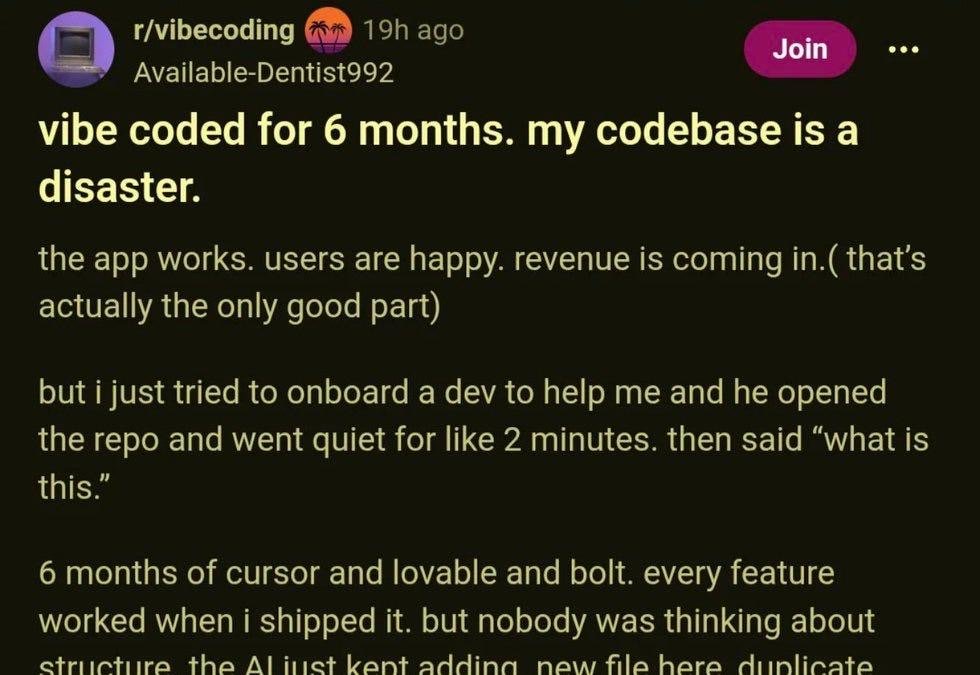
'Coding Is Going Away': The IPO Hype Meets the Vibe Coding Disaster | Ground Truth 🛠️
Dario Amodei told the world this week that 'coding is going away first, then all of software engineering'. Software architecture legend Grady Booch's response was direct: Amodei 'does not understand software engineering and is working feverishly to pump up the valuation of his company in anticipation of its forthcoming IPO'. Gary Marcus has been documenting the growing pile of vibe-coded disasters - production databases wiped in minutes, security breaches, data loss - and lands the structural point: system prompts and guardrails, the safety net users assume will catch them, are 'advisory, not enforcing'.
The lesson isn't that coding agents are useless. In expert hands, with real domain knowledge and constraint-setting, they're genuinely powerful. The problem is that we might walk a path to creating a generation of vibe coders who lack that expertise - and a class of CEOs telling the market those vibe coders are about to replace the engineers who do. For universities building software programmes, the question isn't whether software engineering is going away. It's whether 'AI skills' training is closing the gap between expert use and amateur use - or just producing more people who don't know the difference.
The Corporate University's New Contract: Signed, Sealed, Faculty Not Consulted | Procurement Gap 🏛️
The AAUP just released a special issue of Academe - 'AI in the Corporate University' - and Daniel Greene opening essay names the structural reason most institutions prefer not to examine. Universities caught in Baumol's cost disease - work that grows more expensive every year with no corresponding productivity gain - will always be attracted to a technology that promises expertise at scale without quite so many expensive experts. The pressure driving procurement isn't pedagogical. It's fiscal and reputational: bond markets and peer institutions signal that AI adoption is the move, regardless of whether it works. Chrome silently pushing a 4GB Gemini model onto billions of devices this week - re-downloading automatically when deleted - is the same logic at consumer scale. Who authorises the AI that arrives on your device and in your institution? Increasingly, not you.
ASU's Lev Gonick's Reimagining partnerships in the age of agentic AI points toward what a better answer looks like - co-creation over procurement, institutions articulating genuine needs, vendors willing to align. ASU's CreateAI platform has 30,000 active creators and nearly 1,000 production-grade experiences. The model is real and worth studying. But Greene's structural point holds regardless: even the best co-design process operates inside a fiscal system that was already moving. The bond market doesn't wait for co-design processes. The question Gonick asks - 'whose interests does the technology ultimately serve?' - is the right one. The honest answer varies a lot depending on who's doing the procuring.
AI Outperforms Doctors in Emergency Triage: Nobody Knows Who's Liable When It's Wrong | Clinical Capability 🩺
A Harvard study published in Science found OpenAI's o1 identified the correct emergency diagnosis in 67% of cases against 50–55% for human doctor pairs - rising to 89% vs 34% on longer-term treatment plans. The researchers were careful to note what wasn't tested: the full range of signals a clinician reads in a room. 'I don't think our findings mean that AI replaces doctors', one lead author said. 'It does mean we're witnessing a profound change in technology that will reshape medicine'.
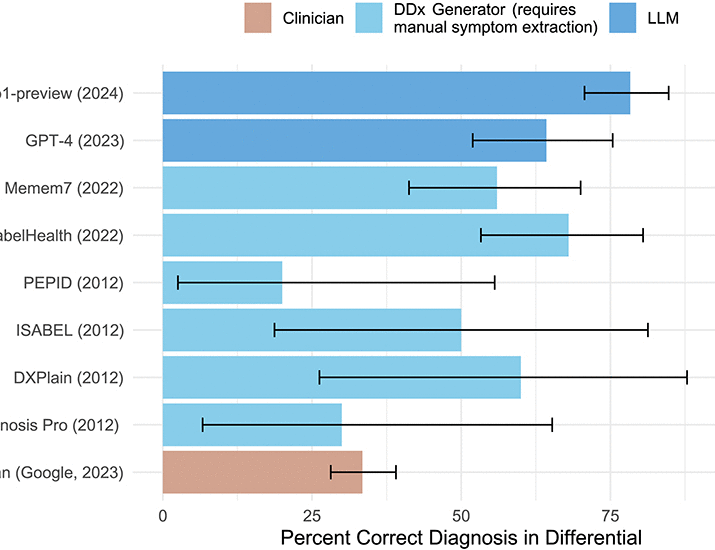
The governance gap is obvious and yet reportedly around one in five US doctors already use AI to assist diagnosis - 16% of UK doctors use it daily. The technology is in clinical settings. The accountability structure isn't. Interesting questions also re. whether doctors may unconsciously defer to the AI rather than thinking independently - a tendency that 'could grow more significant as AI becomes more routinely used.' Teaching students to use AI as a second opinion is a different skill to teaching them not to outsource the first one.

The Voice from Nowhere: What AI Is Doing to How We Communicate | Worth Your Time 📝
Interesting piece for a sit-down with a coffee: Liz Jackson's 'The Manliness of Artificial Intelligence,' in Educational Philosophy and Theory. The entry point is Microsoft Editor flagging words like 'just,' 'basically,' and 'really' as filler - and nudging users toward writing that is more 'powerful' and 'concise.' Linguists have never shown these words to be meaningless; they convey nuance, qualification, relational warmth. What they're coded as, in AI writing tools, is weakness. Jackson traces this to whose writing dominated the training data. It's not a neutral aesthetic preference - and students, she writes, are learning to prefer 'the voice from nowhere to their own, assuming it is the voice of knowledge.’
The second and third-order consequences reach further than the writing classroom. You've likely noticed words like 'delve' and 'navigate' exploding through professional communication over the last two years - LLM defaults absorbed into human expression by people who don't know it's happened. The newest form of this might into extend translation - and so even perhaps learning about other cultures: as AI removes the friction of language learning, the motivation to enter another culture goes with it. 'To study a language was also to enter its culture … with AI, this process of conquest through knowledge will be lost'. Homogenised expression, then homogenised thought, then atrophied curiosity about other people. For universities, that's not a peripheral concern.
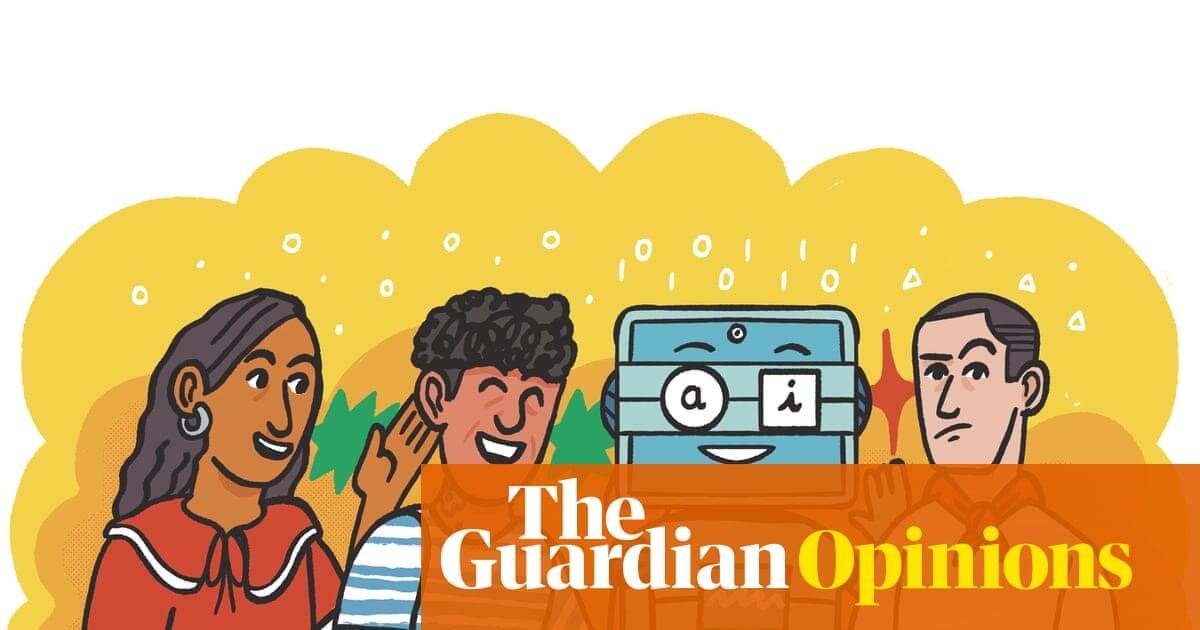
Silicon Valley insiders privately predict a permanent underclass while publicly performing optimism. Vibe-coded disasters pile up while the CEO promises software engineering is going away before an IPO. Faculty open the LMS to find the AI vendor already installed, the governance conversation scheduled for later. Emergency AI outperforms doctors and nobody knows who answers when it's wrong. And 'delve' is in your students' essays because a machine decided powerful writing doesn't qualify itself.
The gap this week isn't between capability and governance in the abstract - it's between what's being said in the room and what's on the record, between who signs the contract and who teaches in the building, between a technology reshaping medicine and the accountability structure that doesn't exist yet. Jasmine Sun's most chilling detail: the people who know most about what's coming won't say it with the mic on. That's not a communication problem. It's a governance one.
The Trust Winter: When AI's Reputation Crisis Hits Campus | Adjunct Intelligence 🎙️
A Molotov cocktail at Sam Altman's gate. Enterprise buyers flipping from OpenAI to Anthropic in ten weeks. Teenagers calling delivery robots 'clankers.' Dale and I are calling it a trust winter - not a capability failure, but a legitimacy one. We get into what that distinction means for institutions making procurement decisions right now, why the psychological conditions of genuine learning may be structurally incompatible with institutional AI, and whether the AI rights conversation is the right one to be having at all. Find Adjunct Intelligence wherever you listen to podcasts or watch on YouTube.