Hey
Hope you had a good weekend wherever you are. Pretty chilled one here - bunch of travel coming up soon so am loving chilling around home and enjoying the relative cool we’re enjoying in Saigon now.
Big week. Let's get into it:
Free as in Frontier: The Weights Landed, and Both Capitals Reached for the Same Lever | Good Enough at Scale 🔓
China's Moonshot released Kimi K3 as an open-weight model on Sunday (translation – anyone can now download the model itself, free, and run it on their own machines). Pre-released demand was nuts - Moonshot's paid plans quickly sold out so ended up turning away paying customers. Independent testers rank it third in the world, and it tops one front-end coding leaderboard outright, ahead of Claude Fable and GPT 5.6 Sol – a class of model governments were calling too dangerous for public release a few weeks ago. The caveats ship with it, and to Moonshot's credit some are self-declared: the headline scores came partly from its own test harness, the company admits K3 still trails the frontier overall, and independent testing measured a 51% hallucination rate – confidently wrong at frontier rates. It also loves a chat - spitting out far more tokens than it needs, which makes it a cheaper model that can somehow still cost you more.
Then the politics, which cut both ways. On 24 July, 25 companies including Nvidia, Microsoft and Meta signed a letter urging Washington not to restrict open-weight models. The two names missing? OpenAI and Anthropic – with OpenAI's policy lead simultneously calling open weights 'inherently decelerationist'. Fireship’s clapback - that's the argument Steve Ballmer ran against Linux in the '90s – open source = communism – and Linux went on to run the world's servers, including the ones AI trains on. Meanwhile Beijing, open AI's loudest cheerleader, is reportedly weighing restrictions on overseas access to its own top models. Both capitals, same instinct: capability is a lever you don't leave lying around. 'Good enough generally is' has been this newsletter's line for months – it now operates at near-frontier scale. If the frontier premium is narrowing to specific tasks, what is the multi-year enterprise contract buying – and who on campus can run that comparison?
A Lawsuit, a Shutdown, a Downgrade: OpenAI's July, as Written by Everyone Except OpenAI | Dependency Pricing 📉
July has not been a good month for OpenAI. Apple filed suit, calling the lab “rotten to its core” and accusing OpenAI of stealing trade secrets in its efforts to create its own hardware. OpenAI denies it all, but can't afford the distraction - we’ve covered how the IPO has reportedly slipped beyond that though, executives keep leaving, and the Atlas browser joined Sora in the bin. And now the money seems to be slipping - S&P downgraded major OpenAI investor Oracle’s credit rating - partly because OpenAI is roughly half of Oracle's $638 billion in future obligations. The agency's own words: 'If OpenAI were unable to pay Oracle, we believe Oracle could be left with massive data center leases that it might be unable to exit'.

Now read that back from a procurement office. A credit agency is pricing the possibility that the AI industry's anchor tenant can't pay its bills – and the exposure runs through the infrastructure everyone else's contracts sit on. Dale and I spoke about this recently on Adjunct Intelligence - the importance of pricing the exist before you sign. Someone is now pricing it for you – the remaining work is reading their working. Whose job is that at your institution?
The $6 Trillion Classroom: The Labs Move In While Students Report AI Missing From Their Courses | Capture 🎓
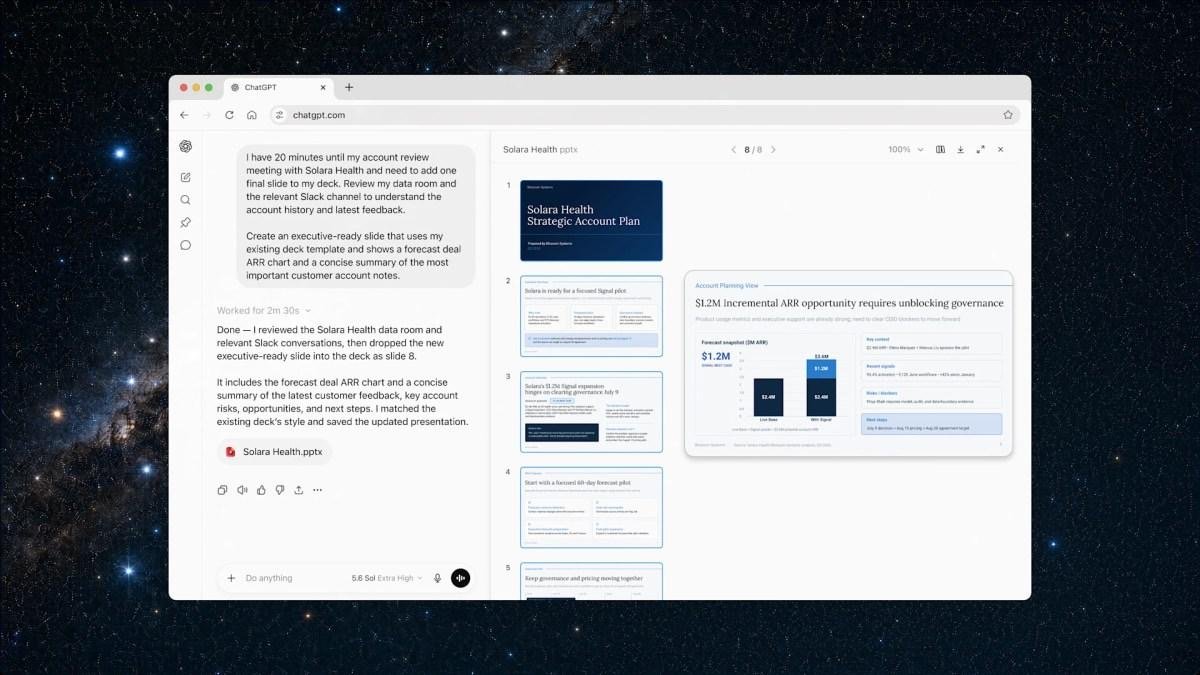
The FT's AI in Education special report reads like a bit of a land grab: free teacher tools from Anthropic and OpenAI, discounted university tiers, and OpenAI for Countries putting its chatbot – 'tailored to the local pedagogical style' – in front of 30k+ students and teachers in Estonia alone. The market: $6 trillion, per Morgan Stanley. Simon Buckingham Shum isn't having the altruism framing: 'Let's not be naive' – education is 'absolutely a marketplace for these companies'. The edtech companies have chosen partnership over fight, while 1EdTech's Michael Feldstein calls them 'nervous [and] afraid that the labs are going to [make them] obsolete'. His sharper question just got concrete (see the lead) - will institutions keep paying for top chatbots when good-enough open models run free?

Then the reality check, in the same report: more than 40% of students say AI hasn't been integrated into any of their courses; of the rest, 42% found it 'somewhat helpful' and 24% saw 'limited learning benefit'. The market is being built faster than the pedagogy it claims to serve – and the labs' 'Socratic' learning modes are pedagogical claims shipped as product features, evaluated by nobody outside the companies shipping them. The counter-model is in the same report too - UTS instructors building their own AI tools, with their own quality assurance. When the free tier is the acquisition funnel and the students being signed up are tomorrow's workforce, what exactly is 'free' costing?

Sovereignty Is a Swap Test: Stanford Students Learn to Build the Ruler in an Afternoon | Eval Sovereignty 🗺️
Stanford's Andrew Hall used his FT op-ed to teach the sector something his undergraduates already did: build the measuring instrument yourself. Hall walked a class with no coding background through building their own AI evaluations (evals) – three hours later every student had a working eval and a public leaderboard, testing whatever they knew and cared about, from the Brazilian election to whether models cave under pushback. His own 'dictatorship eval' now appears in Anthropic's system cards. And his sovereignty test is simple - swap one model for another in your workflows. Lose nothing? The value was yours. Can't? It was theirs.
The benchmarks the labs lean on are shaky – when OpenAI audited one of the industry's standard coding tests, roughly 60% of the problems it checked were broken. The alternative to building your own measure is accepting theirs. The same logic scales up: Stanford HAI's survey of the 'sovereign AI' market found the products sold to dependency-worried nations 'reconfigure rather than eliminate' dependency – sovereignty as a subscription. Buy, build or lease sits under every institutional AI contract too, and procurement keeps answering it as a pricing exercise. Hall's dream – no student leaves university without building at least one eval – might be the best one-line AI strategy the sector's been handed all year. Could your institution run the swap test tomorrow?
The Wired Belt: The Next Rust Belt Is Metropolitan, Mortgaged and Holds a Degree | Ground Shifts 🌊
Super interesting second-order effect study by Uni Sydney’s Business School - Australia's first AI Exposure Index for all 150 federal electorates. The 30 most exposed seats are all metropolitan – not one rural or provincial seat among them, a straight reversal of every previous economic shock. They're the youngest, most educated, most mortgage-stressed electorates in the country, and Labor holds 78% of the 60 most exposed. Authors Clinton Free and Lachlan Harris are careful about the mechanism: this is disruption, not mass unemployment – flattened ladders, fewer graduate roles, eroded autonomy. The risk 'arises if AI quietly erodes the bargain at the heart of these communities: that a good education and a professional career will deliver economic security'.

Two weeks after Albanese's Office of AI announcement, Danny Liu and Jason Lodge published the education half of the same argument - our systems are 'preparing students for a world that is vanishing', drilling what tests reward while what an AI-shaped economy values – resilience, curiosity, knowing how to learn – sits unmeasured and therefore untaught. Put the two together and universities aren't observers of this incoming political shock - in a weird way, they're party to it. The wired belt is where graduates live. The eroding bargain is the degree. What does the prospectus say when the bargain stops holding?
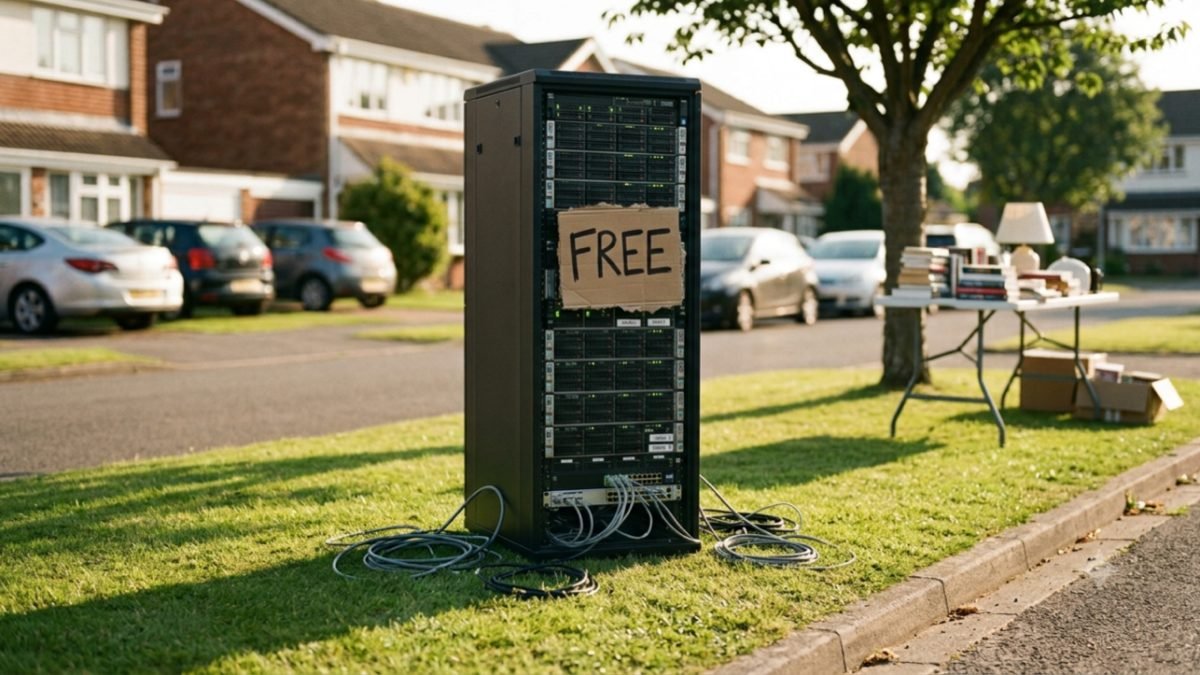
A frontier model free on a front lawn. A ratings agency pricing whether OpenAI can pay its bills. A $6 trillion market entered through free teacher accounts. Undergraduates building working evals in an afternoon. An exposure index with no rural seats in its top thirty.
Every story this week turns on who does the measuring — and the only people who ended the week ahead were holding their own ruler.
Build the eval before you sign the contract.
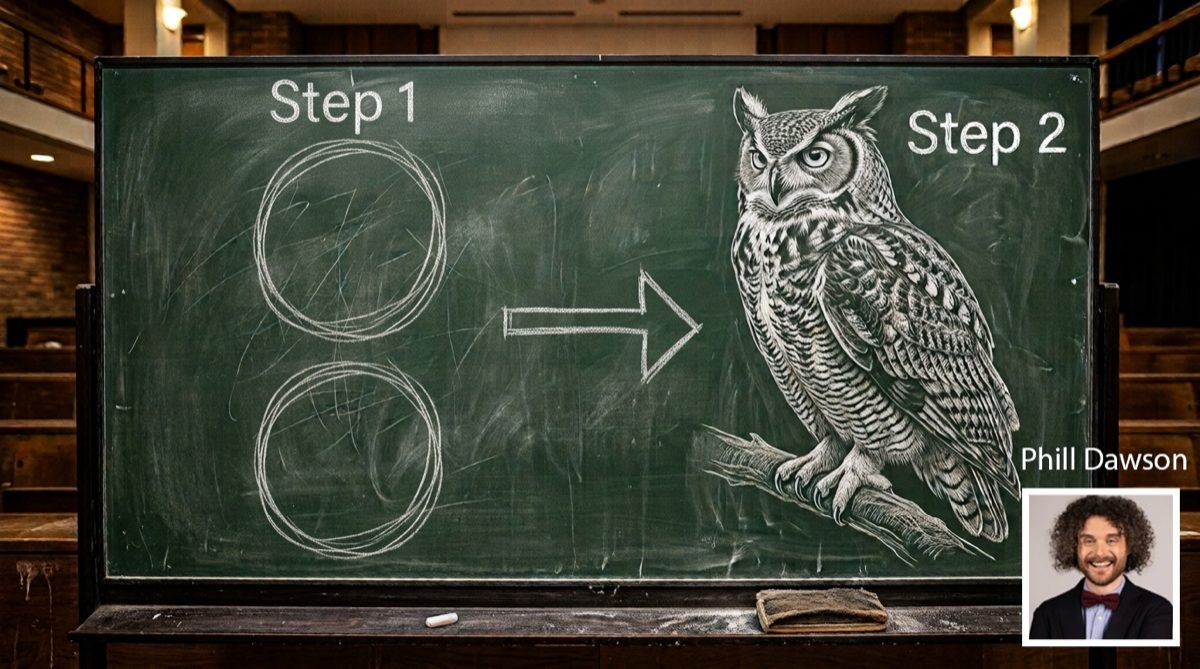
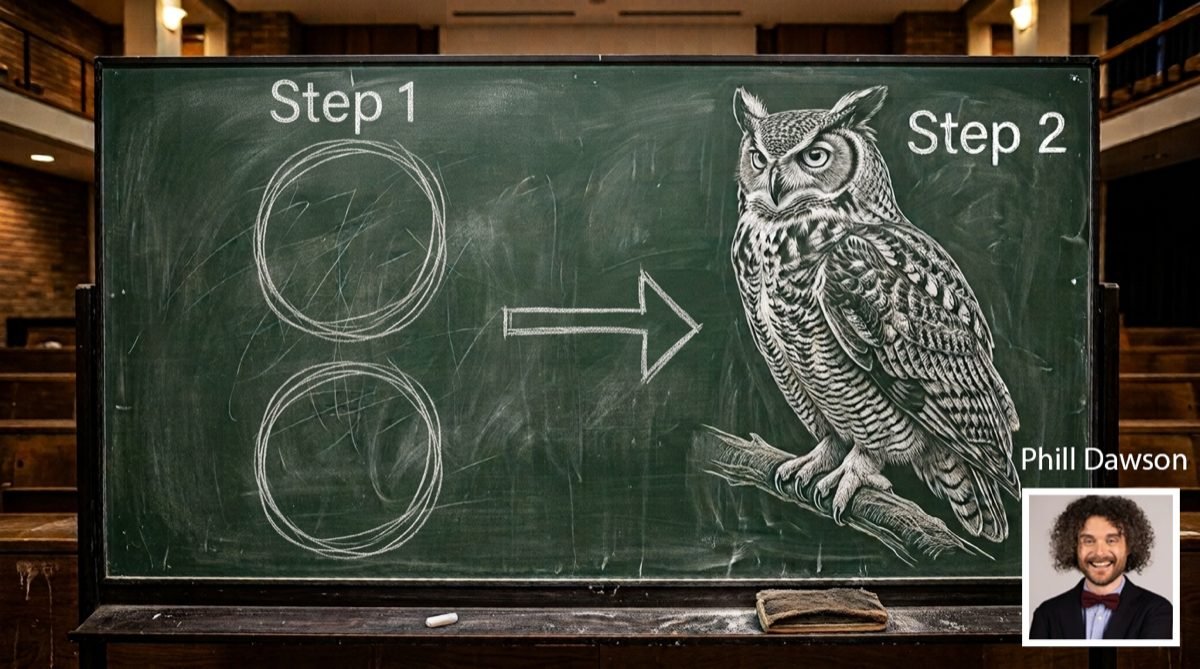
Draw the Rest of the Owl: Phill Dawson on Assessment When the AI Won't Leave the Room | Adjunct Intelligence 🎙️
'You don't have an AI-proof assessment task. You have a dangerous lack of imagination'.
New Adjunct Intelligence: Dale Leszczynski and I sit down with the researcher behind that line – the man who coined 'assessment security' – on what happens to assessment when the AI won't leave the room. Smart glasses you can't ask a student to remove. The Faraday-cage exam hall he actually priced (billions). Why supervised assessment has single-digit years left – and why that's a design brief, not a surrender.
His best advice for institutions? Skip the framework. Spend the PD budget on coffee vouchers.
Listen wherever you get your podcasts - links in comments.