
Hey
Hope you had wonderful weekends wherever you are. It’s our last weekend in Hanoi before we move south later this week so the city decided to send us off with a surge of real summer temperatures - the humidity pushed the RealFeel past 40° 🥵🫠
Anyway, let’s get your Monday started with a few headlines from the world of AI:
The Global AI Divide: While the West Debates, China Embraces | Strategic Divergence 🌏
A deep dive into 18 months of student ChatGPT logs from a top British university reveals the chaotic reality Western institutions are trying to regulate away. Three undergraduates generated nearly 12k prompts, turning AI into their go-to therapist, career advisor, and academic ghostwriter. The logs expose the seductive validation trap - ChatGPT never criticises, always flatters, and readily enables boundary-crossing that universities struggle to detect. Western students navigate an underground landscape of mirror sites, detection-proofing services, and constant anxiety about "using it right."

Meanwhile, Chinese universities have made a decisive pivot - treating AI literacy as core competency, not academic threat. Nearly 60% of faculty and students use AI tools multiple times daily, supported by university-deployed DeepSeek installations and mandatory AI education programmes. The cultural gap is stark: 80% of Chinese respondents are excited about AI versus just 35% of Americans. As one Beijing professor puts it: "Instead of having students do it privately, we should talk about it out in the open." While Western institutions create the expertise gap through prohibition, Chinese students are building exactly the AI fluency that tomorrow's job market demands.

Switzerland's AI Sovereignty Play: Why Free Beats Closed | Third Way 🇨🇭
While tech giants fight over browser dominance and superpowers clash over AI leadership, Switzerland just dropped a different playbook entirely. ETH Zurich and EPFL are releasing a fully open 70B parameter model this summer - trained on their carbon-neutral Alps supercomputer, supporting 1000+ languages, and licensed under Apache 2.0. No paywalls, no API limits, no vendor lock-in. The model isn't just open-source code; it's open weights, open training data, open methodology. This isn't charity - it's strategic sovereignty.

The timing reveals the deeper game. As Western universities scramble with ChatGPT policies while Chinese institutions embrace DeepSeek, Switzerland is building the infrastructure layer that makes both approaches obsolete. Public institutions training their own models on public supercomputers with transparent datasets - funded by taxpayers, owned by citizens, governed by democratic institutions rather than corporate boards. The 1000+ language capability isn't just inclusive; it's geopolitically smart, offering smaller nations an alternative to choosing between Silicon Valley's English-first models or Beijing's state-controlled systems. As this scales, every country with serious AI ambitions might well want their own Alps supercomputer and their own sovereign model stack.
The Diplomatic AI Wars: China’s Global Governance Gambit | Strategic Messaging 🌏
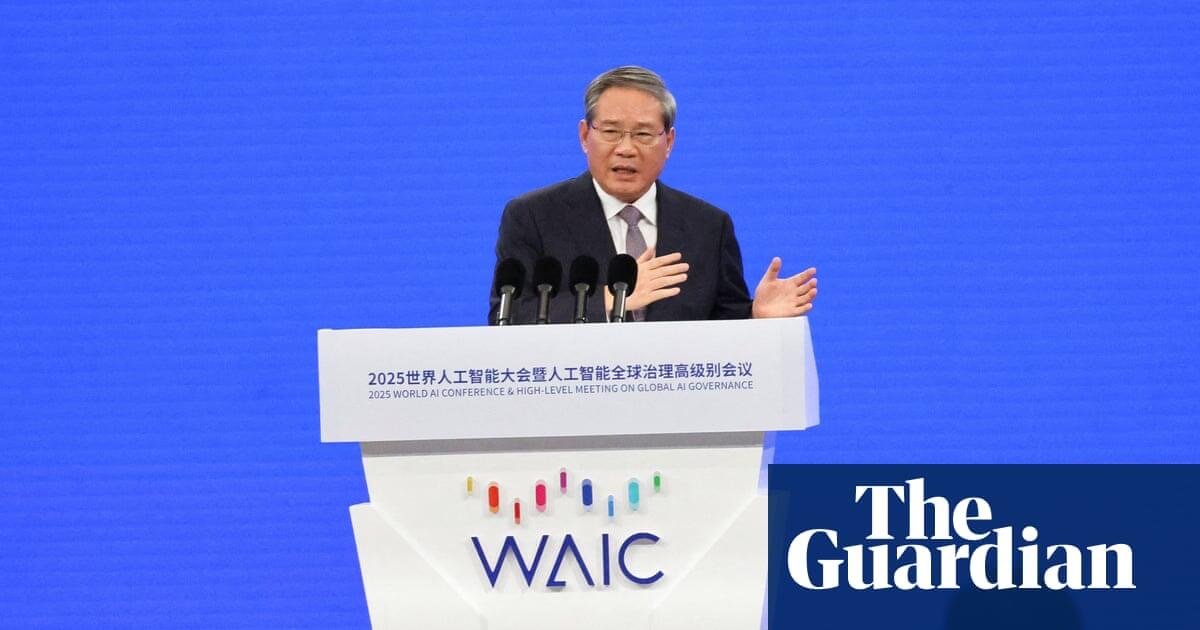
Three days after the US released its 28-page AI Action Plan focused on “winning the AI race” through market-driven approaches and export controls, China unveiled its own - but the real story is in the linguistic chess match. While Trump’s plan emphasises removing regulatory barriers and expanding “dependencies on US-developed AI infrastructure,” China’s version constantly uses “global governance,” “working together,” and “jointly promote development”. The timing isn’t coincidental: China added “global” to its plan title and launched it at their state-organised World AI Conference with Premier Li Qiang announcing a proposed global AI cooperation organisation. It’s strategic nudging to position China as the collaborative multilateralist while framing America as the aggressive unilateralist.

But the messaging obscures the deeper reality. China’s public plan is deliberately summarised and globally focused - diplomatic theatre for international consumption. Their actual internal directives likely mirror the US approach: detailed, nationalistic, and focused on domestic AI supremacy. China’s 2017 goal to be the world’s AI leader by 2030 hasn’t changed, and recent government actions prove they’re fully committed to the AI race. The real competition isn’t between cooperation and rivalry - it’s between two strategies for global AI dominance. China bets that appearing collaborative while building capabilities will attract Global South partners, whilst the US builds an allied bloc through export restrictions and infrastructure dependencies. Both are racing towards the same finish line; they’re just using different diplomatic vocabularies to get there.
The AI Browser Wars: Everyone Wants to Replace Chrome | Platform Battle 🌐
Three major players just launched AI-first browsers within six weeks of each other. Microsoft rolled out Edge’s “Copilot Mode” letting AI view all your tabs and handle bookings. Perplexity launched “Comet” for $200/month subscribers with an AI agent that summarises emails and navigates pages. The Browser Company’s “Dia” turns the URL bar into an AI interface that drafts content from your open tabs. All three are betting that the browser is the ultimate AI distribution channel.
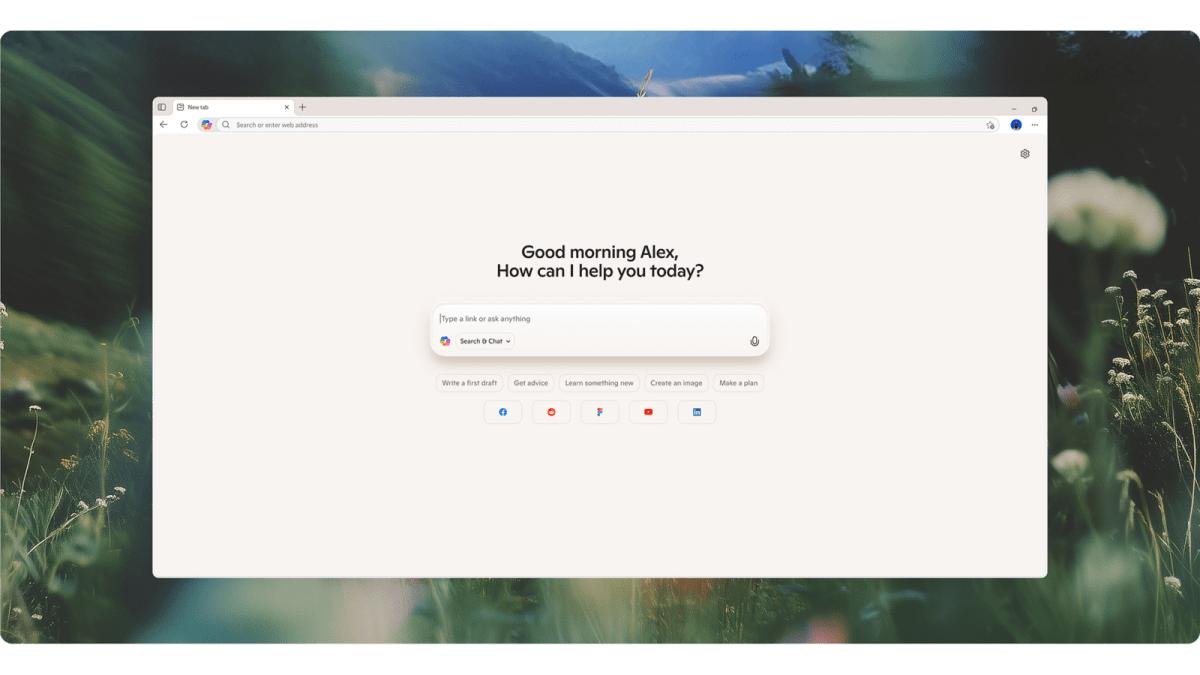
The strategic play isn’t convenience - it’s control over the entire web experience. When your browser becomes your AI assistant, whoever wins doesn’t just capture market share - they become the middleman between users and the entire internet. Microsoft wants to handle your bookings, Perplexity wants to replace Google as your information gateway, The Browser Company wants to eliminate visiting ChatGPT entirely. Chrome’s dominance suddenly looks vulnerable when the competition isn’t about speed or privacy, but about which AI brain mediates your digital life.
The Empathy Engine: When AI Humans Feel More Real Than Real | Emotional Manipulation 🎭
A filmmaker just shared his workflow for creating "real human emotions" using AI - hyper-specific prompts crafting every wrinkle and hesitation until viewers feel genuine empathy for a completely AI-generated "70-year-old European man". The technical execution is flawless, but here's the unsettling bit: if AI can manufacture the visual markers of human emotion so convincingly that audiences find themselves tearing up at AI-generated content, what happens to our ability to distinguish authentic human experience from computer-based theatre?

This isn't about deepfakes - it's about industrialising human connection. When the most emotionally compelling content becomes entirely synthetic, we're not just democratising filmmaking; we're systematically training audiences to respond to artificial vulnerability cues. The filmmaker celebrates creating "emotions that feel real," but he's actually demonstrating how easily our empathy can be hijacked by sufficiently sophisticated simulation. We're heading toward a world where authentic human stories can't compete with AI-optimised emotional manipulation. The question isn't whether AI can create convincing emotions - it's whether we'll still value authentic ones.
We’re witnessing the end of AI as a tool and the birth of AI as infrastructure. Whether it’s students navigating underground ChatGPT economies, superpowers weaponising diplomatic language, Switzerland building sovereign model stacks, filmmakers industrialising empathy, or browsers becoming AI orchestration layers - the question is no longer whether AI will reshape society, but who controls the reshape. The institutions, nations, and companies that build the foundational AI layer won’t just influence the future - they’ll own it. While we debate policies and ethics, the infrastructure that will govern our digital lives for the next decade is being built right now.
Want more analysis? Check out the latest episode of Adjunct Intelligence where Dale Leszczynski and I dig into this and a whole lot more!