Hi
Hope you had an awesome weekend wherever you may be. Mine was relatively chilled - got guests coming to stay next week so just getting things ready for that (oh and the All Blacks beat South Africa in a close-fought battle at Eden Park so 🤩 🇳🇿🎉)!
Anyway, a few notes from the world of AI to kickstart your Mondays:
Universities Can't "Solve" AI Assessment: Stop Trying | Research Reality Check 🔬
New research from Deakin's CRADLE cuts through the endless cycle of AI assessment "solutions" with a brutal reality check: there is no solution. University educators aren't failing to find the right approach – they're wrestling with what researchers call a "wicked problem," challenges designed to resist definitive answers. The study interviewed 20 university educators who consistently described being "at a loss" – not from incompetence, but from confronting impossible trade-offs. Make assessments AI-proof and kill creativity, embrace integration and sacrifice academic integrity, try both approaches and drown in unsustainable workload.
The CRADLE team's prescription isn't another framework but three radical permissions that acknowledge reality: permission to compromise (every approach sacrifices something valuable), to diverge (different contexts need different solutions), and to iterate (constant revision isn't failure, it's survival). It's a rare academic admission that sometimes the smartest response to an impossible problem is to stop pretending it's solvable. While institutions chase perfect AI policies, educators need institutional support for navigating permanent uncertainty rather than punishment for imperfect solutions.
Anthropic's $1.5 Billion Reality Check: When the "Good Guys" Get Expensive | Legal Earthquake 💸
It’s been a busy week for Anthropic. First off, the AI industry just got its first concrete price tag for content theft, and it's hefty. Anthropic agreed to pay at least $1.5 billion to settle copyright claims from authors and publishers who caught them training Claude on pirated books from shadow libraries. The settlement works out to roughly $3,000 per book across an estimated half million titles - a figure that's now become the de facto licensing benchmark rippling across music, film, and images. Judge William Alsup's June ruling was the kill shot: while training on legally acquired books might be fair use, hoovering up seven million pirated titles was "inherently, irredeemably infringing." Facing potentially catastrophic statutory damages in the hundreds of billions, Anthropic chose expensive certainty over existential risk.
The $3,000-per-work anchor won't stay confined to books. Music publishers are already circling with catalogues worth billions, stock photo agencies hold tens of millions of images, and the arithmetic gets terrifying fast. Meanwhile, Anthropic's market dominance tells a different story - they've flipped the script on OpenAI with 32% enterprise market share versus OpenAI's 25%, and Claude crushes coding with 42% market share. But the company also just pulled a classic tech move that stings because they were supposed to be the ethical ones: burying an opt-out toggle for training data beneath a big "Accept" button. When the good guys start acting like everyone else, the AI race has officially claimed its first ethical casualty. The settlement covers past data acquisition only - the battle over whether Claude's outputs infringe copyright is still coming... will be watching with interest.

The AI Cheating Panic Is Wrong: Students Were Already Cheating This Much | Research Reality Check 📊
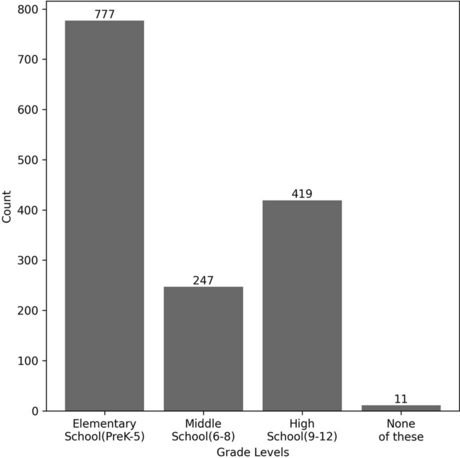
Stanford researcher Victor Lee has spent years tracking AI cheating in schools, and his data delivers an inconvenient truth: AI didn't create a cheating epidemic, it just gave students a new tool for behaviour that was already rampant. Before ChatGPT existed, 61-83% of high school students reported cheating behaviours in any given month. After ChatGPT's release? The numbers stayed virtually identical at 59-64%. The method changed, but the volume didn't. While 11-15% of students now submit fully AI-generated work, those same students would likely have used Chegg, Course Hero, or Wikipedia if AI wasn't available.

The real story isn't about technology corrupting innocent students - it's about systemic issues AI is exposing. Students cheat when coursework feels like meaningless busywork, when they're overwhelmed by competing deadlines, or when they see educators/adults using AI while being told they can't. Only 10% of high school teachers have set explicit AI policies, leaving students to navigate contradictory messages about what's acceptable. Lee's research reveals students trying to stay within bounds they can't clearly see, using AI for late-night homework help rather than wholesale replacement of learning. The panic over AI cheating is missing the point - if we want to reduce academic dishonesty, we need to address why students were already cheating at scale long before AI arrived.
Google's AI Summaries Trigger Publisher Traffic Apocalypse | Search Reckoning 🔍
Google avoided antitrust breakup this week as publishers face what they're calling an "existential crisis" for online journalism. A federal judge ruled the search giant won't be forced to sell Chrome or Android, imposing relatively mild remedies like sharing search data and ending some exclusive deals. But the real transformation is happening through AI integration: Google's AI Overviews and new AI Mode are systematically destroying the referral traffic that has funded digital publishing for decades.
The numbers are brutal. The Financial Times reports a "sudden and sustained" 25-30% decline in search traffic, while the Daily Mail documented clickthrough rates dropping by up to 89% when AI summaries appear. Publishers describe being forced into an impossible choice: accept Google's terms for how content gets used in AI summaries or "drop out of all search results entirely." The effect, whether intended or not, is straightforward: Google increasingly delivers answers directly from scraped content rather than directing users to source websites. Some publishers are striking licensing deals with AI companies or building their own chatbots, but industry executives acknowledge this is a "pincer movement" attacking revenue from both ends. Google maintains it still sends billions of clicks daily and that AI features drive more queries overall, but publishers report the shift toward AI-first search is undermining the economic model that has sustained online journalism since its inception. For a company that once made "don't be evil" it’s unofficial motto, the irony is stark: Google may be inadvertently destroying the very content ecosystem that made it valuable.

China's $5,900 Robot Revolution: The BYD Moment for AI | Manufacturing Reality Check 🤖
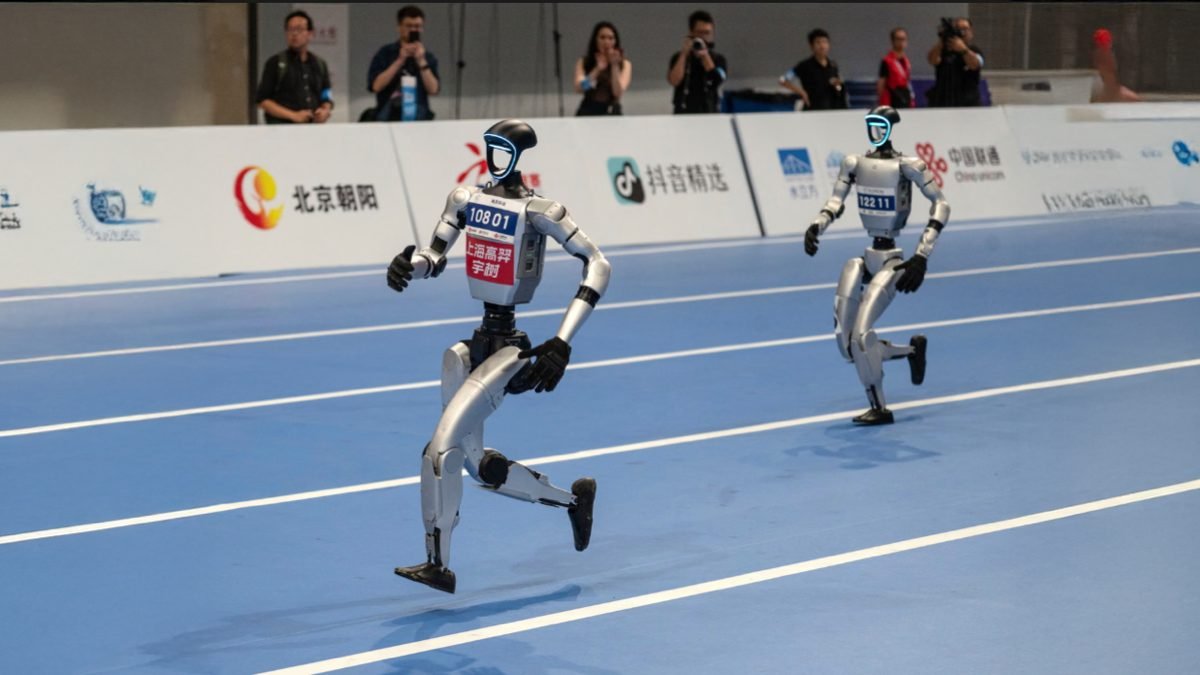
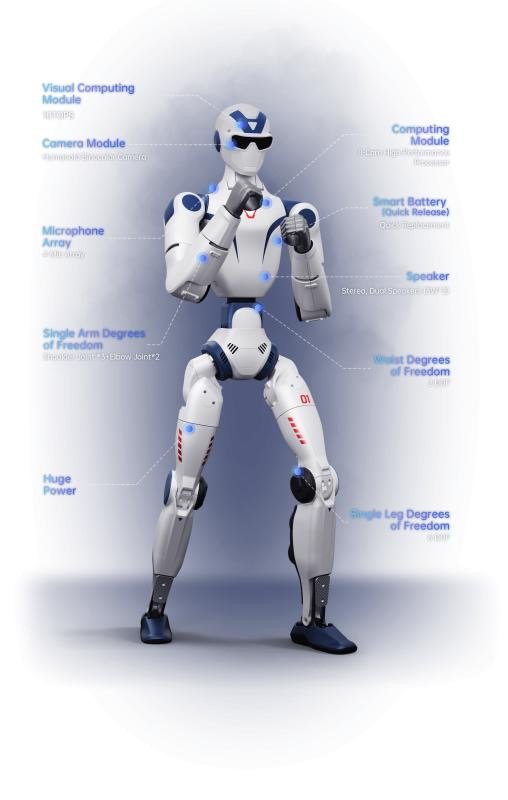
While Silicon Valley chases AGI breakthroughs, China just demonstrated a different AI strategy at the world's first humanoid robot games in Beijing. Chinese company Unitree's R1 humanoid robot sells for $5,900 - a fraction of Boston Dynamics' roughly rumoured $100,000+ price tag. China has become the first country to achieve mass production of humanoid robots, now controlling 40% of global robotic installations versus Japan's 10%. The spectacle revealed both promise and peril: when a robot lost an arm during a 1,500-metre race but staggered to the finish line with wires dangling, the crowd's cheers highlighted how quickly we humanise these machines - after all, who doesn’t love a plucky battler?
The economics mirror China's automotive disruption. Just as BYD flooded global markets with affordable EVs while Tesla focused on premium models, Chinese robotics companies are applying mass production to bring costs down dramatically. Industry observers predict a "China AI shock" similar to what happened with solar panels, wind turbines, and electric vehicles - established markets suddenly facing an avalanche of cheaper alternatives. The question isn't whether Chinese robots are as sophisticated as American counterparts, but whether "good enough" at one-twentieth the price changes everything. With youth unemployment hitting 17.8% and millions of highly educated graduates entering the workforce, China's bet on practical AI applications over theoretical breakthroughs could reshape global labour markets. The robots may be falling over in Beijing today, but at these prices, they don't need to be perfect - just functional enough to undercut human workers worldwide.
The uncomfortable truth is that while higher education debates AI policies, the world has already moved on. Students are living in an AI-native reality that makes traditional academic frameworks irrelevant, employers have eliminated the jobs universities prepare students for, and the platforms students trust can't even protect children from inappropriate AI interactions. Every week spent debating whether students can use ChatGPT for citations is another week your institution falls further behind a reality that's already here. The choice isn't whether to engage with this transformation - it's whether universities will lead it or be dragged through it by forces they refused to understand.
While universities panic about teaching "AI skills," my co-host Dale Leszczynski and I tackle the uncomfortable reality that educational psychologist Jason M. Lodge from University of Queensland lays out: we're teaching students how to use tomorrow's floppy discs. Our latest episode unpacks why domain knowledge still trumps prompt engineering, how "21st century skills" became meaningless buzzwords, and why the most valuable human capabilities maybe aren't technical at all. Catch the latest episode of Adjunct Intelligence wherever you get your podcasts (or on YT below):