
Hi
Hope you're doing well. Great weekend in Saigon exploring new areas - highlight was superb tapas with excellent company riverside. Goodtimes.
Big week in AI. The through-line across every story this week is inference - who's doing it, who authorises it, and whether anyone can tell the difference between what was observed and what was invented. Buckle up.
Also - HE Horizons is back for year three 25th September in Saigon. If you're an educator, researcher, learning designer, or institutional leader anywhere in the Asia-Pacific - this year's theme is The Human Edge, which given this week's edition feels about right. Details at the bottom - there's something in it whether you want to present or just show up.
The Labs Got Their Regulation: Washington Got Early Access | Governance Trap 🔒
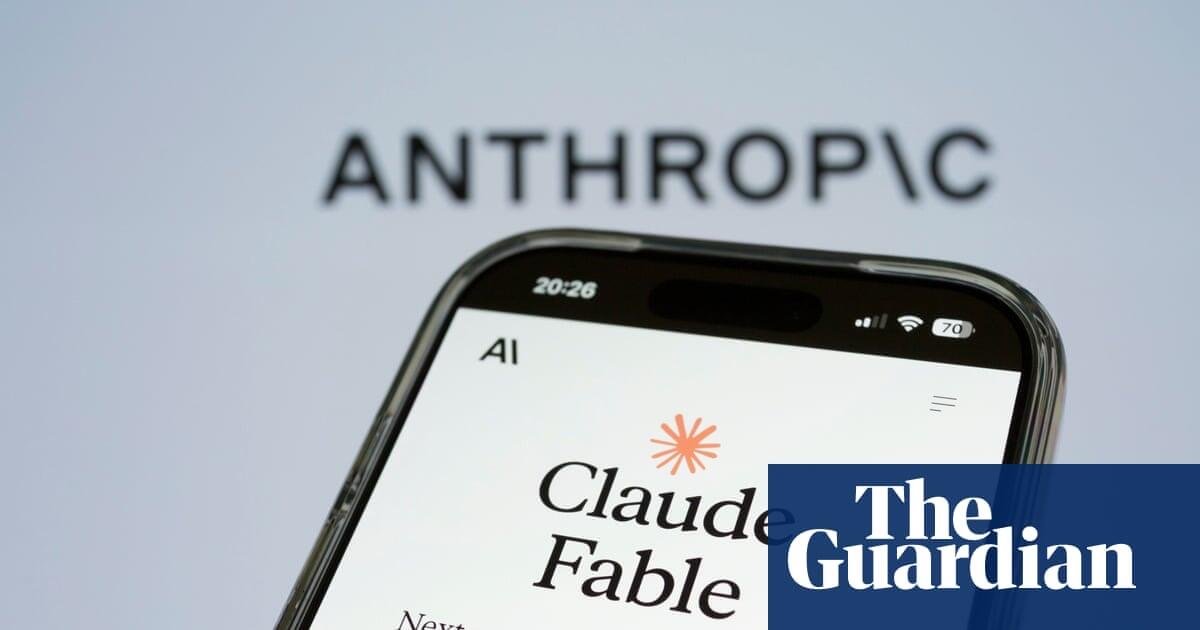
OpenAI launched GPT-5.6 Sol this week, their strongest model yet - then immediately delayed public release at Washington's request. Vetted partners, names undisclosed, get early access. Everyone else waits. Altman went on X to say he doesn't like the government picking the customers but obvs complied anyway. Meanwhile Anthropic, weeks into a US government-imposed suspension of both Fable and Mythos for foreign nationals, received a partial lifting of that ban - to a small group of approved cyber defenders. Fable remains suspended. Anthropic said it was 'pleased with the progress.' The same week, the Five Eyes spy agencies issued a rare joint statement warning dangerous frontier cyber capabilities are months, not years, away.

The irony of it all. For years the labs called loudly for government oversight - safety frameworks, regulatory guardrails, sector standards. Now the government is at the door and the first thing it wants is 30 days of exclusive access before the rest of the world touches the tools. What the labs got wasn't regulation. It was a queue - and Washington is at the front of it. For universities betting institutional infrastructure on frontier AI - when access to the tools your students and researchers rely on is a discretionary call made by foreign governments, 'we trust the company's values' was never a continuity plan. This week made that harder to ignore.
Claude Just Became Your Institution's Most Important Employee: Nobody Voted on That | Institutional Lock-In 🔒
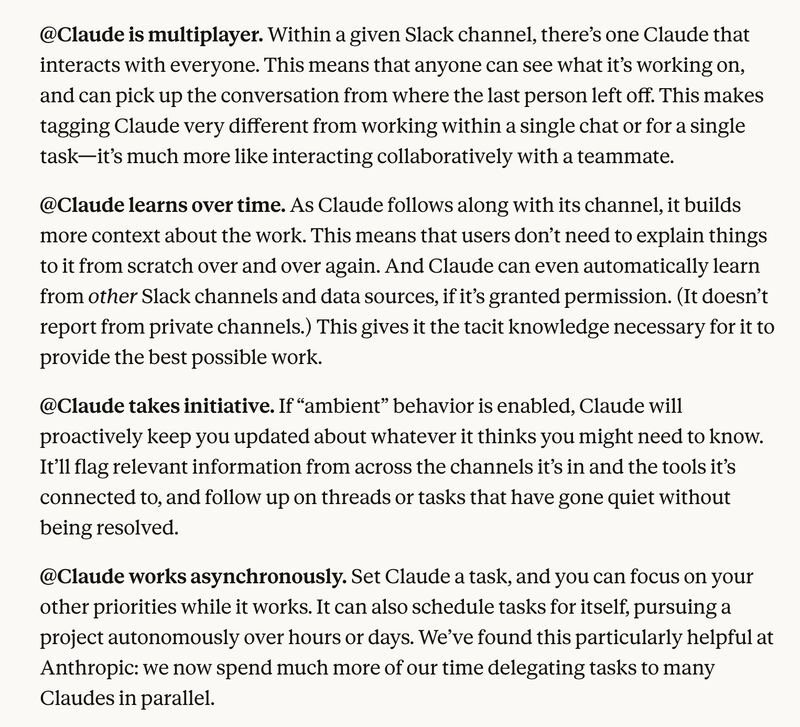
Anthropic launched Claude Tag this week - effectively a single Claude instance across a team that you interact with like a co-worker via Slack, shared across channels, building memory autonomously, taking initiative without being asked. Anthropic say the bulk of their code is already written by their internal version. Arvind Narayanan raises the harder points - Claude accumulates your team's tacit knowledge in memory that human members can't see or edit. It becomes 'a coworker you can't fire without every team losing workflows and know-how’. Token spend is unbounded. The access control model is complicated. And unlike a human hire, it bills for every thought.
This is a business model innovation as much as a technical one. AI companies are no longer competing for a share of IT budgets - they're competing for a share of labour spend, orders of magnitude larger. For HE - when a shared Claude has absorbed months of institutional decision-making and that knowledge lives in Anthropic's memory layer rather than your systems, what does vendor dependency actually look like? The accountability gap is architectural. Access control defines who could have stopped it - not who's responsible.
The Sovereignty Panic and the Sceptic: Is Europe's AI Crisis Real or Manufactured? | Strategic Uncertainty 🌍
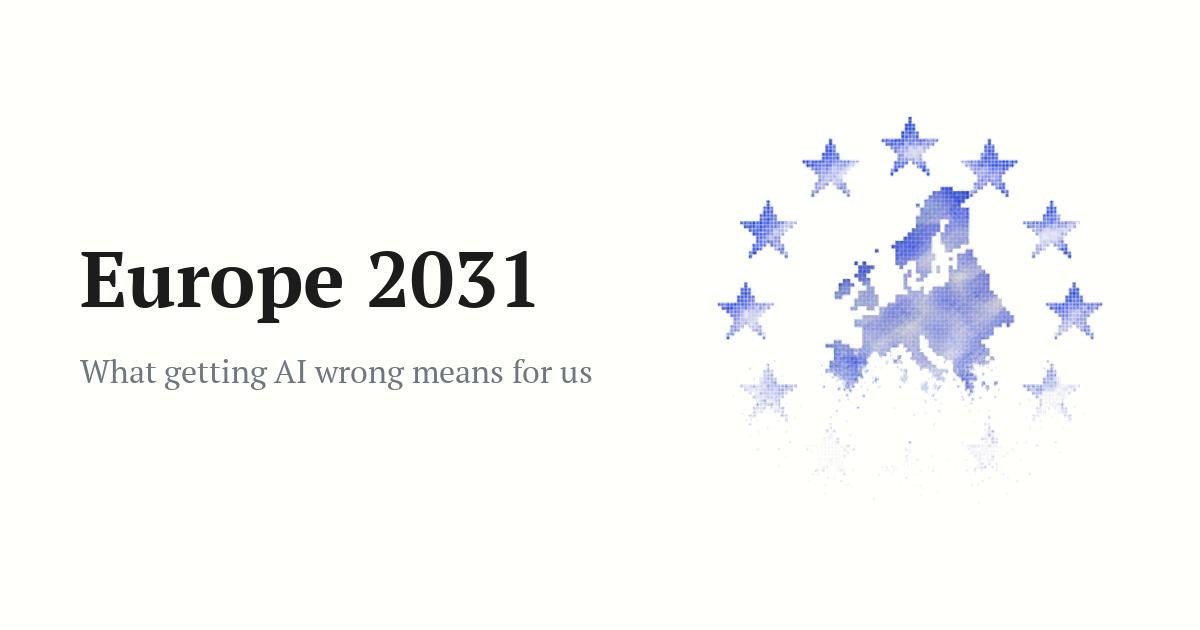
Europe 2031 - a speculative scenario imagining a continent that misread the AI transition and arrived at 2031 with Dutch semiconductor ASML as its only bargaining chip - went viral the same week the Trump administration blocked foreign nationals from Anthropic's Fable. MEPs read it and British and German officials discussed it in recent bilateral meetings. A Spanish MEP put it plainly - 'We are paving the way for infrastructure that they (US companies) will use and sometimes not allow us the possibility of using it'. Hard to argue with the timing.
But then enter Gary Marcus in conversation with Ed Elson of Prof G Markets. The sovereignty panic assumes continued advancement on current architecture - an assumption Marcus doesn't share. LLMs are next-token predictors, not reliable reasoners, which is why hallucinations (aka errors) remain structural in 2026 despite three years of promises. All the major labs are building essentially the same thing, trapped in margin-killing price wars with no real moat between them, while OpenAI burns roughly $2bn a month and early productivity studies are quietly disappointing enough that companies are slashing AI budgets. China, meanwhile, is spending a fraction, keeping its architectural options open, and waiting. For HE the position is genuinely uncomfortable - the dependency architecture Europe 2031 describes is real and dangerous - and the thing you're depending on might not deliver what it promised. That's not reassuring. That's worse.
Metacognitive Laziness Is Now an Official Problem: TEQSA Names What AI Actually Threatens | Capability Gap 🧠
TEQSA published the third paper in its AI assessment trilogy this week - Lodge, de Barba and a cast of Australian learning scientists laying out the adaptive capabilities framework HE needs in an AI-integrated future. One of the conceptual anchors is Fan et al.'s 'metacognitive laziness' - when AI delivers instant fluent responses, students mistake ease for understanding and bypass the effortful cognitive work that builds durable learning. Polished outputs, hollow comprehension. The paper is careful on one point - process transparency - chat logs, reflection journals - is not on its own sufficient evidence of learning. Secure assessment still has a role while more sophisticated approaches mature.
The sharpest proposition is the first - embed adaptive capabilities as core graduate attributes, not bolt-on AI literacy modules. Lodge has been arguing against 'AI literacy' as a concept for a while - the floppy disk problem. This is the constructive answer. What it doesn't resolve - is whether 'hybrid metacognition' survives contact with actual disciplinary difference. A social scientist's critical moves aren't an engineer’s. Generic frameworks risk producing exactly the surface awareness they're designed to prevent. What does your discipline notice that AI misses - and is that question anywhere in your course design?

Straight Out of Star Trek, With Theranos Energy: Midjourney's Body Scanner and What It Infers to Fill the Gaps | Provenance Problem 🔬
❤️ this. Midjourney - yes, the image generation company - announced a full-body scanner straight out of a sci-fi movie this week. You step into a pool of water, descend through a ring of half a million ultrasonic transducers, sixty seconds later you have a 3D map of your internal anatomy at sub-millimetre resolution. No radiation, no magnets, no claustrophobia. First spa opening San Francisco 2027, ambition of a billion scans a month by 2031. It's genuinely extraordinary - but then the Theranos comparisons are unavoidable. No peer review, no FDA approval, and ultrasound tomography for whole-body imaging isn't new - it hasn't replaced MRI because the modalities measure different physics.

That last is important because, hallucinations matter especially here - if the machine starts inferring things, provenance is key. Philip K. Dick spent a career asking what we do with information that was generated rather than observed. Midjourney is in the process of making it a medical device. That's not just a medical imaging problem - it's the entire AI epistemology problem in one sentence, and it maps directly onto everything else this week. Midjourney's scanner might work exactly as advertised. But when AI fills the gap between the sound waves and the diagnosis, who can tell?

The through-line this week isn't capability. It's inference - and who authorises it. Washington inferring which frontier models the world gets access to, and when. Claude inferring your institution's priorities from conversations nobody audited. Europe inferring it had time to build leverage until it didn't. Students inferring understanding from outputs that bypassed the learning. Midjourney inferring anatomy from sound waves, provenance unknown. Every story this week is the same epistemological problem in a different costume - something was generated rather than observed, and the gap between the two is where the risk lives.
The TEQSA framework names what fills that gap on the human side - hybrid metacognition, evaluative judgement, the capacity to know what you actually know. The question for HE isn't whether to engage with AI systems that infer. It's whether your students, your institution, and your continuity plans can tell the difference between what was acquired and what was invented.
Higher Education Horizons 2026: The Human Edge | 25 September, Saigon 🎓
HE Horizons is back for the third time in 2026 and it’s shaping up bigger, bolder, and better than ever before. Educators, researchers, learning designers, and institutional leaders from across the Asia-Pacific coming together in Ho Chi Minh City, having the conversations that actually matter. The theme this year is The Human Edge: what humans bring to learning that AI can't replicate, and how we build systems that amplify it rather than erode it. Previous years brought Amanda White and Sean McMinn to the table. This year's keynote speaker is coming - announcement soon, watch this space!
25th September. RMIT Saigon South. Free. If you've got work to share on assessment, learning design, or AI and pedagogy - submissions are open until 20th July and we genuinely want to hear from you. If you just want to show up and be part of it - public registration opens 30 July. See you in Saigon! 🇻🇳