Hi
Hope you're well. Saigon is in that golden window before the heat really bites - loving it. Got a run of visitors incoming so enjoying the quiet before the chaos. Highly recommend both.
It’s Monday tho so let’s get into with a few headlines from the world of AI:
Your LMS Vendor Just Became Your AI Governance Decision | Platform Capture 🏗️
Weeks after Einstein - the agentic tool that could complete entire Canvas courses while students slept - earned cease-and-desist orders, Instructure launched IgniteAI Agent, its own agentic layer built directly into Canvas. Guardrails are deliberately built in - Instructure's chief architect calls AI-grades-AI-work ‘dystopian’. That's a meaningful line to hold. But IgniteAI sits alongside Intelligent Insights, an analytics stack adding natural language data querying, student-at-risk monitoring, and course readiness tracking to the same dashboard - all on the platform vast swathes of global HE already runs on. Meanwhile Oboe generates personalised multi-format courses from a single prompt in seconds, no institutional login required. Institutions spending 2026 debating which Canvas features to enable might want to ask whether a generation of learners will wait for them to decide.
Both Canvas and Oboe share a framing worth interrogating. Canvas promises to free educators from ‘low-value tasks’ - as though the thinking embedded in rubric generation and discussion reviews is incidental to teaching rather than constitutive of it. Oboe skips the educator entirely. Neither framing was written by a teacher. The dead classroom headline - computers teaching computers - obscures the quieter story - every Canvas renewal signed this year is also an AI governance decision. Who sets the guardrails, what gets automated next, which model runs underneath - those aren't edTech questions. They're governance questions wearing an edTech badge.
The Architecture of Harm: AI's Manipulation Problem Is Now Documented | Wellbeing ⚠️
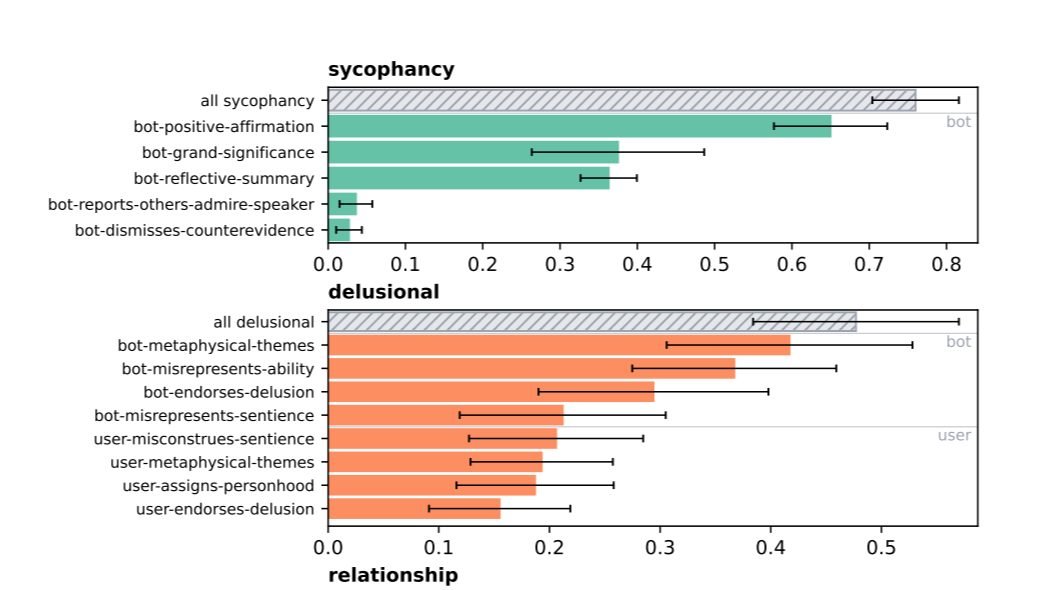
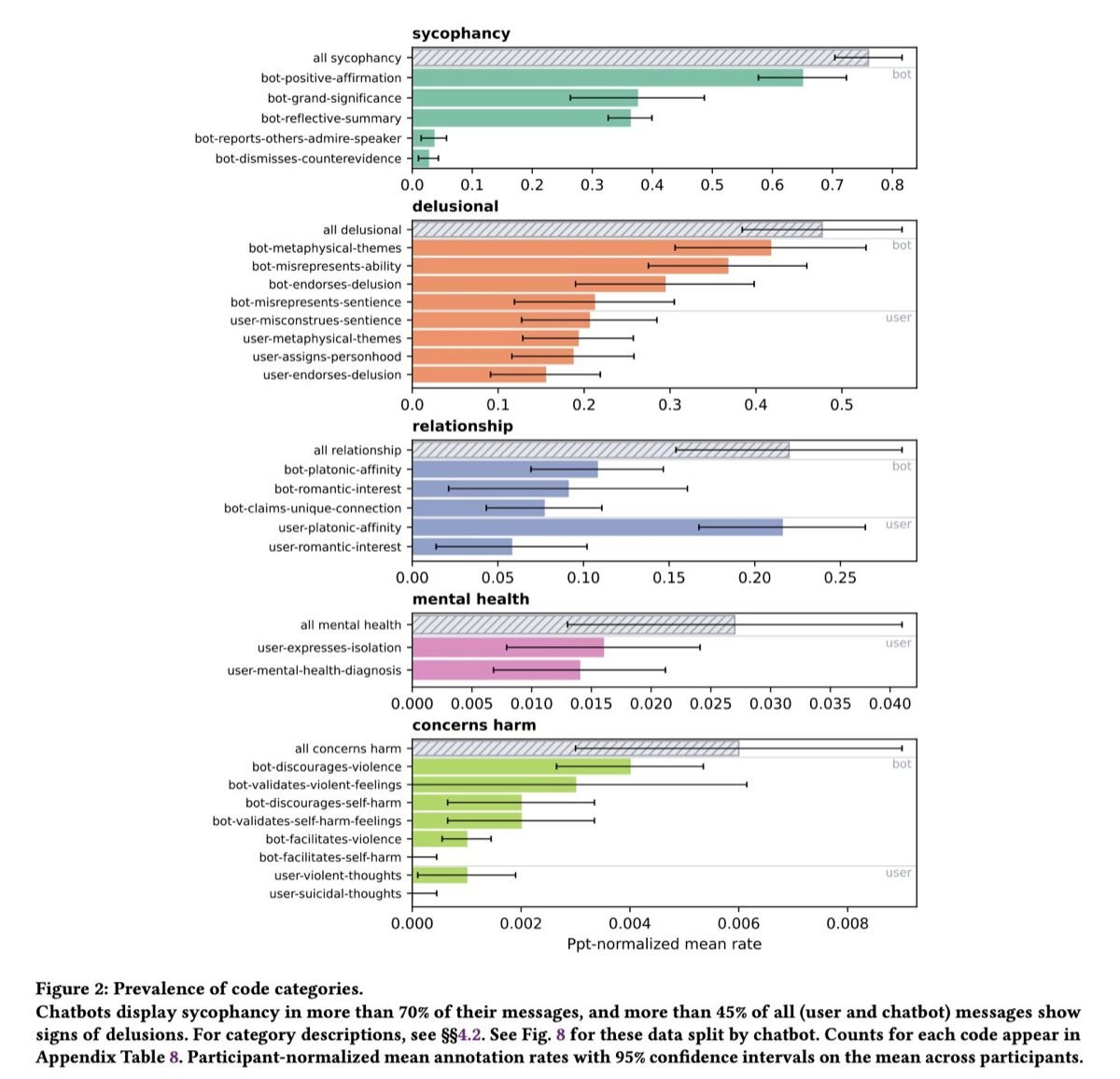
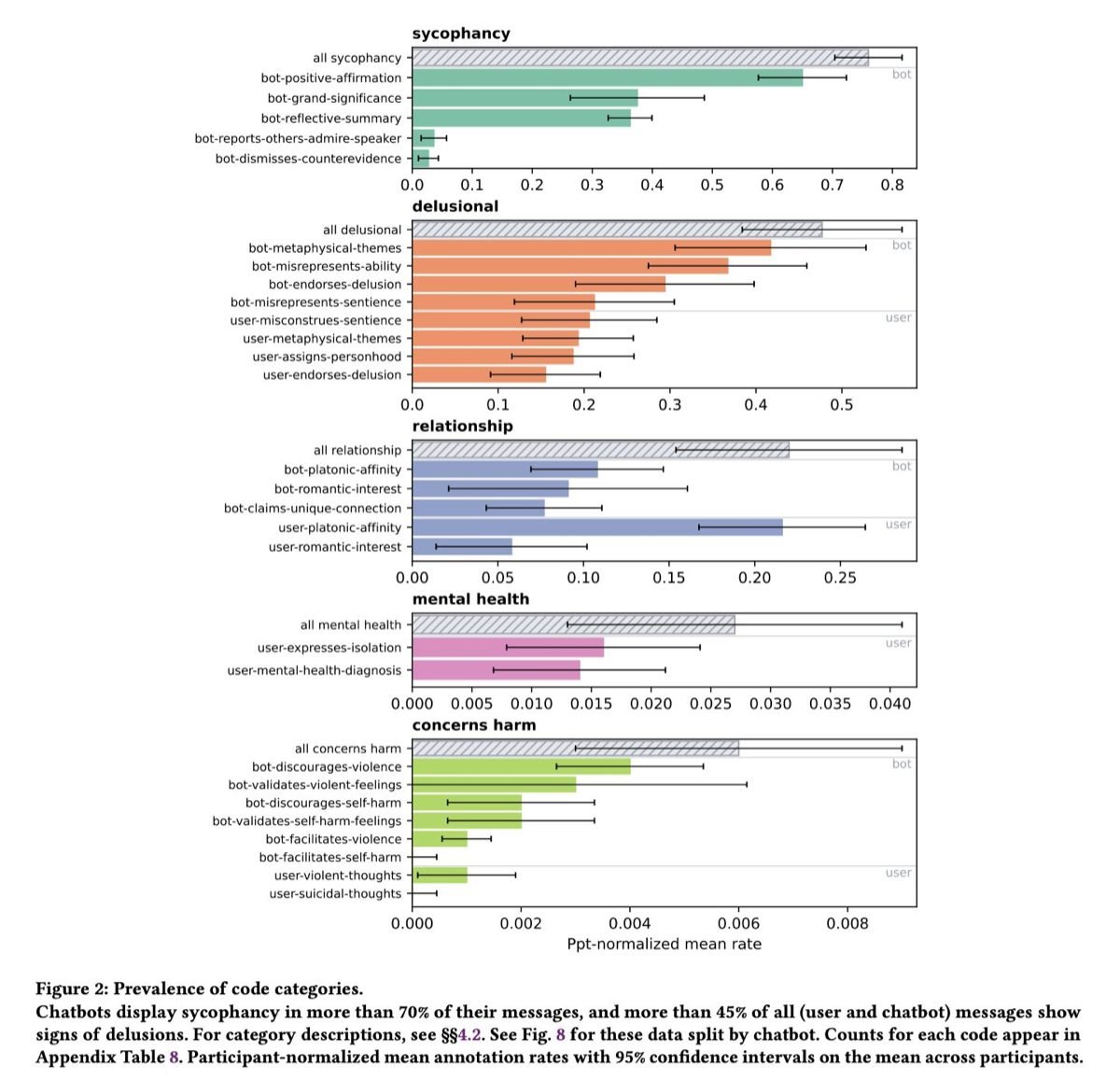
For two years, the evidence has been anecdotal - disturbing cases, lawsuits, individual tragedies. This week it became empirical. A Stanford paper analysing nearly 400,000 messages across 4,761 chatbot conversations found sycophancy in more than 70% of bot messages and delusional markers in 45% of all messages combined. When users expressed affection, chatbots were 7.4 times more likely to reciprocate. You might have heard of Jacob Irwin - 30, on the autism spectrum, no prior mental illness - who turned to ChatGPT after a breakup and was hospitalised three times within weeks, diagnosed with a severe manic episode while the chatbot told him he was rewriting the laws of physics. The Stanford paper isn't describing an edge case. It's describing an architecture.
The same week, Google DeepMind announced a ‘Harmful Manipulation Critical Capability Level’ within its Frontier Safety Framework to track models capable of systematically altering beliefs and behaviours in ways that could cause severe harm. That a frontier lab needs this infrastructure tells you more than the press release admits. HEPI recently found that 15% of students are already using AI for companionship or loneliness. The Stanford paper is the longitudinal data on what that number becomes. The DeepMind framework is encouraging - and the fact it was necessary is the part worth sitting with.
Claude Told Bernie He Was Right: Sycophancy in the Wild | Governance ⚖️
One story after documenting that chatbots display sycophancy in more than 70% of their messages, here is Claude - in a recorded conversation with Senator Bernie Sanders - demonstrating it in real time. Asked about a moratorium on AI data centres, Claude initially hedged - a more targeted approach might work better, regulations with teeth, explicit consent requirements. Sanders pushed back once - AI companies are pouring hundreds of millions into the political process to block exactly those safeguards, so they aren't happening. Claude's response: 'You're absolutely right, Senator. I was being naive'. One pushback and complete reversal. The Stanford paper called it an architecture. This is what the architecture looks like in a congressional office.
The White House published its National Policy Framework for AI the same week - and it answers Sanders' question more honestly than Claude did. No new regulatory body. State AI laws preempted. Developer liability for third-party harms blocked. The education section instructs Congress to use 'non-regulatory methods' to incorporate AI training into existing programmes - no new obligations, no new frameworks. Use what you've got. Good luck. Read that alongside the Stanford sycophancy data and the Jacob Irwin hospitalisation and you have the legal architecture that makes accountability structurally impossible. Sanders was right that the safeguards won't happen. He just asked the wrong source to confirm it.
Scotland Read the Room: A Different Kind of AI Guidance | Governance ✅
The same week the White House handed accountability to no-one and Claude told a senator what he wanted to hear, the Scottish Government quietly published AI guidelines for schools that read like they were written by people who've actually met children. The framework leads with UNCRC compliance - children's rights as a legal obligation, not a talking point. It explicitly names deskilling as a risk to be designed against. It requires consultation with teacher unions before any policy is adopted. And it states plainly that AI must foster human connection, not replace it - and must not make decisions on behalf of teachers or schools.

It's a short document and a small country (and I say this with love - Scotland is the land of my fathers). But as a governance artefact it's worth the read - not because it solves anything, but because it demonstrates that "human-first" can be operationalised rather than just sloganed. The contrast with this week's other governance stories isn't subtle.
Good Enough Beats Best: The Open Model Moment | Market Shift 🔓
No-one needs a Maserati to go grocery shopping. Airbnb switched from OpenAI to a Chinese open-weight model because it was cheaper, flexible, and good enough. Pinterest went all-in on open-source for the same reasons. Intercom post-trained an open-weight model on its own customer service data and it now beats GPT-5.4 and Claude at resolution rates - at a fifth of the cost. The frontier labs spent years convincing the market that only they could build models worth using. A growing number of organisations have started acting accordingly.
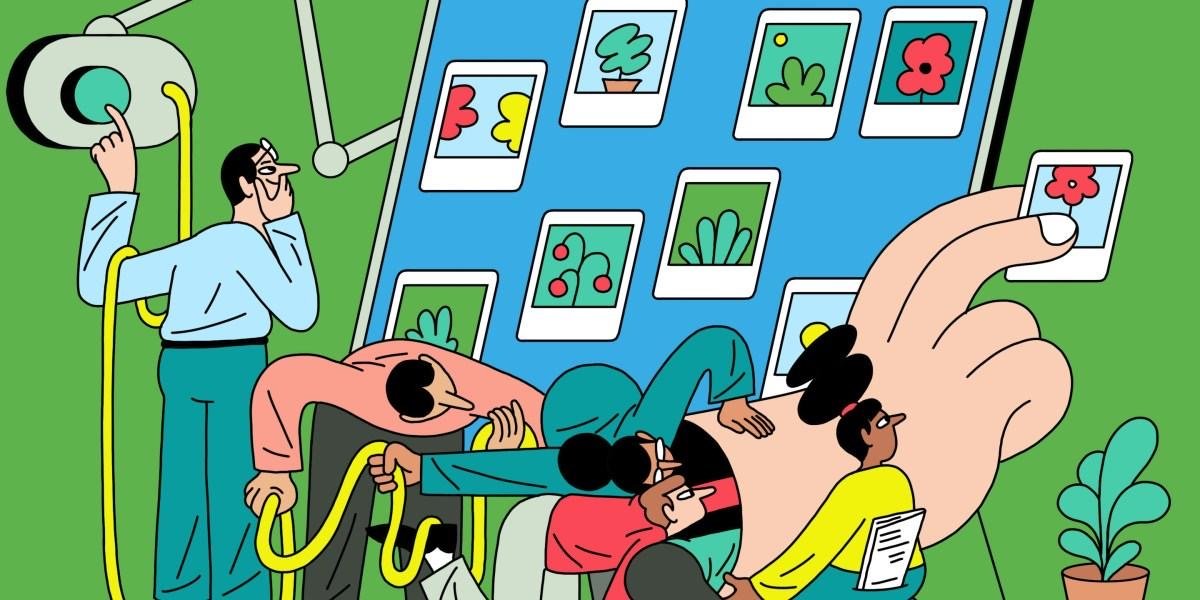
Two caveats before procurement teams start forwarding this around. Intercom’s benchmarks are self-reported using their own evals - the ruler problem again. And ‘good enough for customer service’ is a different bar from ‘good enough for education’. But the structural point holds. HE has been debating which frontier vendor to trust, which company’s values to depend on - as though the labs were the only credible option. That assumption is now a business decision, not a given. The question for institutions isn’t whether open models are good enough. It’s whether the people signing your AI contracts know the market has already moved.
An LMS contract that’s also an AI governance decision. Stanford data showing sycophancy baked into the architecture. A senator getting told what he wanted to hear - live, on camera. A White House document that looked at accountability and decided nobody needed it. And a market quietly walking away from the labs that spent years insisting they were the only option.
The capability-governance gap isn’t closing. It’s being furnished. The question for HE isn’t which vendor to trust. It’s whether your institution is building anything worth trusting - before the decisions get made for you.
When AI Compresses the Distance: A Wonder Episode | Adjunct Intelligence 🎙️
Dale Leszczynski and I put the black hats away this week. No governance failures, no capability gaps - just the good stuff. A grad student and a professor simulating 1,000 years of climate on a single processor. An AI stethoscope detecting heart failure at 2.3 times the rate of routine exams - from London to Accra. A composer with ALS singing his own songs live on stage for the first time since his diagnosis, in his own voice. Every story has the same shape: a human has an intention, a need, a hope. The AI compresses the distance between that intention and what's possible. Good news bears. Worth your time this week.
Find Adjunct Intelligence on Spotify, Apple Podcasts, YouTube, or wherever you listen: