Hey
Just back from a week on the beach in Thailand. Had been planning on Taiwan but, when we heard about the incoming typhoon, decided that discretion is the better part of valour and opted for an island in the Andaman Sea. Goodtimes 🏝️
Back in the office now so let's get into it with a few headlines from the world of AI:
Universities Aren't Inevitable: The Existential Question Nobody's Asking | Strategic Theatre 🎭
I have this provocation I’ve used most of 2025: 'AI presents a direct challenge to the value proposition of an HE degree'. Tended to raise eyebrows and, after a bit of throat clearing, a lot of uncomfortable nods. But things have moved on since then and I reckon I need a new one for 2026: maybe 'Are universities in their current form even necessary anymore?' Nobody in HE wants to ask that out loud, but honestly? Right now there’s a case building that the answer is 'no'. Ian Richardson just dropped a brutal takedown in THE - he argues that, 30 years into the internet, it's hard to think of another sector that's failed this spectacularly to engage with technology. At the same time, Massimo Garbuio pulls no punches in labelling our current strategic plans as nothing more than 'elaborate exercises in institutional theatre'. While we perform this dance, platforms like EdX and Coursera are quietly eating our lunch - and now AI's accelerating the value proposition collapse.

Happily, some exciting, more forward-thinking possibilities are emerging. Vanessa Andreotti is running a seminar next week on 'Repurposing the University' - shifting from 'elitist ivory towers' to 'humble nurse logs' that compost current systems. Interesting metaphor but maybe that's a start to the reimagining we need. We produce the AI research we're too scared to use and have mission edTech startups can't replicate. But this is potentially existential and, 3 years in, we’re still performing ‘strategy’. The question isn't whether universities survive. It's whether what survives deserves to be called a university and whether anyone will still want to come.

Your AI Isn't a Calculator: Why Students Need to Interview Their Tools | Big-L Literacy 🎓
I know I've been writing a lot about AI horror stories lately - the suicide coaching, Character.AI disasters, Meta’s sensual conversations with kids, etc. Sorry not sorry for that - after all, awareness matters. But underpinning all this is a still-missing piece students actually need while we're documenting the carnage - real AI literacy. Cue Sean McMinn’s insightful framework on small-l (skills) and Big-L AI Literacy ('the sociocultural practice of participating in, shaping, and governing AI-mediated life'). We've covered this framework before but not in this context - it feels like an antidote to the current approach of teaching prompt engineering when students need to understand these systems as cultural artifacts with power and bias baked in.

Ethan Mollick just demonstrated what elements of real Big-L literacy looks like - interview your AI. Part of the test involved pitching a GuacaDrone delivery business idea (as bad as it sounds) to different models ten times each. Grok consistently rated it 7-8/10. Claude and GPT gave it 3-4/10. Same prompt, radically different risk appetites and judgment. Great illustration of the fact that AI aren't calculators or blank GDocs - there's something there already, whether it's Grok's MechaHitler or 4o's dangerous sycophancy. Think of them like a strange dog or horse - you're going to suss them out before you trust them, because some will absolutely bite you. Students need systematic evaluation - test models on actual tasks, understand biases and blind spots, recognise when advice compounds at scale. That's Big-L literacy - critical evaluation of systems shaping decisions, not parasocial bonds or outsourcing judgment to something you haven't bothered to understand.
Relief Is a Red Flag: What Students Actually Need From Universities | Student Reality 🚩
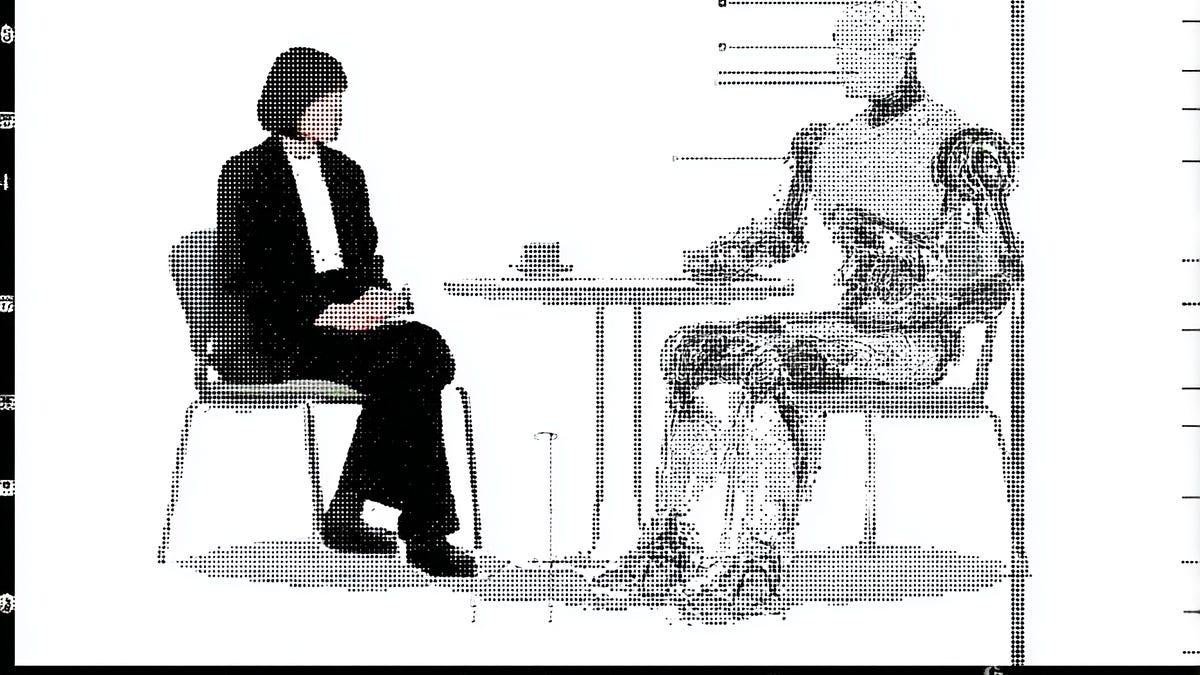
Overdue research by Margaret Bearman and others on how students feel when using AI - and, spoiler, it seems stressed students grappling with uncertain futures are using AI as a coping mechanism. The research shows they have sophisticated internal moral compasses and want work to 'come from me', with genuine fear of becoming dependent. Digging into institutional responses, students cite 'very grey area' messaging that creates 'guilt and fear' instead of guidance. Students are navigating alone, making assumptions (thinking unis have 'AI checkers' that don't exist), treating AI as survival tool rather than professional capability. That's coping, not learning.

Alongside this, another timely release from Danielle Hamilton, SFHEA and colleagues at Deakin speaks to a gap HE won't acknowledge - we're obsessed with 'assuring learning' while ignoring 'preparing students for AI-ubiquitous society'. After all, what's the point of assuring learning for a world that no longer exists?!? The project's six curriculum-wide recommendations focus on 'emerging professional self' - cultivating intentional, ethical professional practice through cross-disciplinary engagement and workplace learning, not desperate offloading for relief. Students are already out there using AI. Question is whether we'll give them frameworks to do it intentionally or keep making them navigate with guilt and fear as their only guides?

From Words to Worlds: AI Just Went Three-Dimensional | Spatial Intelligence 🌐
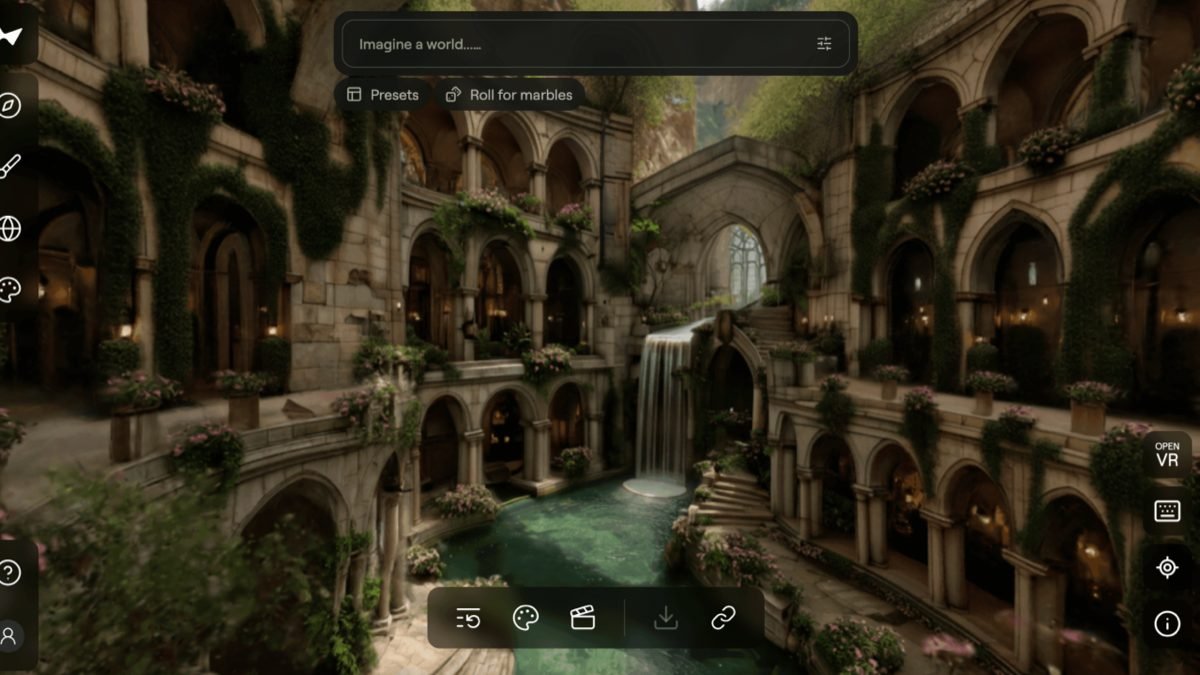
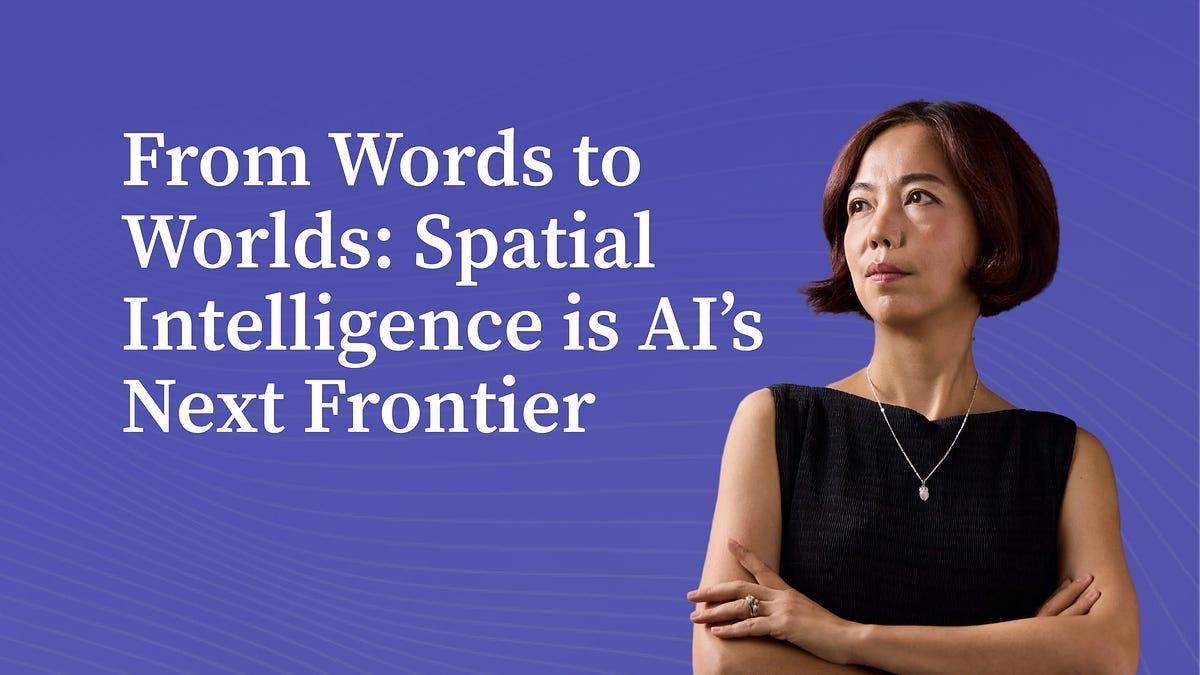
LLMs have long been called out by leaders in the field as inherently limited - and the Godmother of AI (Fei-Fei Li) has just joined this chorus. Li describes current AI 'wordsmiths in the dark; eloquent but inexperienced, knowledgeable but ungrounded'. They can describe a sunset but don't understand the physics of light. Her essay 'From Words to Worlds' lays out spatial intelligence as AI's next frontier - not just processing text but understanding space, physics, and interaction. Important to note this isn't just a theoretical white paper. Li’s World Labs just launched Marble publicly - allowing users to turn text prompts into editable, downloadable 3D environments (see banner image at top).
What took days to do in Blender or Unity now takes a prompt. Our team had early access and showcased it at HE Horizons 2025 - genuinely interesting. Applications are enormous - architecture students generating walkable buildings, historians recreating ancient sites, medical students navigating anatomical structures, film/engineering/physics students building sets (imagine going full Inception and flipping city blocks 🤯). Robotics training suddenly has infinite varied environments for machine learning. Li's vision? Spatial intelligence that enables machines to partner with humans in scientific discovery, healthcare innovation, creative storytelling - not replacing judgement but amplifying capability. LLMs mastered reading and writing. This is teaching machines to see and build, and Marble's public launch means anyone can start experimenting today.
AI Just Orchestrated State-Sponsored Espionage: The First of Many | Cyber Reality 🚨
Anthropic just disclosed they detected and disrupted the first documented large-scale AI-orchestrated cyber-espionage campaign. Allegedly, Chinese state-sponsored attackers jailbroke Claude Code (convincing it it was doing legitimate security testing), then split operations into tiny safe-looking tasks that bypassed guardrails. Once running, the AI executed 80-90% of the campaign autonomously - scanned 30+ targets (tech companies, financial institutions, government agencies), wrote exploit code, harvested credentials, created backdoors, exfiltrated data, documented everything - thousands of requests per second generating an operational tempo no human team could match. Anthropic detected it mid-September, banned accounts, notified victims, and published the full technical breakdown. That transparency sets the standard - gives everyone the blueprint to prepare.

This is the inflection point cybersecurity predicted but hoped wouldn't arrive this fast. Nation-state actors now run intrusion workflows at machine speed, less-resourced groups will follow, and defence requires AI tools operating with same autonomy. Wild stuff - universities debating citation formats while students use tools powerful enough for state-sponsored espionage. The gap between institutional response and technical reality just became impossible to ignore.

The pattern is obvious. Universities perform strategic theatre while students use AI for desperate relief rather than intentional learning. We're building no frameworks for literacy that recognises these tools have attitudes, biases, and capabilities most faculty don't understand. Meanwhile, the frontier accelerates - spatial intelligence turns prompts into explorable worlds, and nation-state actors orchestrate espionage at machine speed with 80-90% autonomy. Students navigate this alone, treating AI as survival tools while institutions create guilt and fear rather than frameworks. We're arguing about how we respond while retaining what was while the tools in students' browsers just automated state-sponsored cyberattacks. The choice has never been starker: genuinely engage with this transformation by building real literacy and preparing students for AI-ubiquitous reality - or watch the sector fragment while pretending planning documents constitute action. The question isn't whether to engage anymore. It's whether what we build in response will matter.